As traditional banks reel from compressed margins and mounting uncertainty, a quieter but potentially more dangerous threat is building in the vast and opaque world of private credit and shadow banking, where trillions of dollars now sit beyond the reach of conventional regulatory oversight.
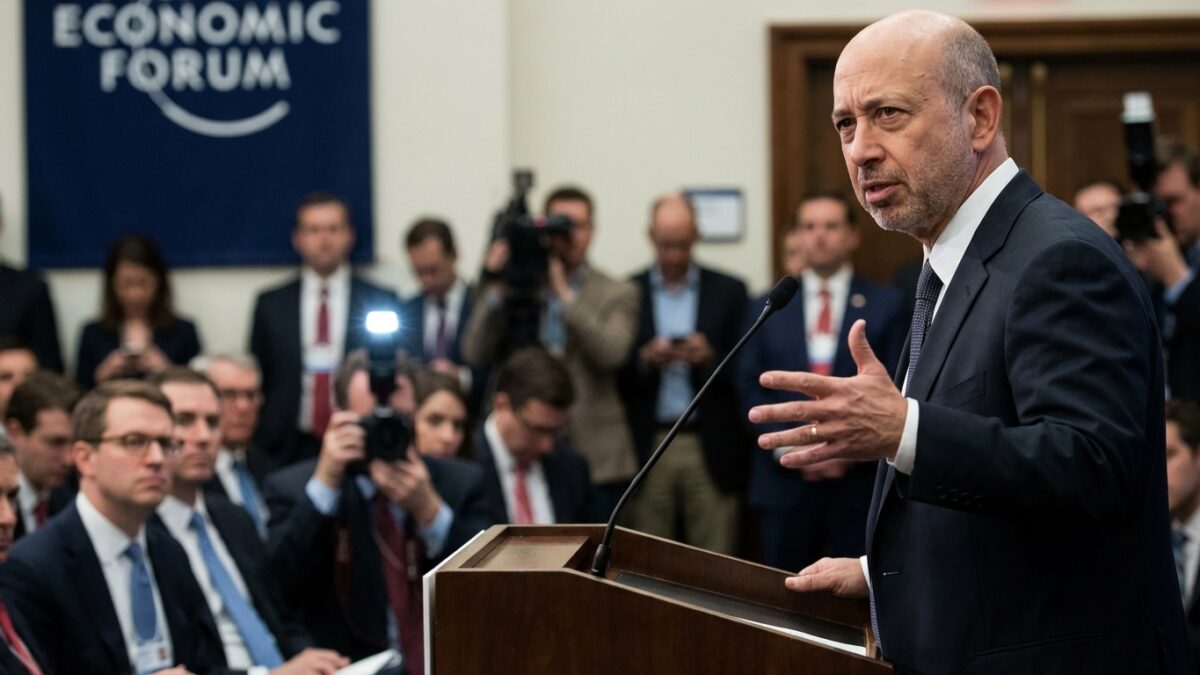
The warning from Lloyd Blankfein, Goldman Sachs’ former longtime chief executive, landed with particular force this week. Speaking on the Bloomberg Big Take podcast, Blankfein said the financial system appeared to be drifting toward another potential catastrophe, with a critical difference from past crises: everyday Americans are now directly exposed to losses through private credit vehicles that have migrated from institutional portfolios into retirement accounts and retail investment products. (Source: Bloomberg)
A $256 Trillion Shadow
The scale of the shadow banking system, which encompasses private credit funds, insurance-linked investments, hedge funds, and other non-bank financial intermediaries, has grown to an estimated $256 trillion globally. Unlike traditional banks, these entities are not subject to the same capital requirements, liquidity stress tests, or transparency mandates that were imposed after the 2008 financial crisis. (Source: FinancialContent, citing regulatory estimates)
Regulators have been sounding alarms with increasing urgency. The Financial Stability Board has repeatedly warned that the rapid growth of non-bank financial intermediation represents a systemic vulnerability, particularly as interest rates remain elevated and credit quality deteriorates in sectors like commercial real estate and leveraged lending.
The collapse of London-based Market Financial Solutions has provided a stark illustration of the risks. The Mayfair-based mortgage lender’s failure has left more than 2.5 billion British pounds of investor money in limbo, with reports emerging that retail investors, not just institutional players, face significant exposure. The case has become one of the most troubling private credit stories to emerge from the City of London in recent years. (Source: Eastern Eye)
Why This Time Could Be Different
What makes the current moment particularly concerning is the convergence of multiple stress points. The banking sector’s 2026 Twist, a yield curve distortion that has eroded profitability for traditional lenders, has accelerated the migration of credit risk into less regulated channels. As banks pull back from lending in sectors where margins have evaporated, private credit funds have stepped in eagerly, often with less rigorous underwriting standards.
Doug Noland, who publishes the Credit Bubble Bulletin, has written extensively about what he describes as history’s greatest financial bubble, warning that the private credit expansion shares dangerous parallels with previous episodes of credit excess. His analysis, published before the Iran crisis added geopolitical risk to the equation, highlighted the growing interconnection between private credit markets and the broader financial ecosystem. (Source: Credit Bubble Bulletin)
BlackRock’s 2026 macro outlook has also flagged the rising politicization of central bank balance sheets as an underappreciated risk factor. The firm noted that U.S. commercial bank reserves collapsed in the third quarter of 2025, triggering the end of quantitative tightening. The complex drivers behind that episode are likely to remain persistent headaches for the Federal Reserve. (Source: BlackRock)
Stablecoins Add Another Layer
PwC’s annual outlook highlighted the rapid expansion of stablecoins into mainstream payment and cross-border transaction flows as an additional source of financial stability risk. Today, 99 percent of stablecoins are backed by the U.S. dollar, creating concentration risk at a time when the currency itself is expected to soften further in 2026. As stablecoin issuers increase their exposure to government debt markets, transparency, regulation, and reserve quality become increasingly critical. (Source: PwC)
What Regulators Face
The challenge for policymakers is that the tools designed to prevent a repeat of 2008 were built for traditional banking. The post-crisis regulatory framework, including Dodd-Frank stress tests and Basel III capital requirements, applies primarily to deposit-taking institutions. The private credit ecosystem operates in what one analyst described as a regulatory gray zone, where the lack of transparency could lead to cascading failures if defaults rise in a sustained economic downturn.
J.P. Morgan’s 2026 market outlook projected S&P 500 earnings growth of 13 to 15 percent driven by the AI supercycle, but cautioned that AI could further amplify economic polarization and market concentration. In such an environment, broad sentiment measures remain vulnerable to sharp swings even as underlying fundamentals appear solid. (Source: J.P. Morgan)
With the Iran crisis now adding energy inflation and geopolitical uncertainty to an already fragile backdrop, the question is whether the shadow banking system’s rapid growth has made the global financial architecture more resilient through diversification, or more brittle through opacity. History suggests the answer may not become clear until it is too late.
The Regulatory Response Gap
International regulators have begun to acknowledge the scale of the challenge. The Bank of England’s Financial Policy Committee issued a warning about the growing interconnection between private credit markets and the traditional banking system, noting that some banks have significant indirect exposure through lending facilities extended to private credit funds. The European Central Bank has similarly flagged non-bank financial intermediation as a priority area for macroprudential surveillance.
In the United States, the Securities and Exchange Commission under Chair Gary Gensler had pushed for greater disclosure requirements for private fund advisers before Gensler’s departure, and the question of whether those efforts will continue under new leadership remains uncertain. The tension between promoting financial innovation and maintaining systemic stability is nowhere more acute than in the private credit space, where the promise of higher returns has drawn capital from every corner of the investment landscape.