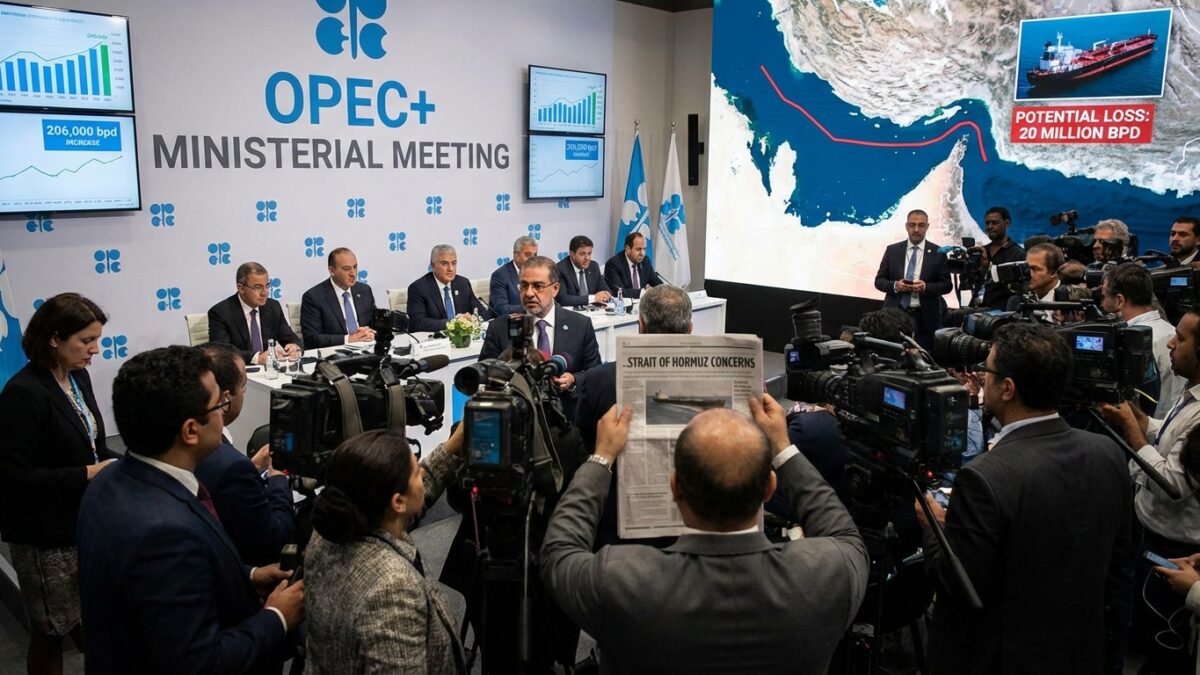
Eight oil-producing nations within the OPEC+ alliance agreed on Sunday, March 1, to increase output by 206,000 barrels per day starting in April, a move aimed at calming markets amid the most significant disruption to Middle Eastern energy infrastructure in decades. The increase, which was slightly larger than analysts expected, came from Saudi Arabia, Russia, Iraq, the UAE, Kuwait, Kazakhstan, Algeria, and Oman. However, energy analysts warn that the modest boost is far from sufficient to offset the potential loss of supply if the Strait of Hormuz remains effectively closed. (Source: Al Jazeera; NPR)
A Drop in the Bucket
The 206,000 barrel-per-day increase represents less than 0.2 percent of global daily consumption of approximately 100 million barrels. By contrast, approximately 17 to 20 million barrels per day normally transit the Strait of Hormuz. If even a fraction of that flow is disrupted for an extended period, the OPEC+ increase would be overwhelmed. Rystad Energy’s head of geopolitical analysis Jorge Leon described the situation as one where elevated global benchmark prices are expected to be sustained until the Strait is passable, regardless of OPEC+ actions. (Source: NBC News; Kpler)
The timing of the announcement, which emerged from a meeting that had been scheduled before the conflict began, suggested that OPEC+ was already planning a modest increase for supply management reasons unrelated to the Iran crisis. The decision to proceed with and slightly expand the increase after the conflict erupted represents a delicate balancing act for the cartel, which includes Iran as a member but must also consider the economic interests of Gulf states that have been directly attacked by Iranian forces.
The Duration Variable
Goldman Sachs analyst Daan Struyven explained that oil markets are pricing in a disruption lasting approximately four weeks. In a short-term scenario, crude can be stored on land in producing countries, delaying deliveries without permanently reducing supply. But if the conflict and strait closure extend beyond four weeks, storage facilities could fill and production would need to be shut down. To rebalance the market under those conditions, prices may have to rise into triple-digit territory to destroy demand. (Source: Fortune)
JPMorgan Chase analysts identified four variables that will determine the economic outcome: the extent of supply disruption, its duration, whether alternative supply can be mobilized quickly, and the strategic direction of the conflict. KPMG’s U.S. energy strategy leader Angie Gildea noted that while strategic reserves, rerouted cargoes, and floating inventories provide buffers, these are stopgaps. The critical variable is how long the conflict lasts. (Source: NPR; NBC News)
Insurance and Shipping
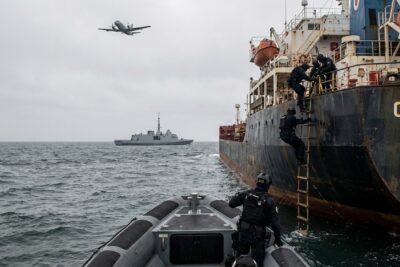
Perhaps more significant than the physical military threat is the insurance-driven shutdown of Strait of Hormuz traffic. Marine insurance providers have either dramatically increased premiums for Gulf transits or withdrawn coverage entirely, creating a de facto blockade. At least six major shipping companies halted or diverted vessels in the first days of the conflict. This means that even if military activity around the strait ceased immediately, commercial traffic would not resume until insurers were satisfied that risk levels had normalized, a process that could take weeks. For now, OPEC+’s modest production increase serves more as a political signal than a market remedy. (Source: Kpler; NBC News)
Insurance markets have created a novel blockade dimension. Marine insurers withdrew coverage or demanded prohibitive premiums, meaning commercial shipping would not resume even if military hostilities ceased. The dynamic creates a de facto closure that could outlast the military conflict itself. For OPEC+ members caught between economic interests and alliance dynamics, the situation is exceptionally complex. Saudi Arabia and UAE have been directly attacked by Iranian forces. Russia has its own complex Iranian relationship while dealing with shadow fleet enforcement. The cartel’s ability to manage markets during a crisis involving one of its own members tests institutional resilience not faced since the Gulf War era of the 1990s.
Natural gas prices in Europe surged over 20 percent as QatarEnergy halted LNG production. European consumers who benefited from easing prices since 2022 face renewed heating and electricity cost pressure. The Iran conflict is thus both a Middle Eastern security crisis and a global economic event with consequences reaching from Asian manufacturing to European households to American gas stations. OPEC+’s modest increase provides little practical relief against disruptions of this magnitude and serves primarily to demonstrate continued market management engagement, even as the cartel’s ability to influence outcomes is overwhelmed by geopolitical forces. The insurance-driven shipping shutdown represents a novel crisis dimension, meaning commercial traffic will not resume immediately even when military activity ceases.
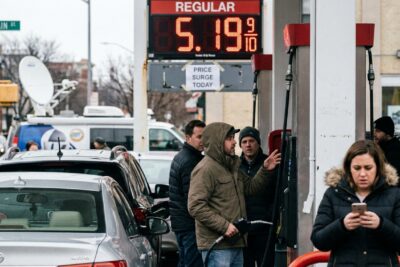
U.S. crude oil soared more than 13 percent in the first three days of the conflict, pushing prices to their highest levels since January 2025. Brent crude, the international benchmark, briefly surpassed $82 per barrel before settling around $79. Goldman Sachs head of oil research Daan Struyven estimated that without sustained supply disruptions, the fair value for Brent would be approximately $65, meaning current prices reflect a war premium of roughly $14 per barrel. (Source: Fortune; CNN)
Iran plays a pivotal role in global oil markets. The country controls a vital shipping lane, possesses the world’s third-largest proven oil reserves, and exports to oil-hungry nations including China. The Strait of Hormuz, off Iran’s southern coast, is the main route for crude from Saudi Arabia, Kuwait, and other Gulf producers. About 20 percent of global oil consumption passes through the narrow waterway, and its effective closure has created the most significant supply disruption since the OPEC embargo of the 1970s. (Source: CNN; Al Jazeera)
The cartel faces additional challenges from the shifting energy landscape. The transition to renewable energy sources is accelerating in many OPEC+ member nations’ primary export markets, particularly in Europe where wind and solar capacity additions have reduced oil dependency for electricity generation. While oil remains essential for transportation and petrochemicals, the long-term demand trajectory creates uncertainty about the value of additional production capacity investments. For OPEC+ members dependent on oil revenue, the Iran conflict represents both a short-term price boost and a reminder of the geopolitical volatility that makes energy transition planning more urgent, not less.