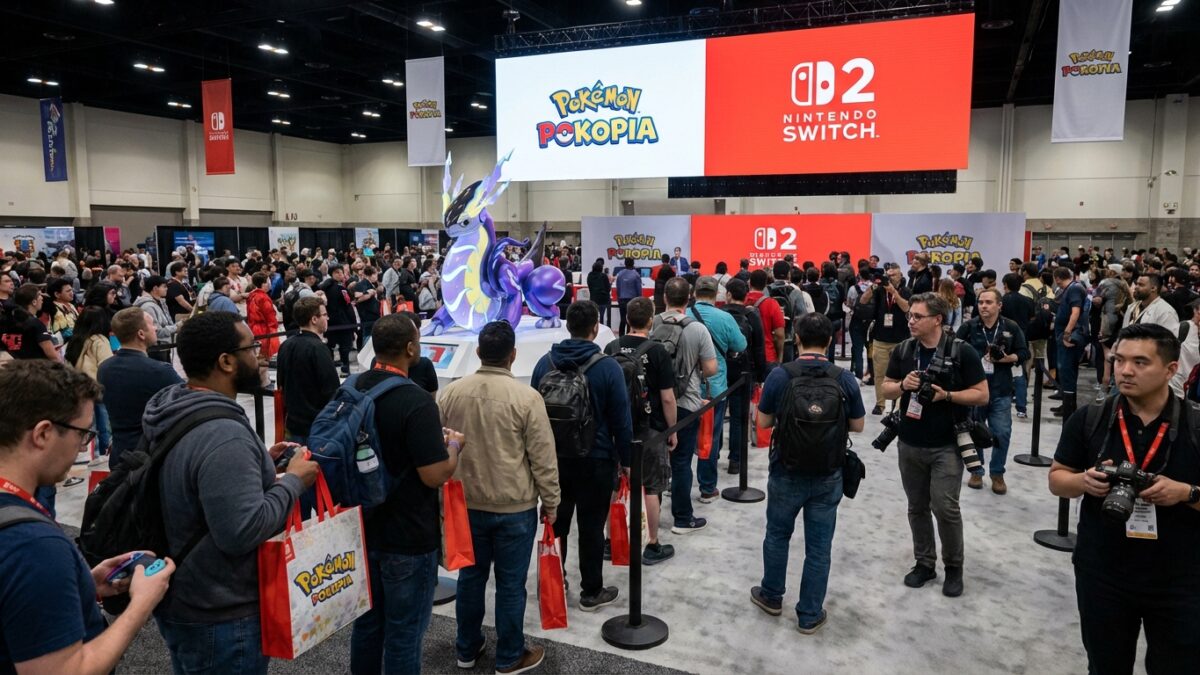
The release of Pokemon Pokopia on March 5 marks arguably the Pokemon franchise’s biggest spin-off to date and arrives as the Nintendo Switch 2 continues building momentum after its launch earlier in the year. As the new console’s library expands with both enhanced editions of existing titles and ambitious new exclusives, the gaming industry is watching to see whether Nintendo can replicate the runaway success of the original Switch while navigating an increasingly competitive market. (Source: VGC; Cinelinx)
Pokopia Broadens the Franchise
Pokemon Pokopia takes the franchise in a distinctly different direction from the mainline RPG entries that have defined the series for nearly three decades. The game emphasizes social interaction and community-focused gameplay, creating what The Pokemon Company describes as a more collaborative and creative experience. While details have been carefully managed ahead of release, early impressions suggest a title designed to appeal to both dedicated Pokemon fans and a broader casual audience. (Source: DLCompare)
The launch positions Pokemon as a year-round franchise rather than one dependent on mainline RPG releases every two to three years. With Pokemon Legends: Z-A also in development, the series is maintaining a consistent presence across multiple gameplay styles and audiences.
The Switch 2 Library Grows
March represents a significant month for the Switch 2’s library expansion. Multiple titles are launching with Switch 2 editions or enhancements, including Super Mario Bros. Wonder Nintendo Switch 2 Edition with Meetup in Bellabel Park on March 26, Virtua Fighter 5 R.E.V.O. World Stage the same day, and Disney Dreamlight Valley on March 25. These join the console’s growing catalog of both original titles and enhanced ports that take advantage of the new hardware’s improved capabilities. (Source: Game Informer; VGC)
The Switch 2 has faced the challenge familiar to all new console launches: building a library compelling enough to justify the upgrade while maintaining backward compatibility with the enormous original Switch catalog. Nintendo’s approach has combined graphically enhanced versions of beloved Switch titles with genuinely new content additions, as evidenced by the Meetup in Bellabel Park expansion included with the Mario Wonder port.
The Competitive Landscape
Nintendo’s console launches into a market fundamentally different from the one the original Switch entered in 2017. Mobile gaming continues to grow, cloud gaming services have matured, and both Sony and Microsoft maintain powerful current-generation consoles with substantial libraries. The Switch 2 must differentiate itself not just on exclusive games but on the unique hybrid portable-home console experience that made its predecessor a cultural phenomenon.
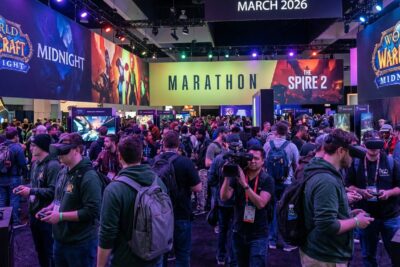
The gaming industry’s broader health in 2026 provides both opportunities and challenges. March’s unprecedented density of releases demonstrates robust developer and publisher confidence, but it also means individual titles must fight harder for attention. Monster Hunter Stories 3, WWE 2K26, Marathon, and World of Warcraft: Midnight are all competing in the same window, creating a environment where even high-quality games can struggle to find their audience. (Source: GameSpot)
Upcoming Blockbusters
Looking beyond March, the 2026 gaming calendar promises continued momentum. April brings Diablo IV: Lord of Hatred and Tomodachi Life: Living the Dream for Switch. May features 007: First Light, Forza Horizon 6, and Lego Batman: Legacy of the Dark Knight. The looming presence of Grand Theft Auto 6, currently planned for November, continues to influence publisher scheduling as companies try to avoid releasing within its gravitational pull. (Source: VGC)
Ace Combat 8: Wings of Theve is also confirmed for 2026, and Resident Evil Requiem’s February launch has already generated significant buzz with its Deluxe Edition content and puzzle-focused gameplay. The survival horror franchise continues to be one of Capcom’s strongest performers. (Source: VGC)
Industry Trends
Several broader trends are shaping the 2026 gaming landscape. The extraction shooter genre is being tested with Marathon and ARC Raiders competing for a growing but potentially saturated audience. Deckbuilding roguelikes continue to thrive with Slay the Spire 2’s launch. And the ongoing integration of AI into game development, from procedural content generation to NPC behavior, is beginning to produce visible results in released products, with PitchBook projecting the world models market in gaming could reach $276 billion by 2030. (Source: TechCrunch)
For players, 2026 is shaping up to be one of the strongest years in recent memory, with quality titles spanning every genre and platform. The question is no longer whether there are enough good games to play, but whether there are enough hours in the day to play them all.
Digital and Paper Play
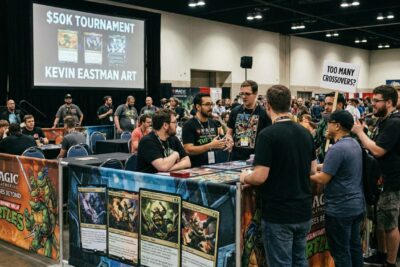
The simultaneous release strategy for TMNT, with Arena launching March 3 and tabletop following March 6, reflects Wizards of the Coast’s continued evolution toward an integrated digital-physical model. Arena has become an increasingly important engagement and revenue driver, serving as both standalone platform and gateway to the physical card game.
The Commander format continues to dominate casual play, and the Turtle Power Commander deck taps into that enormous market. Commander has grown from a niche fan-created format into Magic’s most popular way to play, with dedicated product lines and a vibrant secondary market.
From a competitive standpoint, the Standard format appears in excellent health. The diversity of Pro Tour Lorwyn Eclipsed’s Top 8, featuring seven different archetypes, suggests a wide range of viable strategies. Whether TMNT cards will enhance or disrupt this balance remains to be seen, though early evaluations suggest the set’s power level is calibrated to complement rather than dominate the existing metagame.
Looking ahead, the Magic community is already buzzing about Marvel Super Heroes arriving in June, with Bruce Banner as a transforming Hulk card and Doctor Doom’s plans mechanic. For Universes Beyond skeptics, the question remains whether crossover products can deliver gameplay depth alongside brand recognition, or risk becoming novelty items that fail to sustain long-term engagement with the game’s strategic depth.