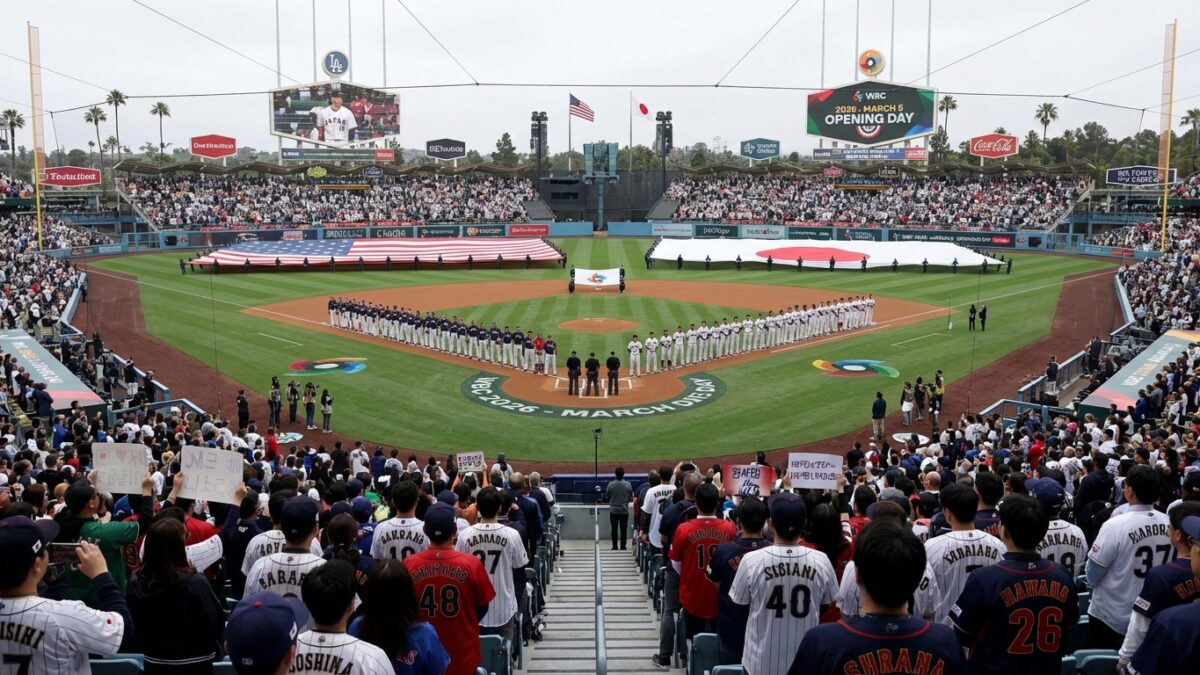
The 2026 World Baseball Classic gets underway on March 5 in a tournament format expanded to feature more nations and games, with defending champion Japan seeking a fourth title against a loaded United States roster and emerging programs from across Asia, Latin America, and Europe. The tournament, which runs through March 17 with games in Japan and the United States, has grown into baseball’s premier international event and a critical showcase for the sport’s global expansion. (Source: Wikipedia)
Japan’s Dynasty
Japan enters as the defending champion after winning the 2023 WBC in dramatic fashion, with Shohei Ohtani striking out Mike Trout in the final at-bat of the championship game. The moment became one of baseball’s most iconic and helped propel the WBC to new viewership records. Japan’s roster features a mix of Nippon Professional Baseball stars and Japanese players from Major League Baseball, creating a formidable squad that combines elite pitching with disciplined hitting.
The United States, eager to recapture the title it won in 2017, has assembled one of its strongest rosters in tournament history. Major League Baseball’s increased cooperation with the WBC, allowing top players to participate during spring training, has elevated the quality of play and drawn greater fan interest. The tournament serves as a rare opportunity for MLB stars to represent their countries in meaningful competition outside the regular season.
Global Growth
The expanded format reflects baseball’s growing international footprint. Programs from countries not traditionally associated with the sport have shown dramatic improvement, with strong showings in qualifying rounds from teams across Europe and Asia. The tournament structure provides a pathway for emerging baseball nations to compete against the sport’s traditional powers, building grassroots interest that feeds back into player development.
For MLB, the WBC serves both sporting and commercial purposes. International viewership, particularly in Japan, South Korea, and Latin America, drives broadcast revenue and builds the fan bases that support international player development. The success of players like Ohtani, who became baseball’s biggest global star partly through his WBC performances, demonstrates the tournament’s power to create narratives that transcend national leagues.
The Format
Pool play begins March 5 with games in Tokyo and Miami, followed by rounds in cities across both host nations. The tournament builds toward a championship round in the United States. Cuba, the Dominican Republic, South Korea, Mexico, Venezuela, and Puerto Rico all field competitive rosters, ensuring that the path to the final will be contested across every round. For baseball fans worldwide, the next two weeks represent the sport at its most compelling, with national pride on the line and the world’s best players competing under maximum pressure. (Source: Wikipedia)
Israel, Italy, the Netherlands, and Czech Republic have fielded increasingly competitive teams, demonstrating baseball’s growth potential beyond traditional strongholds. The expanded format includes additional qualification rounds giving more nations opportunities. For MLB, international viewership in Japan, South Korea, and Latin America drives broadcast revenue and fan development. The 2023 final between Japan and the United States drew record audiences and generated social media engagement exceeding regular-season MLB playoff games. The tournament has become baseball’s most effective global growth tool. The 2026 edition promises deeper rosters, more games, and greater worldwide attention than ever before. For players representing their countries in meaningful competition outside the regular season, the WBC offers rare patriotic pride alongside world-class athletic competition.
The WBC serves as a testing ground for rule innovations MLB considers for the regular season. Pitch clocks, adopted in MLB, provide international data on cultural adaptation to time constraints. The tournament’s role as both sporting spectacle and regulatory laboratory makes it valuable beyond commercial dimensions. The 2023 final between Japan and the United States drew record audiences and generated social media engagement exceeding regular-season playoff games. For fans worldwide, the next two weeks offer baseball at its most passionate, with national pride elevating every at-bat. The expanded format builds on the tournament’s growing tradition as the sport’s premier international showcase and most effective tool for building global fan bases.
For host nations Japan and the United States, the tournament provides economic benefits through ticket sales, hospitality, and global media exposure. Japanese baseball venues, renowned for their passionate fan culture and unique traditions, create an atmosphere that international visitors find memorable and that broadcasts convey to global audiences. The American venues, including facilities in Miami and other cities, showcase MLB’s efforts to position the sport as entertainment that combines athletic excellence with a social experience designed for diverse audiences.
The World Baseball Classic’s significance extends to labor relations within professional baseball. Players who participate in the WBC demonstrate the sport’s appeal and revenue potential beyond domestic leagues, strengthening arguments for international expansion of franchise operations, broadcasting rights, and player development investments. The 2026 tournament, with its expanded format and broader international participation, provides the most compelling evidence yet that baseball can function as a truly global sport rather than one confined to a handful of traditional markets. For the sport’s governing bodies, this evidence supports continued investment in international development programs that identify and nurture talent in emerging baseball nations.