The military conflict between the United States, Israel, and Iran has entered its second week with no sign of de-escalation, as the war spreads beyond the Middle East to draw in NATO allies, civilian death tolls mount past 1,300 in Iran alone, and both chambers of Congress vote down bipartisan resolutions that would have required President Trump to seek authorization for continued military action. The widening scope of the conflict, the enormous financial cost estimated at $1 billion per day, and the growing humanitarian crisis are testing the limits of American foreign policy and global stability. (Source: NBC News; CNBC)
The Scale of Destruction
The World Health Organization reported on March 5 that nearly 1,000 deaths had been confirmed in Iran since strikes began on February 28, a figure that rose past 1,300 by March 6. Among the dead are at least 181 children, according to UNICEF. In one of the war’s most devastating single incidents, a strike on a girls’ school in the southern city of Minab killed at least 165 schoolgirls and staff on the first day of the conflict. The Iranian Red Crescent Society reported that U.S. and Israeli forces had struck targets in at least 174 Iranian cities. (Source: Al Jazeera; Democracy Now!)
Israel’s military chief announced the country was moving to the next phase of the war after carrying out 2,500 strikes using more than 6,000 weapons. Israeli forces launched a ground offensive into Lebanon, capturing positions along the border, and issued evacuation orders covering entire neighborhoods of Beirut’s southern suburbs, home to more than half a million people, causing mass panic. The death toll in Lebanon has reached 77, with over 300,000 displaced. (Source: CNN)
Conflict Widens to Gulf States
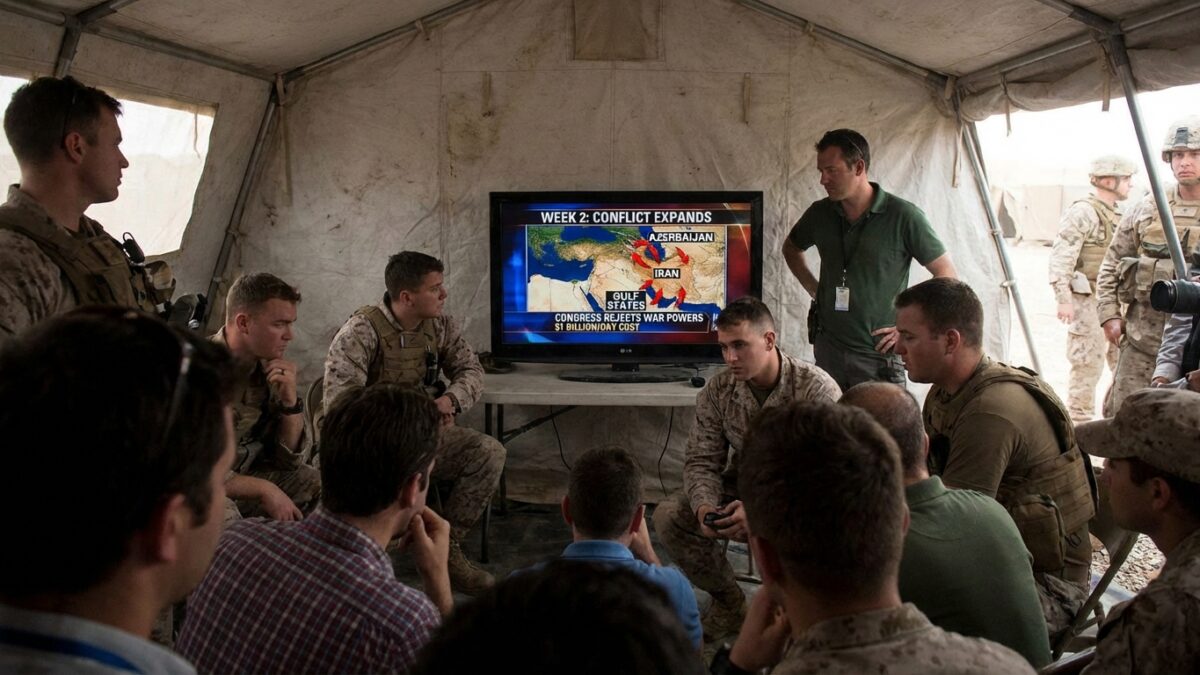
Iran’s retaliatory strikes have expanded far beyond Israel to target Gulf states hosting U.S. military installations. A hotel, two residential buildings, and an oil refinery in Bahrain were struck by Iranian missiles. Qatar, Kuwait, and Saudi Arabia all intercepted missile and drone attacks, with the UAE’s defense ministry reporting it had dealt with six ballistic missiles and 131 drones in a single day on March 5. Explosions were reported at the U.S. Embassy compound in Riyadh, Saudi Arabia. (Source: CNN; CBS News)
Most provocatively, Iran launched strikes against Azerbaijan, marking the first time the conflict had reached a country outside the immediate Middle East theater. Azerbaijan summoned Iran’s top diplomat and stated it reserved the right to take appropriate retaliatory measures. The U.S. military confirmed on March 4 that a submarine had torpedoed and sunk the Iranian Navy frigate IRIS Dena in the Indian Ocean near Sri Lanka, killing at least 87 sailors. The ship had been returning from a naval exercise in India. Iranian Foreign Minister Abbas Araghchi accused the U.S. Navy of committing an atrocity at sea. (Source: CBS News; Democracy Now!)
Congressional War Powers Fail
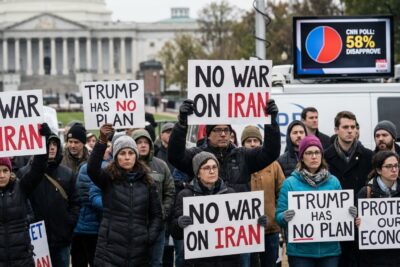
The Senate voted down a bipartisan war powers resolution 47 to 53 on March 5, and the House followed suit the same day when four Democrats joined Republicans to kill a similar measure. The resolutions would have required Trump to seek congressional authorization for continued military action in Iran. Senator Tim Kaine, a leading advocate for congressional war powers, expressed frustration at the votes, while the White House celebrated the outcome. (Source: CNBC; NBC News)
Six American service members have been killed since the conflict began, all in an Iranian missile strike on a base in Kuwait. The Pentagon identified the final two casualties as Major Jeffrey O’Brien and Robert Marzan. Defense Secretary Pete Hegseth warned that the war would soon escalate further, telling reporters that if they thought they had seen something, they should just wait. (Source: LiveNOW from FOX)
The $1 Billion Per Day War
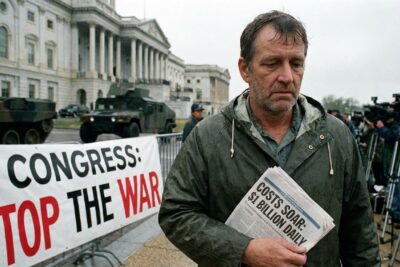
Sources familiar with military spending told NBC News that the war is costing the United States approximately $1 billion per day, a figure that accounts for munitions expenditure, operational costs, force deployment, and fuel. The financial burden adds to the economic damage already being felt through soaring oil prices, with West Texas Intermediate crude surpassing $81 per barrel on March 5, its highest level since July 2024. The Dow Jones Industrial Average dropped 785 points on Thursday, bringing the index negative for the year. (Source: NBC News; CNBC)
Trump stated he should be involved in choosing Iran’s next supreme leader, opposing the candidacy of Mojtaba Khamenei, the late ayatollah’s son, who has emerged as the front-runner. Meanwhile, Iranian President Masoud Pezeshkian said mediation efforts should be directed at the U.S. and Israel, stating that Iran was committed to lasting peace but had no hesitation in defending its sovereignty. (Source: CBS News; Al Jazeera)
NATO Allies Drawn In
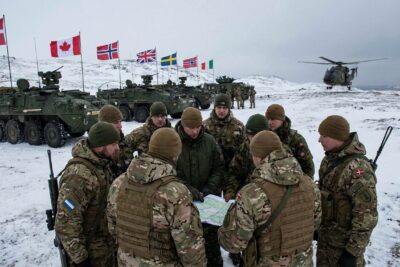
France authorized American armed forces to use French bases amid the war, while the United Kingdom permitted the U.S. to use British military bases for defensive purposes. France sent its aircraft carrier toward the Mediterranean and deployed Rafale fighter jets to the UAE. Britain deployed the warship HMS Dragon to Cyprus after the British base at RAF Akrotiri was struck by an Iranian drone. (Source: CNN; Wikipedia)
Spain refused to allow the U.S. access to its military bases, prompting Trump to threaten to cut off trade with the country. Canadian officials said they could not rule out participation. The growing involvement of NATO allies in a conflict not sanctioned by the alliance raises profound questions about collective defense obligations and the future of the transatlantic relationship at a moment when it is already strained by disputes over defense spending, Greenland, and Ukraine. (Source: CBS News; CNBC)