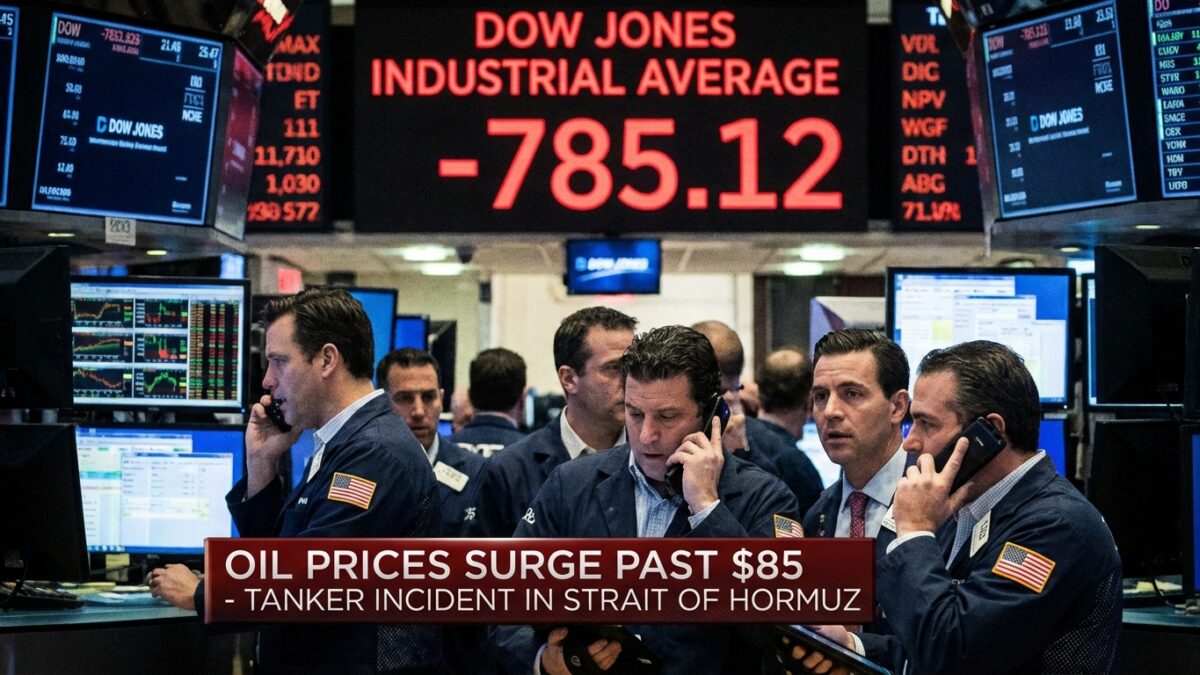
Global oil prices surged past $85 per barrel on March 5 after Iran struck an oil tanker with a missile in the Strait of Hormuz, deepening fears of a prolonged energy supply disruption that sent the Dow Jones Industrial Average tumbling 785 points and pushed the blue-chip index negative for 2026. West Texas Intermediate crude settled at $81.01 per barrel, up more than 8 percent for the day, while Brent crude closed at $85.41, marking the highest levels since mid-2024 and the biggest weekly gains since Russia’s invasion of Ukraine in 2022. (Source: CNBC; TheStreet)
Market Carnage
The sell-off was broad and deep. At its intraday low, the Dow plunged more than 1,100 points before a partial afternoon recovery. Twenty-four of the index’s thirty components declined, with Caterpillar falling 4.1 percent, Goldman Sachs dropping 3.9 percent, and GE Aerospace losing 3.4 percent as investors priced in the risk of supply chain disruptions and margin compression. The S&P 500 fell 0.56 percent while the Nasdaq dipped 0.26 percent, with chipmakers taking outsized losses after Bloomberg reported the administration was considering new permits for AI chip exports. (Source: CNBC; Bloomberg)
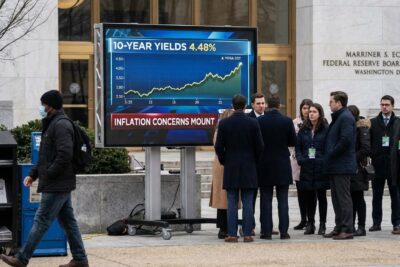
The CBOE Volatility Index, known as Wall Street’s fear gauge, spiked nearly 30 percent to 23.75. The 10-year Treasury yield surged toward 4.5 percent as fears mounted that higher oil-driven inflation would keep the Federal Reserve from cutting interest rates. Bitcoin slumped below $71,000. The Dow Jones Transportation Index dropped 2.9 percent, while homebuilder stocks fell 2.7 percent. (Source: TheStreet; Bloomberg)
The Oil Tanker Attack
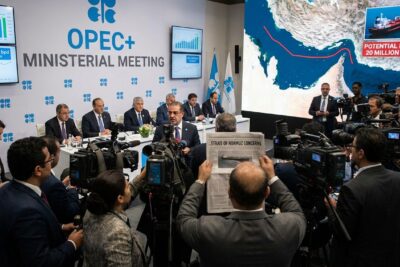
The missile strike on an oil tanker in the Strait of Hormuz marked a dramatic escalation in Iran’s efforts to disrupt global energy flows. Approximately 20 percent of the world’s daily oil consumption transits the narrow waterway, and the attack raised the prospect of a sustained blockade that would have consequences far beyond the current conflict. Six major shipping companies had already halted or diverted vessels from the strait, but the tanker attack demonstrated that even attempting transit carries direct physical risk. (Source: CNBC)
The Trump administration signaled it was considering options to address the oil price spike, though no specific measures were announced. On the previous Tuesday, Trump had stated the U.S. Navy would escort tankers through the Strait of Hormuz if necessary, posting on Truth Social that no matter what, the United States will ensure the free flow of energy to the world. Whether naval escorts can restore commercial confidence while the military conflict continues remains highly uncertain. (Source: CNBC)
Berkshire Hathaway Steps In
In a notable market development, Berkshire Hathaway disclosed that new CEO Greg Abel had purchased $15 million worth of company stock and that the conglomerate had resumed share repurchases for the first time since 2024. The move suggested that the legendary investment firm views current market prices as attractive despite the geopolitical turmoil. Warren Buffett’s successor appears to be signaling confidence in the long-term value of the portfolio even as short-term risks mount. (Source: CNBC)
Investor sentiment surveys reflected the uncertainty. The American Association of Individual Investors reported that bullish sentiment fell to 33.1 percent, the lowest since November 2025, while neutral sentiment jumped to 31.4 percent. Professional investors counseled patience, noting that U.S. markets historically bounce back relatively quickly following Middle Eastern conflicts. But the combination of oil above $80, sticky inflation, and a war that shows no signs of concluding has created a risk environment unlike any seen since the early 2000s. (Source: CNBC; TheStreet)
The sell-off extended globally. The iShares MSCI South Korea ETF plunged 6.4 percent, threatening Korean equities heavily concentrated in memory makers Samsung and SK Hynix. The Japanese iShares MSCI ETF fell 3 percent, while Taiwan’s semiconductor-heavy index dropped 1.7 percent. Energy was the only S&P sector to finish in the green, rising 0.4 percent, while consumer staples and technology eked out marginal gains. Financial heavyweights took significant hits, with Goldman Sachs down 3.9 percent and Morgan Stanley retreating 3 percent amid the volatile yield environment. (Source: TheStreet; Trading Economics)
The oil tanker attack represents a qualitative escalation in Iran’s strategy. Rather than merely threatening to close the Strait of Hormuz, Iran demonstrated the capacity and willingness to target commercial vessels directly. This raises the threshold for resuming normal shipping even after a potential ceasefire, as insurers will require sustained evidence of safety before restoring coverage at commercially viable rates. The insurance-driven blockade of the Strait may outlast the military conflict itself, extending the period of elevated energy prices well beyond the cessation of hostilities. For markets already struggling with tariff uncertainty, AI spending concerns, and sticky inflation, the oil shock introduces a third major source of instability that could define the economic landscape of 2026. (Source: CNBC; Fortune)
The energy sector’s outperformance underscored the bifurcated nature of the market. Exxon Mobil rose 2.2 percent as higher oil prices boosted revenue expectations, while defense contractors Northrop Grumman and Lockheed Martin also gained. Walmart held essentially flat as investors sought refuge in essential retail stocks. The divergence between energy winners and industrial losers reflects a market pricing in prolonged disruption rather than a quick resolution to the Iran conflict. (Source: CNBC; TheStreet)