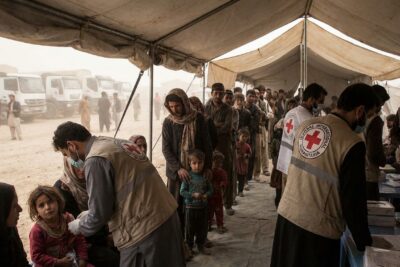
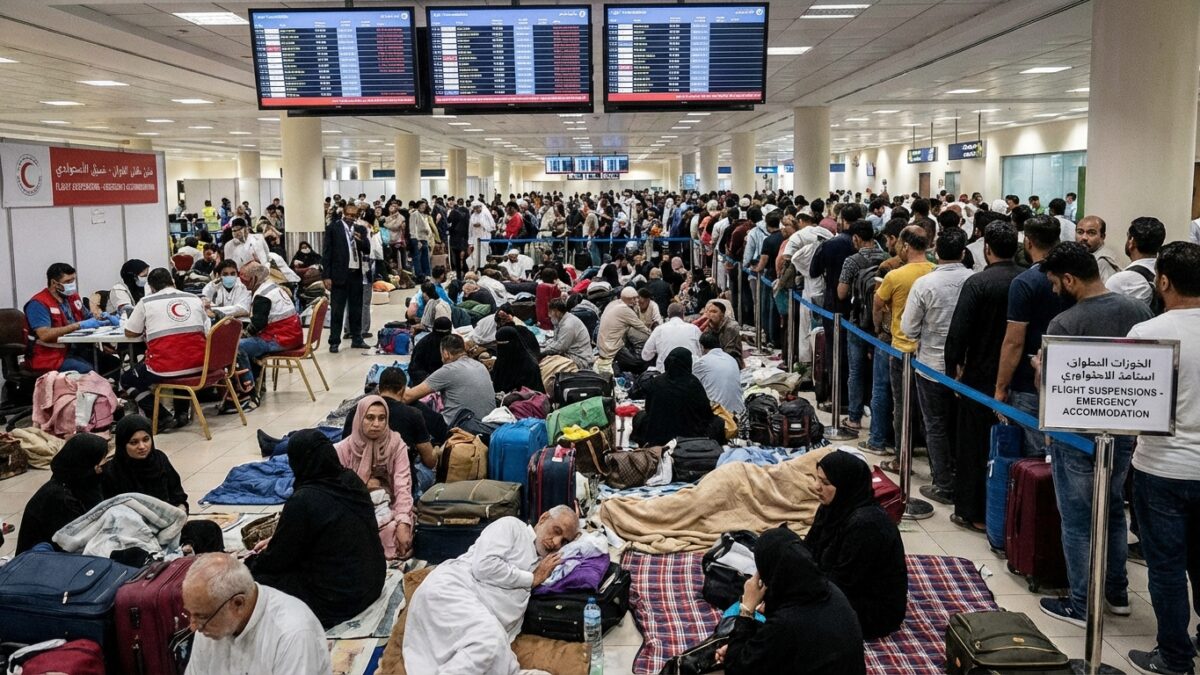
Tens of thousands of international travelers remain stranded across the Persian Gulf region as the Iran war enters its second week, with airports in the UAE, Bahrain, Kuwait, Qatar, and Saudi Arabia operating at sharply reduced capacity or fully shut down. The situation has created a cascading health and safety crisis for displaced travelers who face medication shortages, expired visas, psychological distress, and uncertainty about when they will be able to return home. Abu Dhabi’s Zayed International Airport resumed limited flight operations on March 5 in what authorities described as a significant display of resilience, but full recovery remains weeks away. (Source: CBS News; CNN)
The Scale of Displacement
Dubai International Airport, normally the world’s busiest for international passenger traffic, suspended all operations when the conflict began. Emirates and Etihad, the UAE’s two flagship carriers, grounded their entire fleets, stranding passengers from every continent. At least six of the world’s leading cargo shipping companies halted or diverted vessels that had been scheduled to transit the Strait of Hormuz, disrupting the movement of goods alongside passengers. (Source: CNBC; CNN)
Hotels in Dubai, Abu Dhabi, and Doha have been overwhelmed with guests unable to leave, with some properties reporting occupancy rates above 100 percent as they convert conference rooms and lobbies into temporary accommodation. The UAE government has worked to provide shelter and basic services for stranded travelers, but the volume of displaced people has tested even the wealthy Gulf state’s resources.
Medical Concerns
Health officials have identified several urgent medical concerns among the stranded population. Travelers with chronic conditions including diabetes, heart disease, and respiratory disorders face medication shortages as prescription supplies run out. The psychological toll is significant, with travelers reporting anxiety, sleep disruption, and distress at being separated from family members and unable to work. Parents with young children face particular challenges in maintaining routines and accessing appropriate nutrition and care.
The U.S. State Department has been working to assist American citizens stranded in the region, though White House Press Secretary Karoline Leavitt acknowledged the difficulty of the situation. The department has issued advisories urging Americans to avoid travel to the Gulf region and to register with the nearest U.S. embassy or consulate if they are already there. However, several U.S. embassies in the region, including those in Kuwait and Saudi Arabia, have themselves come under Iranian attack, limiting their ability to provide consular services. (Source: CNBC; CBS News)
Economic Impact on Travel Industry
The travel industry, which had fully recovered from the COVID-19 pandemic only in the past year, faces its most significant disruption since 2020. Airlines with heavy exposure to Gulf routes have seen their stock prices plummet. Hotel chains with properties in the affected region face mass cancellations for months ahead. Travel insurance companies are processing an avalanche of claims from passengers seeking reimbursement for canceled trips and extended stays. The disruption extends to air cargo, with significant volumes of freight normally routed through Gulf hubs stuck in limbo, affecting supply chains that depend on the region’s logistics infrastructure.
For the stranded travelers themselves, each day brings new uncertainty. Visa extensions have been granted by most Gulf states, but the question of how to get home when flights are limited and routes disrupted remains unanswered for many. The situation underscores the vulnerability of global travel networks to geopolitical shocks and the limited options available to individuals caught in the crossfire of international conflicts they played no part in creating. (Source: CNN; CBS News)
Several embassies in the region have themselves come under Iranian attack, including the U.S. compounds in Riyadh and Kuwait, limiting their ability to provide consular assistance to stranded citizens. The State Department has issued advisories urging Americans to avoid travel to the Gulf and to register with the nearest functioning diplomatic facility if already in the region. Private evacuation services, which charge premium rates during conflict situations, have seen overwhelming demand from expatriates and business travelers seeking alternative routes home. (Source: CNBC; CBS News)
The economic impact on the Gulf tourism and business travel sector is severe. Dubai, which welcomed over 17 million visitors in 2024, faces mass cancellations extending months into the future. The hotel industry is paradoxically both overwhelmed by stranded guests unable to leave and facing the prospect of empty rooms once those guests depart and future bookings evaporate. Convention and business event organizers have begun relocating upcoming conferences to alternative destinations, potentially redirecting billions in business travel revenue away from the Gulf for months or years to come. The fragility of the region’s tourism-dependent economies, particularly Dubai’s, is being exposed by a conflict that most industry planners had not considered in their risk models. (Source: CNN; CBS News)
Insurance companies are also processing an unprecedented volume of travel disruption claims, with coverage questions complicated by the fact that many standard travel policies exclude acts of war. Specialized war risk travel insurance, which few leisure travelers purchase, covers precisely this scenario, but the vast majority of stranded passengers will need to rely on airline and government assistance rather than insurance proceeds. The situation has prompted calls for travel insurance reform to address the reality that conflict-related disruptions are becoming more common in an era of heightened geopolitical instability. (Source: CBS News)