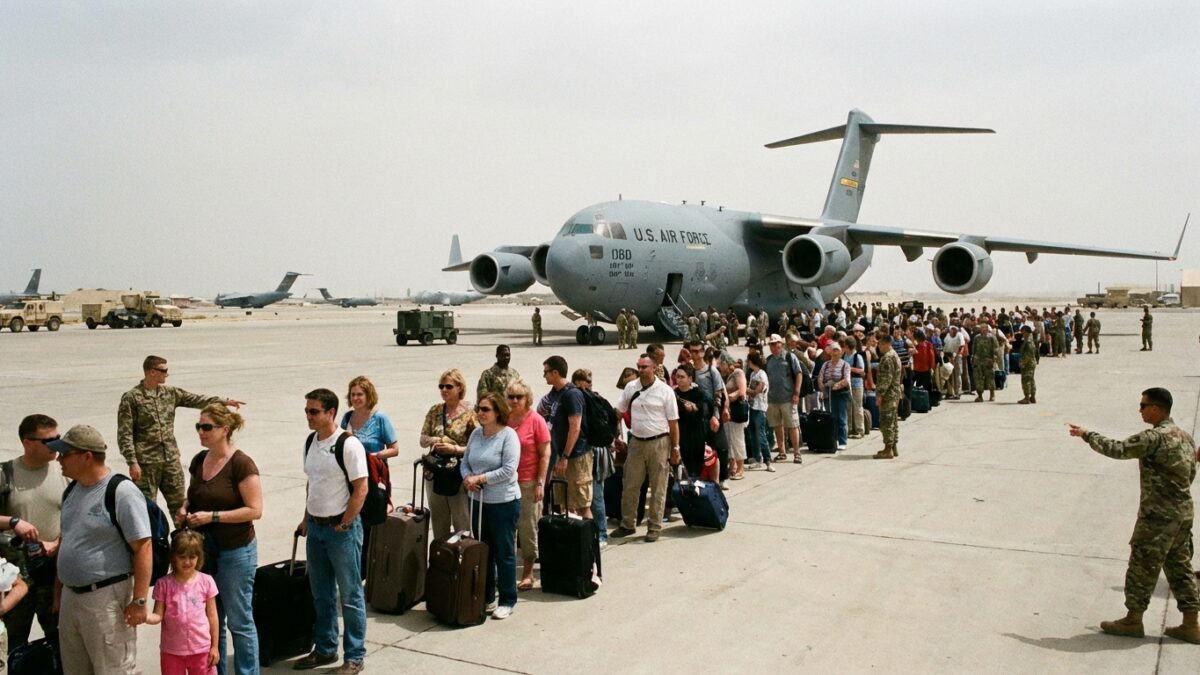
The U.S. State Department reported on March 8 that approximately 32,000 American citizens have returned from the Middle East since the U.S.-Israeli strikes against Iran began on February 28, in what has become the largest American evacuation operation since the fall of Kabul in 2021. The department stated it had been in contact with more than 3,000 additional Americans who remained in the region and were seeking assistance with departure. Secretary of State Marco Rubio described the operation as an unprecedented logistical challenge conducted while U.S. embassies in Kuwait and Saudi Arabia had themselves come under Iranian attack. (Source: Wikipedia/2026 Iran war; NBC News)
The Evacuation Challenge
The evacuation has been complicated by the closure or severe restriction of aviation across the Gulf region. Dubai International Airport, normally the world’s busiest for international passengers, suspended all operations when the conflict began. Emirates and Etihad grounded their fleets entirely. Abu Dhabi’s Zayed International Airport resumed limited operations on March 5, but capacity remains a fraction of normal. The shutdown of Gulf aviation hubs stranded tens of thousands of travelers from every continent, not just Americans, creating a humanitarian situation that overwhelmed hotel capacity and strained local resources. (Source: CBS News; CNN)
The State Department urged Americans in the region to use available commercial transportation where possible and to register with the nearest embassy or consulate for assistance. However, the damage to U.S. diplomatic facilities in Kuwait and Saudi Arabia has limited consular services. Explosions and fires were reported at the U.S. Embassy compound in Riyadh following Iranian drone strikes, and the Kuwait embassy was similarly affected. Private evacuation services, which charge premium rates during crises, reported overwhelming demand from expatriates and business travelers. (Source: CNBC; CBS News)
Scope of the Challenge
The 32,000 figure represents both permanent residents of Middle Eastern countries and travelers who were present when the conflict erupted. The UAE alone hosts an estimated 100,000 American expatriates, many working in Dubai’s financial, aviation, and construction sectors. Bahrain hosts the U.S. Navy’s Fifth Fleet headquarters and a significant military community. Saudi Arabia has substantial American business presence in the energy sector. Each of these communities faces different challenges and timelines for departure, with military families receiving priority but civilian evacuees navigating limited flight options and rapidly changing security conditions.
Kazakhstan, Turkey, New Zealand, and the United Kingdom all announced they were developing evacuation plans for their nationals. The UAE, despite being targeted by Iranian strikes, worked to provide shelter and services for stranded travelers, though the volume of displaced people tested even the wealthy Gulf state’s resources. The situation represents a reminder of the vulnerability of global expatriate communities to geopolitical shocks and the limited options available to individuals caught in conflicts they played no part in creating. (Source: Wikipedia; CNN)
For the Americans who remain, each day brings new uncertainty about flight availability, route safety, and the trajectory of a conflict that shows no signs of ending. The State Department continues to advise against all travel to the region while working to expand commercial flight options and coordinate with allied governments on evacuation corridors. The operation’s success will be measured not just by the numbers who have departed but by whether those who wish to leave are ultimately able to do so safely.
The 32,000 figure represents both permanent residents and travelers present when the conflict erupted. The UAE alone hosts an estimated 100,000 American expatriates in Dubai’s financial, aviation, and construction sectors. Bahrain hosts the Fifth Fleet headquarters. Saudi Arabia has substantial American energy sector presence. Each community faces different departure challenges, with military families receiving priority while civilians navigate limited flights and changing security. (Source: Wikipedia; CBS News)
The economic disruption to Gulf expatriate-dependent economies adds a secondary crisis. Dubai’s sectors depend heavily on foreign workers whose employers face repatriation decisions. Business events generating billions in revenue have been canceled or relocated. The long-term reputation impact on the Gulf as a base for international business could persist well beyond the conflict, potentially redirecting investment toward alternative hubs in India, Singapore, and East Africa. Private evacuation services charge premium rates and report overwhelming demand from those seeking alternatives to limited commercial flights.
The evacuation also raises questions about emergency preparedness for American communities abroad. Unlike military personnel who operate under established evacuation protocols, civilian expatriates often lack emergency planning, communication networks, and the institutional support needed to respond to sudden security crises. The Iran war has exposed gaps in the State Department’s ability to communicate with and assist large expatriate populations during active military conflicts, particularly when the diplomatic infrastructure itself comes under attack. For the thousands of Americans who remain in the region, the coming days represent a race between evacuation capacity and the potential for further conflict escalation.
For the Bureau of Consular Affairs, the evacuation has become the defining operational challenge of the decade. Resources already strained by processing backlogs are being redirected to emergency coordination. Consular officers at damaged embassies work around the clock to identify and assist citizens while managing their own safety. The scale of the operation, involving coordination with allied governments, commercial airlines, charter services, and military transport, tests institutional capacity that was designed for individual emergencies rather than mass evacuations during active conflicts involving the country’s own military.