Israel’s military chief of staff announced on March 5 that the Israel Defense Forces were moving to the next phase of the war with Iran after carrying out 2,500 strikes with more than 6,000 weapons in the conflict’s first eight days. The announcement coincided with a deepening Israeli ground offensive into southern Lebanon and the issuance of evacuation orders covering entire neighborhoods of Beirut’s southern suburbs, home to more than half a million people. The combination of intensified strikes on Iran and expanded ground operations in Lebanon represents the most ambitious Israeli military campaign in the country’s history. (Source: CNN; Al Jazeera)
The Lebanese Front
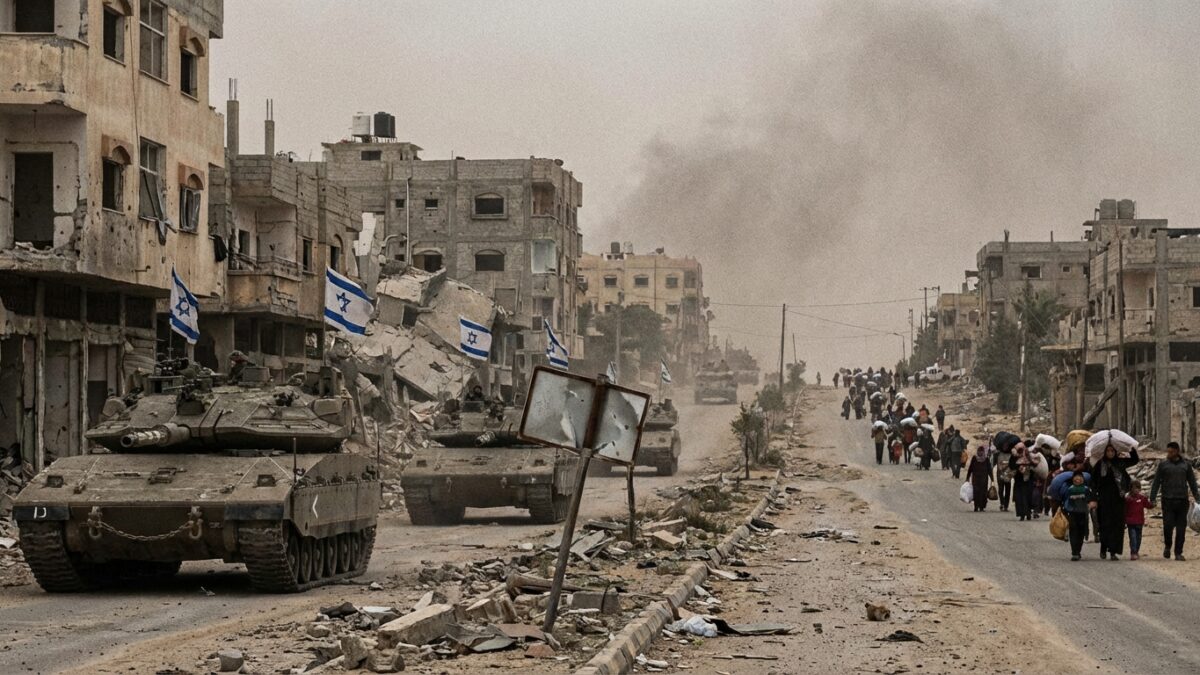
Israeli forces from the 91st Division launched the ground incursion into southern Lebanon with the stated objective of establishing a security layer to protect northern Israeli settlements from Hezbollah rocket and missile fire. Hezbollah had begun attacking Israel on March 2, claiming solidarity with Iran following the assassination of Supreme Leader Khamenei. The Israeli operation violated the 2024 Israel-Lebanon ceasefire agreement, forcing the Lebanese army to redeploy from border posts. (Source: Wikipedia; Al Jazeera)
The campaign’s scope extends well beyond the immediate border area. Israel launched what it described as broad-scale waves of strikes on key regime infrastructure in Tehran, targeting government buildings, military facilities, and oil storage. Satellite imagery analyzed by defense researchers revealed strikes on the Natanz nuclear facility entrances, the Assembly of Experts building in Qom, and presidential administration buildings in Tehran, though the International Atomic Energy Agency confirmed no increase in radiation levels at nuclear sites. (Source: Reuters; CBS News)
Multi-Front Operations
The IDF is simultaneously conducting operations across multiple theaters: air campaigns over Iran spanning hundreds of targets per day, ground operations in southern Lebanon, air defense against Iranian missile and drone attacks targeting Israeli territory, and naval operations across the eastern Mediterranean and Indian Ocean. The operational complexity of managing simultaneous campaigns across such vast geographic distances represents an unprecedented challenge for the Israeli military, which is supplemented but not replaced by U.S. forces conducting their own parallel operations under separate command structures. (Source: CNN; CBS News)
Defense Minister Israel Katz previously disclosed that Israel had initially planned to strike Iran in mid-2026, suggesting the current campaign was accelerated by intelligence assessments or political calculations that moved the timeline forward. Israeli President Isaac Herzog told CBS that Israel and the U.S. did not have much of a choice but to take action, citing concerns about Iran’s nuclear weapons ambitions. The political dimension is also present domestically, with reports that early elections could be called for late June or July to allow Netanyahu’s bloc to leverage the war. (Source: CBS News; Wikipedia)
For the populations caught between these military operations, the announcement of a next phase offers no comfort. In Lebanon, families continue to flee in scenes reminiscent of the 2006 war but at even greater scale. In Iran, cities across the country endure daily bombardment. In Israel, communities near the Lebanese border remain evacuated while Tel Aviv has experienced projectile attacks including what Iran described as a hybrid drone and missile strike. The military escalation trajectory, with each day bringing more weapons, more targets, and more casualties, shows no sign of reversing without the kind of diplomatic intervention that neither side appears willing to accept.
The multi-front nature stretches Israeli resources across unprecedented geographic distances. Maintaining simultaneous air operations over Iran, ground and air operations in Lebanon, homeland air defense, and naval operations in the Mediterranean and Indian Ocean requires coordination testing even the most capable military. Reliance on U.S. intelligence, logistics, and aerial refueling underscores the interdependence of the alliance. (Source: CNN; CBS News)
Israel’s military tempo is extraordinary by historical standards. During the 2006 Lebanon War, Israel conducted approximately 7,000 strikes over 34 days. The current campaign matched that volume in less than nine days. The introduction of precision-guided munitions alongside area-effect weapons creates a mixed picture of sophistication and devastating impact. For soldiers in Lebanon under ambush threat and pilots flying long-range missions potentially tracked by Russian-shared intelligence, the next phase represents intensification of risk alongside expansion of objectives.
Defense Minister Israel Katz previously disclosed that Israel had initially planned to strike Iran in mid-2026, suggesting the current campaign was accelerated by intelligence assessments or political calculations. Israeli President Isaac Herzog told CBS that Israel did not have much of a choice but to take action. Domestically, reports suggest early elections could be called for late June to leverage the war. For populations caught between these operations, the next phase announcement offers no comfort. In Lebanon, families flee in scenes reminiscent of 2006 but at greater scale. In Iran, cities endure daily bombardment. In Israel, communities remain evacuated while Tel Aviv has experienced projectile attacks. The escalation trajectory shows no sign of reversing without diplomatic intervention neither side appears willing to accept.
The political dimensions add complexity. Defense Minister Katz disclosed Israel had initially planned strikes for mid-2026, suggesting acceleration by intelligence or political calculations. Reports suggest early elections could be called for late June to leverage the war politically, adding domestic considerations to military decision-making. For Israel’s security establishment, the multi-front campaign requires managing not just military risks but political pressures from a government eager to capitalize on wartime momentum while avoiding the kind of setback that could undermine public confidence in the operation’s rationale and execution.