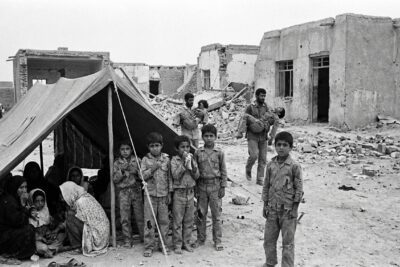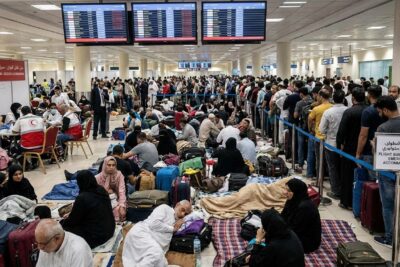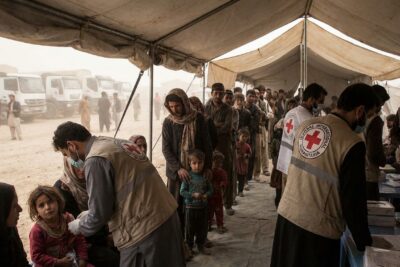
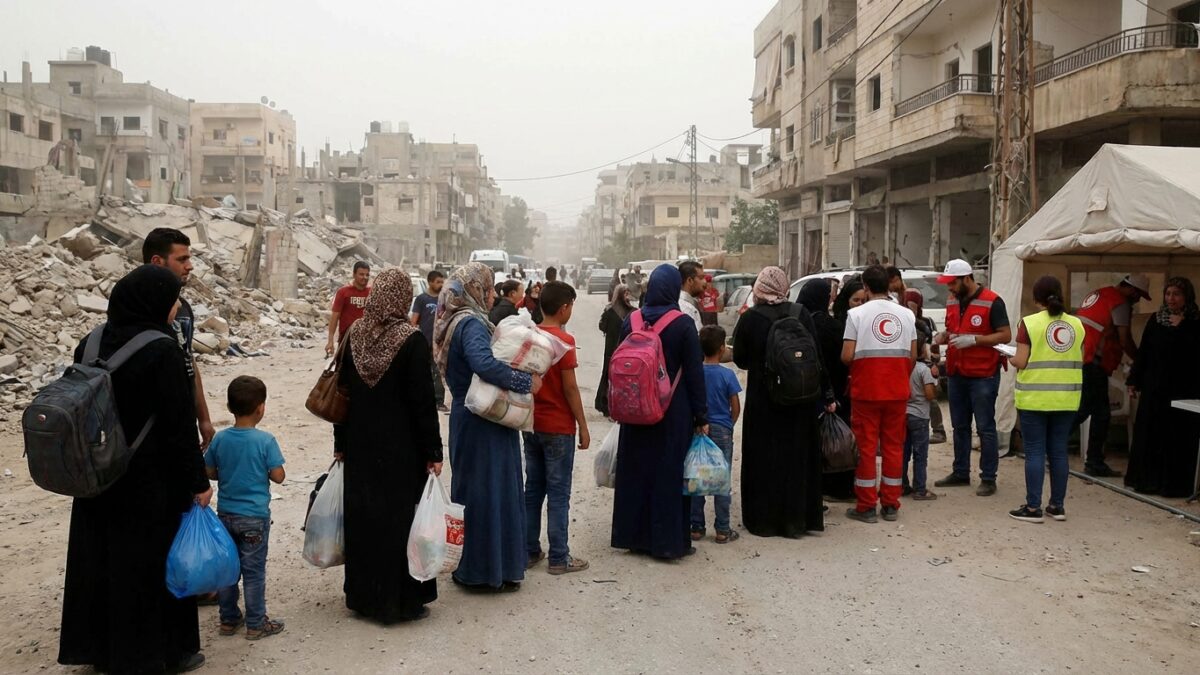
More than 517,000 people have fled their homes in Lebanon as Israeli ground forces advance into southern Lebanon and waves of airstrikes devastate Beirut’s southern suburbs, creating the country’s worst displacement crisis since the 2006 war. The Lebanese government reported at least 400 deaths by March 8, including paramedics killed while attempting to reach casualties. Israel’s military issued evacuation orders covering entire neighborhoods home to more than half a million people, triggering mass panic as residents rushed to leave areas the IDF considers Hezbollah strongholds. (Source: Al Jazeera; CNN)
The Ground Offensive
Israeli forces from the 91st Division launched a ground incursion into southern Lebanon with the stated goal of establishing a security layer for Israeli residents of northern settlements. The operation has captured positions along the border in what Israel frames as a preventive action against Hezbollah’s infrastructure. Hezbollah began launching rockets and missiles at Israel on March 2, claiming retaliation for the killing of Iran’s supreme leader, an action condemned by the Lebanese government itself. (Source: Wikipedia; Al Jazeera)
The military operation has forced the Lebanese army to redeploy from border posts established under the 2024 Israel-Lebanon ceasefire agreement, effectively nullifying that arrangement. An Israeli strike in central Beirut killed four people and pushed Lebanon’s death toll close to 400. Lebanon’s hospitals, already overwhelmed by the country’s ongoing economic crisis and the aftermath of the 2020 Beirut port explosion, face a casualty surge they are ill-equipped to manage. Medical supply chains have been disrupted and international humanitarian access is severely constrained. (Source: NCRI; CNN)
Humanitarian Emergency
The displacement figure of 517,000 represents approximately 8 percent of Lebanon’s entire population being forced from their homes in less than two weeks. Many have fled to Beirut’s northern suburbs, the Bekaa Valley, and northern Lebanon, straining infrastructure in areas that were already under economic pressure. Lebanon’s economy has been in crisis since 2019, with the currency losing more than 90 percent of its value, making the country uniquely ill-equipped to absorb a mass displacement event. The United Nations has appealed for emergency humanitarian funding but the response has been slow given the simultaneous demands of the Iran humanitarian crisis and the ongoing Ukraine war. (Source: Al Jazeera)
For the displaced families, the crisis is immediate and existential. Schools have been converted to shelters, food distribution is sporadic, and access to clean water and sanitation is deteriorating. The psychological toll on children who have survived bombing campaigns and been forced from their homes is a particular concern for UNICEF and other child welfare organizations. Lebanon’s fragile social fabric, held together by an intricate confessional political system, faces its most severe test since the civil war that devastated the country from 1975 to 1990. The international community’s ability and willingness to provide meaningful assistance will determine whether this displacement crisis becomes a generational humanitarian catastrophe.
Israel’s stated objective of establishing a security layer involves creating a buffer zone from which Hezbollah cannot launch rockets against Israeli communities. The operation has destroyed Hezbollah infrastructure along the border, but the human cost has been severe. The Lebanese army was forced to withdraw from border posts established under the 2024 ceasefire, effectively nullifying that framework. (Source: Wikipedia; Al Jazeera)
The crisis occurs in a country uniquely ill-equipped to absorb mass displacement. Lebanon’s economy has been in freefall since 2019, with currency losing over 90 percent of value, banks restricting withdrawals, and public services deteriorating. Schools converted to shelters lack adequate sanitation and nutrition. UNICEF and UNHCR have appealed for emergency funding, but international resources are divided between multiple simultaneous crises. The question for 500,000 displaced is not just when they can return but whether homes will remain. (Source: Al Jazeera; CNN)
Women and children comprise the majority of the displaced population and face compounded vulnerabilities including disrupted healthcare, separation from support networks, and the psychological trauma of bombardment and forced flight. Women’s health organizations have specifically called for humanitarian corridors to ensure access to reproductive healthcare, demands that have not been addressed amid ongoing military operations.
The international response to Lebanon’s displacement crisis has been hampered by donor fatigue and competing demands. The UN’s humanitarian appeals for Lebanon have historically been underfunded, and the simultaneous demands of the Iran crisis, the ongoing Ukraine war, and persistent food insecurity in sub-Saharan Africa mean that available resources are stretched thinner than at any point in recent memory. For Lebanon, a country that has hosted over a million Syrian refugees for more than a decade, the addition of half a million internally displaced people represents a burden that the state’s collapsing institutions cannot bear without massive international assistance that shows no signs of materializing at the required scale.
The displacement patterns reveal the fragility of Lebanon’s confessional fabric. Communities from Shia areas of southern Beirut have relocated to traditionally Sunni or Christian areas, creating social pressures in a country where sectarian balance is both stability source and tension. Local organizations have mobilized humanitarian assistance, but the scale far exceeds local capacity. Without sustained international support, the displacement risks becoming permanent.