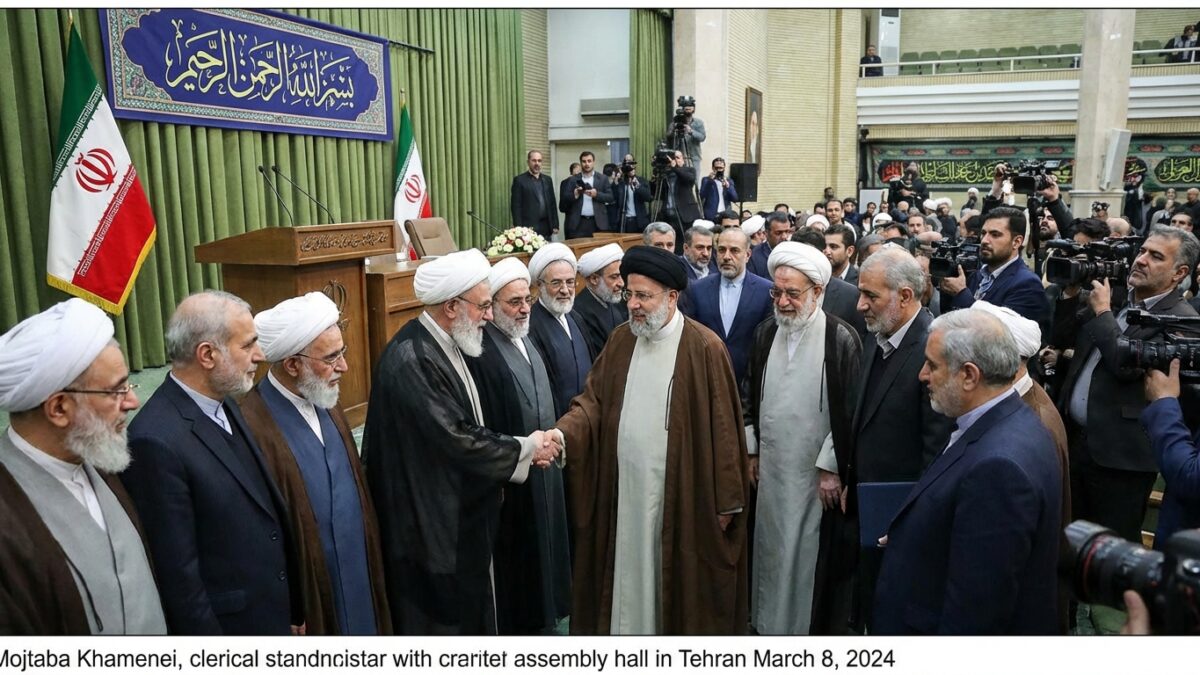
Iran’s Assembly of Experts announced on March 8, 2026, that Mojtaba Khamenei, the 56-year-old son of slain Ayatollah Ali Khamenei, has been selected as the Islamic Republic’s third supreme leader, a deeply consequential succession that signals hardline continuity and defiance against both the United States and Israel as the war enters its second week. The appointment of the younger Khamenei, a mid-ranking cleric with deep ties to the Islamic Revolutionary Guard Corps but no formal government experience, has drawn immediate condemnation from Washington and an extraordinary threat from the Israeli military. (Source: Al Jazeera; NBC News)
Dynastic Succession
The transfer of power from father to son is a profoundly sensitive act in a country whose founding mythology is built on the 1979 overthrow of a hereditary monarchy. The late Ayatollah Khamenei had reportedly been deeply opposed to the idea of his son succeeding him, fearing it would create precisely the appearance of dynasty the revolution was meant to end. Iran International reported, citing sources within the Assembly of Experts, that Khamenei was not pleased with the idea of his son’s leadership and never allowed this issue to be raised during his lifetime. (Source: Jerusalem Post; Iran International)
Yet the IRGC, Iran’s most powerful military institution, pushed hard for Mojtaba’s appointment. According to Iran International, starting early on March 3, IRGC commanders pressured Assembly members to vote for Mojtaba through repeated contacts. The assembly met primarily online due to security fears that any in-person gathering could be targeted by Israeli or American strikes. The Assembly of Experts’ announcement was delayed for days amid disagreements and the logistical impossibility of convening during an active bombing campaign. (Source: Wikipedia; Iran International)
International Reaction
President Trump responded to the appointment with characteristic bluntness, telling ABC News on March 9 that the new leader is not going to last long if the Iranians do not get his approval first. Trump had earlier called Mojtaba Khamenei unacceptable and stated that he should have a role in choosing Iran’s next leader. Israeli Defense Forces posted a statement in Persian on X stating that the hand of the State of Israel will continue to pursue every successor and every person who seeks to appoint a successor, warning that they would not hesitate to target any replacement. (Source: ABC News; Al Jazeera)
By contrast, Russian President Vladimir Putin pledged unwavering support for the new supreme leader, while China said it opposed any targeting of Mojtaba Khamenei. Iran’s President Masoud Pezeshkian called the appointment a new era of dignity and strength, while Parliament Speaker Mohammad Bagher Ghalibaf, a Mojtaba ally, pointedly rejected Trump’s demands by stating that Iran’s fate would be determined solely by the proud Iranian nation, not by what he called Epstein’s gang. (Source: Al Jazeera; Washington Post)
Who Is Mojtaba Khamenei?
Mojtaba Khamenei has never run for office, never given public lectures or Friday sermons, and most Iranians have reportedly never heard his voice. He has operated almost entirely behind the scenes, cultivating power through relationships with IRGC commanders forged during his military service in the Iran-Iraq War. He studied under the hardline cleric Ayatollah Taqi Mesbah Yazdi in Qom before returning to Tehran to join the Office of the Supreme Leader. Vali Nasr of Johns Hopkins University described Mojtaba as a significant center of power with both family ties and military connections that lent him political weight. (Source: ABC News; Al Jazeera)
His appointment carries considerable controversy. Mojtaba is a hojatoleslam, a mid-level cleric, rather than an ayatollah. His father was also not an ayatollah when he became supreme leader in 1989, and the law was amended to accommodate him. The reformist camp has long accused Mojtaba of tampering with elections and deploying the Basij paramilitary force against peaceful protesters during the 2009 Green Movement. Western media reports have linked him to an economic empire worth billions of dollars moved through networks of associates. He is under U.S. and Western sanctions. (Source: Al Jazeera; ABC News)
Implications for the War
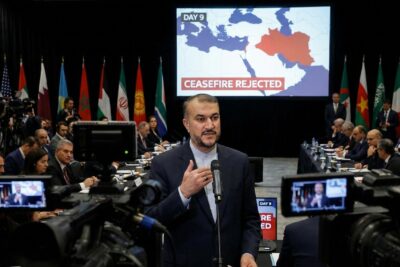
Rami Khouri, a distinguished public policy fellow at the American University of Beirut, described the appointment as an act of defiance, with Iran telling the Americans and Israelis that they wanted to get rid of our system but have failed. Suzanne Maloney of the Brookings Institution noted that Mojtaba’s hardline reputation could align with a more militarized Iranian state under existential threat. The selection suggests little appetite for negotiation in the short term, particularly after Foreign Minister Abbas Araghchi told NBC News on March 8 that Iran needs to continue fighting for the sake of our people and rejected all calls for a ceasefire, insisting on a permanent end to the war as the only acceptable outcome. (Source: NBC News; Council on Foreign Relations)
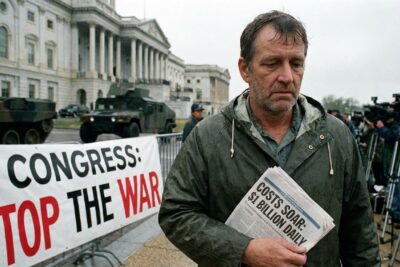
Senator Lindsey Graham predicted Mojtaba would meet the same fate as his father. Senator Thom Tillis warned that any U.S. ground forces would require new congressional authorization. The succession creates the extraordinary situation of a supreme leader governing from hiding, unable to show his face publicly for fear of being targeted, while commanding a nation of 87 million people in the midst of the most devastating military assault in its modern history. For Iran, the war is now not just a military conflict but a test of whether the Islamic Republic’s most fundamental institution can survive the loss of its founder’s chosen successor and the appointment of a leader chosen under the barrel of a gun.