
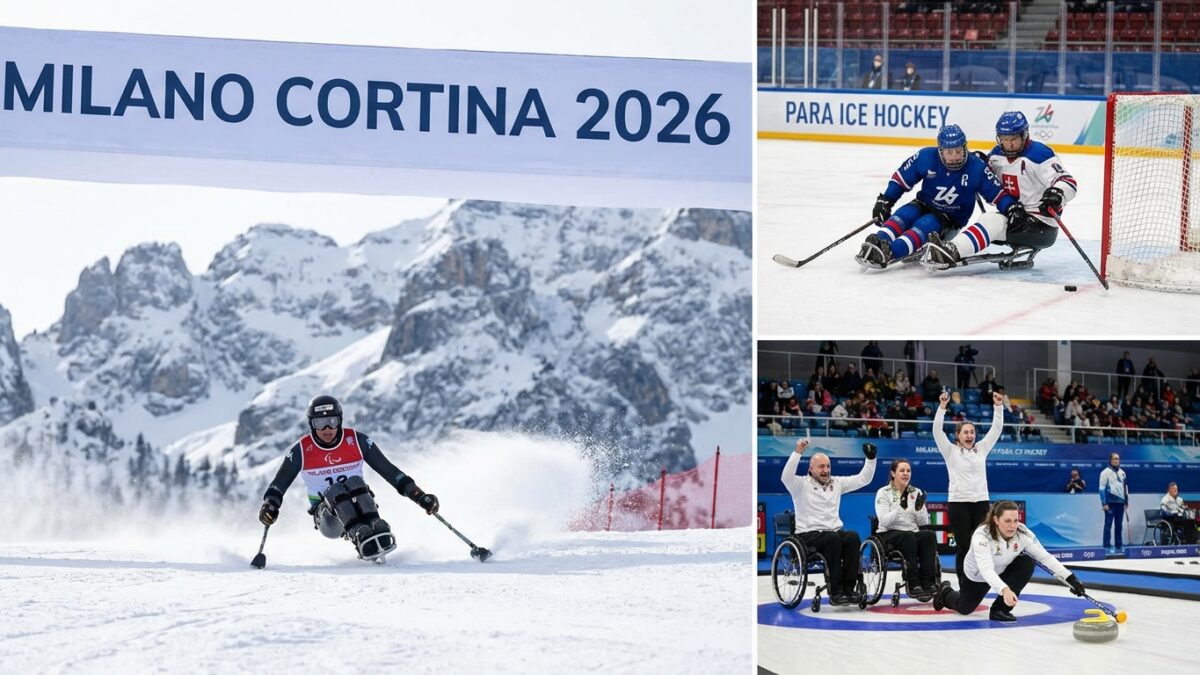
The Milano Cortina 2026 Winter Paralympic Games delivered thrilling competition in their opening days of medal events, with athletes from around the world captivating audiences in venues spanning Milan, Cortina d’Ampezzo, Tesero, and Verona. Following the spectacular Opening Ceremony at the ancient Arena di Verona on March 6, the first medals were awarded on March 7 in Para alpine skiing and Para biathlon, with competition in all six sports now underway as the Games celebrate the 50th anniversary of the Winter Paralympic movement. (Source: International Paralympic Committee; Olympics.com)
Para Alpine Skiing Opens in the Dolomites
The Tofane Alpine Skiing Centre in Cortina d’Ampezzo provided a dramatic backdrop for the first medal events in Para alpine skiing, where athletes race down steep mountain courses at speeds exceeding 100 kilometers per hour. The women’s and men’s downhill events in the visually impaired, standing, and sitting categories produced emotional victories and fierce competition. Austrian veteran Markus Salcher, competing in his fifth and self-described last Paralympics, demonstrated that experience and determination remain formidable assets in one of the most demanding winter sports. (Source: International Paralympic Committee)
The Para alpine program runs through March 15, encompassing downhill, super-G, giant slalom, slalom, and super combined events. Each discipline tests different aspects of athletic ability, from raw speed to technical precision, and the varied conditions of the Dolomite mountain courses add an unpredictable element that rewards adaptability and courage.
Para Ice Hockey Begins in Milan
The newly built Milano Santa Giulia Ice Hockey Arena, a 14,000-seat venue constructed specifically for the Games, hosted the opening rounds of Para ice hockey, with eight nations competing in a round-robin tournament building toward the gold medal game on March 15. The United States, led by five-time Paralympic gold medalist Declan Farmer, entered as the dominant force in the sport and an overwhelming favorite to extend its dynasty. Para ice hockey, played on sleds with two short sticks for propulsion and puck handling, delivers some of the fastest and most physical action at the Winter Paralympics. (Source: Team USA; Olympics.com)
Canada, China, Czechia, Germany, Italy, Japan, Slovakia, and the USA form the eight-team field. The host nation Italy drew passionate support from local fans who packed the arena, creating an atmosphere that players from multiple teams described as electric. The sport’s combination of speed, skill, and physicality makes it one of the Games’ most compelling spectacles, and the new venue provides a world-class setting that will be converted into a multi-use entertainment center after the Paralympics. (Source: International Paralympic Committee)
Wheelchair Curling Makes History
Wheelchair curling at the Cortina Curling Olympic Stadium made history with the Paralympic debut of the mixed doubles format, adding a new discipline that has energized both athletes and fans. The mixed doubles tournament began on March 4, two days before the Opening Ceremony, and has produced competitive matches that demonstrate the strategic depth of a sport that rewards precision and teamwork. The traditional mixed team format continues alongside the new discipline, with both competitions running through the Games. (Source: Olympics.com)
The Games carry particular significance against the backdrop of the Iran war. While sports provide respite from global crisis, many athletes have spoken about the importance of representing hope, resilience, and the possibility of peaceful competition during a time of conflict. The Paralympic movement’s message of inclusion, determination, and human potential resonates with particular force when the world’s attention is dominated by destruction and division. For the 665 athletes competing in 79 medal events, Milano Cortina 2026 represents both personal achievement and a reminder that international cooperation remains possible even in the most challenging times. (Source: International Paralympic Committee)
Para biathlon at the Tesero stadium produced emotional victories combining endurance and marksmanship. Athletes transition between cardiovascular demands of skiing and prone shooting precision. Para snowboard at the Cortina Para Snowboard Park showcased athletes navigating banked slalom courses at significant speeds. The explosive short-format racing provides some of the most visually spectacular action at the Games. (Source: Olympics.com)
Accessibility-focused pricing, with 89 percent of tickets under 35 euros, has helped ensure packed venues. The mascot Milo, designed to represent ingenuity and willpower, has become a beloved presence. Sweden’s Ronny Persson competes at his fifth Paralympics after switching from alpine skiing to wheelchair curling. The competition remains a celebration of human potential even as the broader world grapples with the devastation of war, with athletes and audiences finding in sport a reminder that cooperation, determination, and excellence remain possible amid the darkest circumstances. (Source: International Paralympic Committee)
American Oksana Masters, the most decorated Team USA Winter Paralympian with 14 winter medals and five summer medals, brings star power that elevates the Games’ global profile. Her pursuit of additional medals in Para cross-country skiing and biathlon has attracted media attention that extends beyond the traditional Paralympic audience, introducing new viewers to the extraordinary capabilities and determination of Paralympic athletes. The combination of elite competition, stunning Italian mountain scenery, and the inclusive spirit of the Paralympic movement creates an event that transcends sport, offering a global audience a reminder that human excellence takes many forms.