Joint U.S.-Israeli airstrikes launched on February 28, 2026, killed Iran’s Supreme Leader Ayatollah Ali Khamenei and multiple senior military officials, plunging the Middle East into the most dangerous confrontation in decades and sending shockwaves through global energy and financial markets.
The coordinated offensive, dubbed Operation Epic Fury by the Trump administration, targeted military facilities, nuclear sites, and leadership compounds across Iran. Within hours, Tehran confirmed the deaths of Khamenei and several top commanders, including Abdolrahim Mousavi, Aziz Nasirzadeh, Mohammad Pakpour, and Ali Shamkhani, who were reportedly killed during a meeting in Tehran. Former Iranian President Mahmoud Ahmadinejad was also reportedly killed in a targeted strike on his home in Narmak. (Sources: Al Jazeera, The Hill, The Times of Israel)
Iranian Retaliation Engulfs the Region
Iran’s response was swift and far-reaching. The Islamic Revolutionary Guard Corps launched retaliatory missile and drone strikes against Israeli cities and U.S. military bases across the Persian Gulf, hitting targets in the United Arab Emirates, Qatar, Bahrain, Kuwait, Saudi Arabia, and Jordan. Hezbollah, Iran’s powerful proxy in Lebanon, simultaneously launched rockets into Israeli territory, prompting Israeli counterstrikes on Lebanese targets. (Source: Wikipedia, citing multiple news agencies)
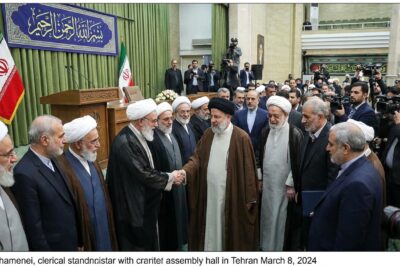
High-ranking Iranian clerics declared jihad against Israel and the United States, issuing religious decrees calling for retribution. A 40-day mourning period was declared across Iran, and questions swirled about who would ultimately govern the Islamic Republic. (Sources: Al Jazeera, The Telegraph)
Strait of Hormuz Effectively Shut Down
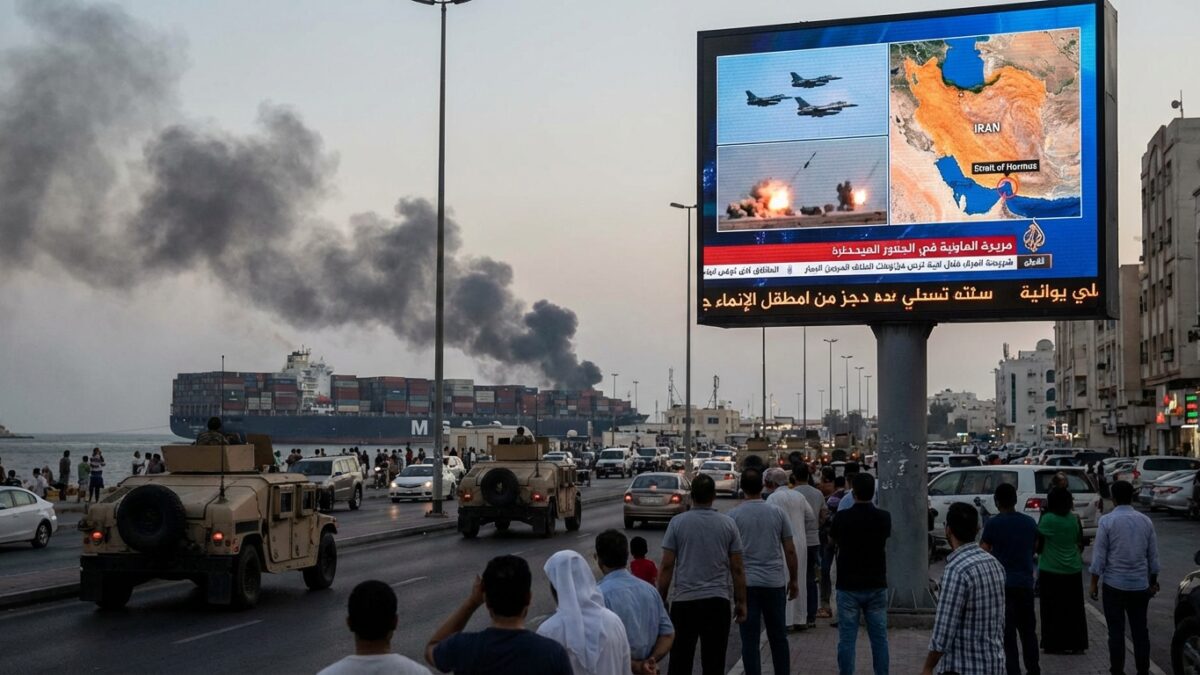
Perhaps the most consequential dimension of the crisis has been its impact on the Strait of Hormuz, the narrow waterway between Iran and Oman through which roughly 20 percent of the world’s daily oil supply flows. Within hours of the initial strikes, IRGC commanders transmitted warnings via maritime radio that no vessel would be permitted to pass, and subsequent drone and rocket attacks on at least five tankers brought commercial shipping to a near-total halt. (Sources: CNBC, Al Jazeera, Reuters)
Michelle Bockmann, a senior maritime intelligence analyst at Windward, told Al Jazeera that maritime traffic through the strait had dropped by at least 80 percent. An IRGC commander declared the strait was closed and threatened to set ablaze any vessel attempting passage. While Iran has not formally declared a blockade, the threats and selective attacks on shipping have been sufficient to cause major companies and insurers to withdraw from the corridor entirely. (Source: Al Jazeera)
Ship-tracking data from energy analytics firm Kpler showed that limited traffic continued, primarily vessels flying Iranian and Chinese flags, but commercial operators, major oil companies, and insurers had effectively abandoned the route. Over 150 tankers were stranded in waters around the strait. (Source: Kpler)
Global Implications
President Trump told CNN on March 2 that the military campaign would continue until all U.S. objectives were met, saying the largest wave of strikes had yet to occur. The escalating conflict has raised urgent questions about the durability of Gulf state alliances, the future of Iranian governance, and the potential for a broader regional conflagration.
Ali Vaez, director of the Iran project at the International Crisis Group, warned that the consequences could extend far beyond the battlefield. He told Al Jazeera that a prolonged disruption of the strait would tighten financial conditions, fuel inflation, and push fragile economies closer to recession within weeks. (Source: Al Jazeera)
Cormack McGarry, director of maritime intelligence at Control Risks, noted that a total long-term closure remained unlikely given the military imbalance, but cautioned that selective attacks on individual vessels were far harder to prevent. Rachel Ziemba, a senior adjunct fellow at the Center for a New American Security, pointed to overnight escalation involving energy infrastructure in the Gulf, including Qatar’s preemptive pause of LNG production. (Sources: Al Jazeera, Control Risks)
The conflict has already triggered diplomatic crises across the region, with Gulf states that did not join the U.S.-led campaign now absorbing Iranian retaliatory strikes. Adriana Alvarado, senior vice president at Morningstar, said the overall economic impact would largely depend on the duration of disruptions, but that political developments in Iran would have lasting consequences for the entire Middle East. (Source: Fortune)
As the conflict enters its fourth day, the world watches to see whether diplomatic channels can prevent further escalation, or whether the region is headed toward a prolonged confrontation with consequences that could reshape global geopolitics for years to come.
Humanitarian and Diplomatic Dimensions
The International Committee of the Red Cross has reported difficulty accessing affected areas in both Iran and the Gulf states, raising concerns about civilian casualties that remain difficult to verify amid the fog of war. The United Nations Security Council convened an emergency session on March 1, though predictable divisions between permanent members prevented the adoption of any binding resolution.
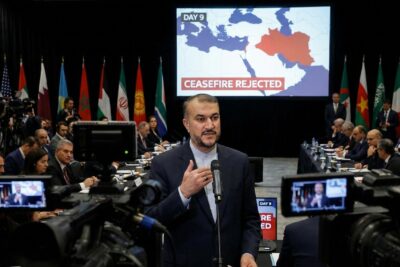
European leaders have called for an immediate ceasefire and a return to diplomatic channels, with French President Emmanuel Macron and German Chancellor Friedrich Merz issuing a joint statement urging restraint from all parties. China, which receives a significant share of its energy imports through the Strait of Hormuz, has maintained a carefully calibrated position, calling for de-escalation while avoiding direct criticism of either side.
The humanitarian situation inside Iran remains opaque. Communication infrastructure in several major cities has been damaged or disrupted by the strikes, making it difficult for international organizations and media outlets to assess conditions on the ground. Reports from Iranian state media, the primary remaining information channel, describe widespread damage to military and civilian infrastructure in Tehran and other major cities.