
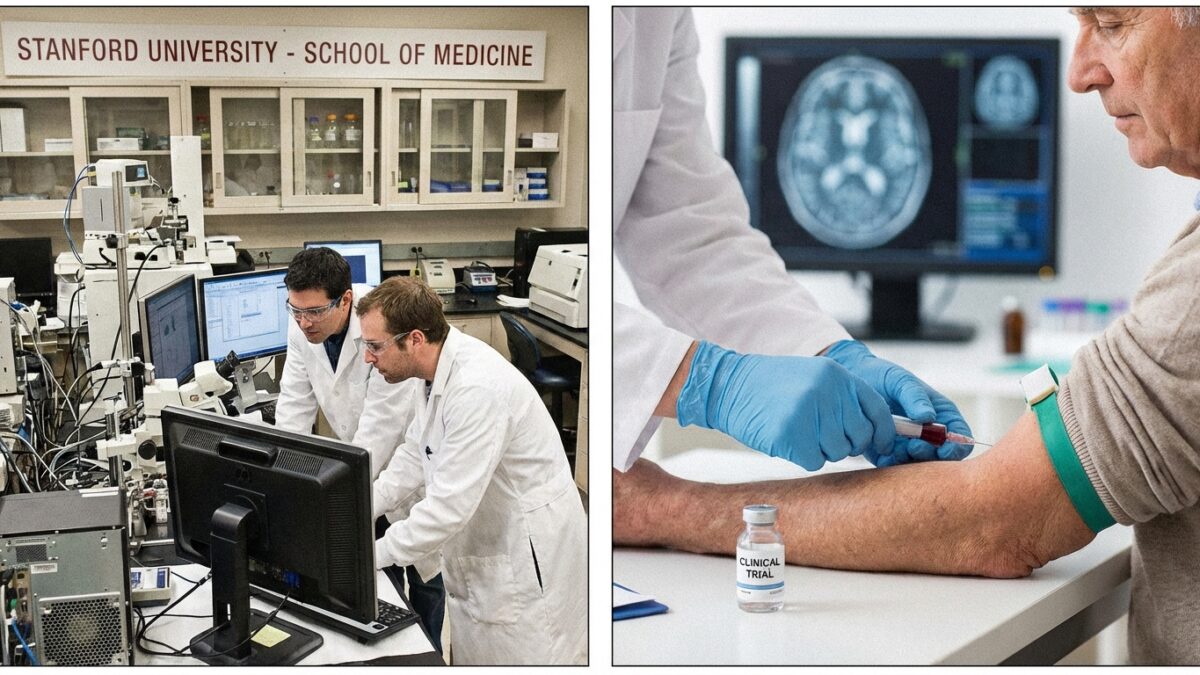
A pair of potentially transformative medical advances are capturing attention in early 2026: a new universal vaccine platform from Stanford Medicine that could one day protect against pathogens ranging from COVID-19 to bacterial pneumonia, and a blood test that can predict the onset of Alzheimer’s disease years before symptoms appear. Together, they represent the kind of preventive medicine breakthroughs that could reshape public health for decades. (Source: ScienceDaily)
A Vaccine to Cover Them All
Scientists at Stanford Medicine have unveiled a novel approach to vaccination that targets the fundamental mechanisms the immune system uses to fight infection, rather than training it against specific pathogens. The research describes a bold new kind of universal vaccine that could theoretically protect against everything from COVID-19 and influenza to bacterial pneumonia and common respiratory infections. (Source: ScienceDaily)
Traditional vaccines teach the body to recognize a single pathogen by exposing it to weakened or modified versions of that specific virus or bacterium. The Stanford approach instead focuses on broadly stimulating the immune response through a platform that can be rapidly adapted as new threats emerge. While still in early stages, the technology could address one of the fundamental limitations of current vaccination strategies: the need to develop, test, and distribute new formulations for each emerging pathogen.
The timing is particularly significant given the U.S. government’s recent reduction of recommended vaccines from 17 to 11 and its withdrawal from the WHO, which has raised concerns about the country’s vulnerability to infectious disease outbreaks. A universal vaccine platform could partially offset these risks by providing broader protection through fewer doses.
Predicting Alzheimer’s Before It Strikes
In a separate advance, researchers have created a blood test that can estimate when Alzheimer’s symptoms are likely to begin by measuring levels of a protein called p-tau217. The model predicts symptom onset within roughly three years of accuracy, offering a window for early intervention that has long eluded clinicians and patients. (Source: ScienceDaily)
Alzheimer’s disease affects approximately 6.9 million Americans and is the seventh leading cause of death in the United States. Current diagnostic methods rely primarily on cognitive testing and expensive brain imaging, often catching the disease only after significant neurological damage has occurred. A simple blood test could revolutionize screening by identifying at-risk individuals years earlier, when emerging therapies have the best chance of slowing disease progression.
The test builds on the recent FDA approvals of anti-amyloid antibody treatments like lecanemab and donanemab, which have shown modest but meaningful ability to slow cognitive decline in early-stage patients. With a reliable predictive blood test, doctors could identify candidates for these treatments well before symptoms manifest, potentially amplifying their effectiveness. (Source: Scientific American)
PFAS and Accelerated Aging
Meanwhile, environmental health researchers have added urgency to the debate over chemical regulation with new findings linking per- and polyfluoroalkyl substances, commonly known as forever chemicals, to accelerated biological aging. The study found that PFAS, which have infiltrated everything from nonstick cookware to food packaging, are present in most Americans and may be speeding up the aging process at a cellular level. (Source: ScienceDaily)
The findings have implications for cancer risk, cardiovascular disease, and immune function, adding to a growing body of evidence that environmental exposures play a significant role in health outcomes that have traditionally been attributed to genetics or lifestyle factors.
Heart Disease Warning for Women
The American Heart Association released stark new projections warning that over 60 percent of U.S. women will have cardiovascular disease by 2050 if current trends continue. The organization called for a fundamental rethinking of how cardiovascular risk is assessed in women, with researchers at Mass General Brigham predicting that 2026 will bring the ability to characterize women’s cardiovascular risk with greater biological precision, particularly around how adverse pregnancy outcomes and menopause alter heart disease pathways. (Source: ScienceDaily; Mass General Brigham)
The Promise and the Peril
These breakthroughs emerge against a complex backdrop for American health policy. Even as laboratory science reaches new heights, public health experts worry that federal budget cuts, agency restructuring, and reduced vaccine recommendations could undermine the infrastructure needed to deliver these advances to patients. The challenge for 2026 and beyond will be ensuring that the fruits of groundbreaking research are not limited to those with the resources to access them.
The Bacterial Kill Switch
In another significant development, researchers announced the discovery of a bacterial kill switch that could transform the fight against antibiotic-resistant superbugs. Drug-resistant bacteria are becoming increasingly difficult to treat, pushing scientists to look for entirely new approaches to antimicrobial therapy. The newly identified mechanism offers a potential target for drugs that could bypass conventional resistance. (Source: ScienceDaily)
The discovery of caffeine-activated CRISPR switches at Texas A&M University represents yet another creative approach. Researchers created a system where cells can be programmed to activate specific genetic programs in response to caffeine, essentially turning a cup of coffee into a trigger for therapeutic gene expression. While still experimental, the approach demonstrates creative possibilities at the intersection of genetic engineering and everyday biochemistry. (Source: ScienceDaily)
Meanwhile, researchers found that restricting two amino acids common in animal protein, methionine and cysteine, caused mice to burn significantly more energy, suggesting dietary interventions that could complement pharmaceutical approaches to metabolic disease. This research linking diet to fundamental metabolic pathways is part of a broader trend toward understanding how lifestyle factors interact with genetic predisposition. (Source: ScienceDaily)