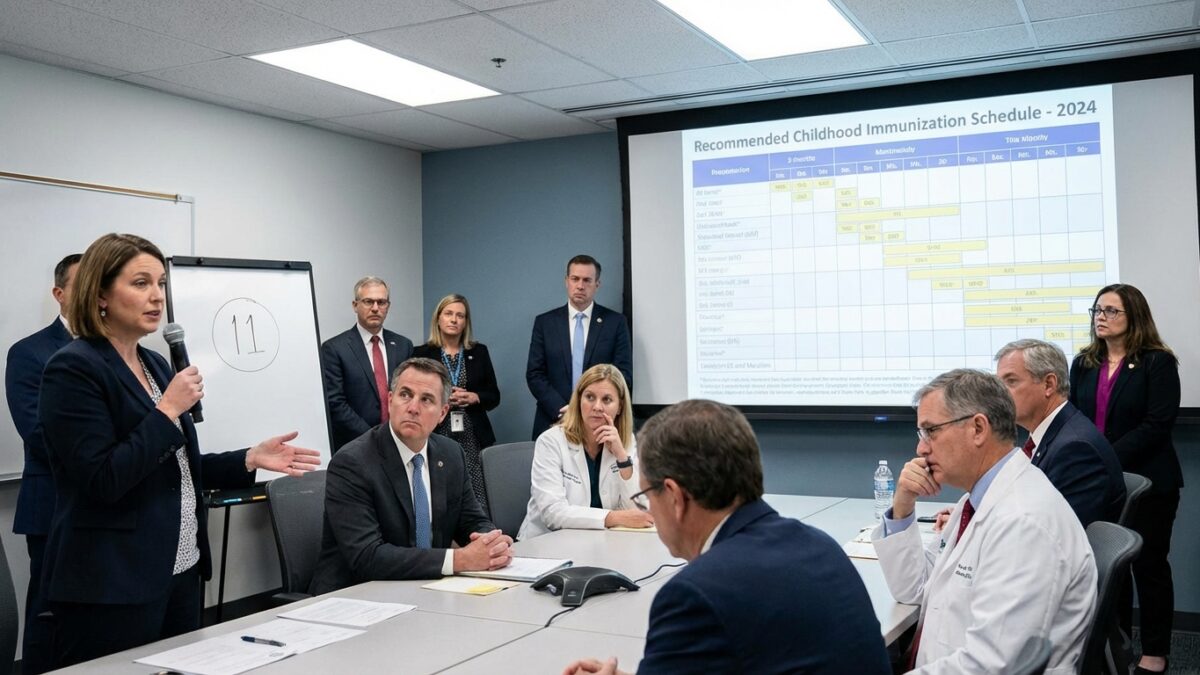
The Trump administration reduced the number of universally recommended childhood vaccines in the United States from 17 to 11 in January 2026, removing hepatitis A, hepatitis B, influenza, meningococcal disease, varicella, and human papillomavirus from the standard schedule while retaining polio, measles, mumps, rubella, diphtheria, and tetanus. The decision, championed by Health and Human Services Secretary Robert F. Kennedy Jr., has drawn sharp criticism from public health experts who warn it could reverse decades of progress against preventable diseases at the worst possible time. (Source: Euronews)
Denmark as a Flawed Model
Administration officials cited Denmark’s 10-vaccine schedule as a template, arguing the United States over-vaccinates children compared to peer nations. However, infectious disease specialists note that vaccine schedules cannot be transplanted between countries with different disease epidemiology, population density, healthcare access, and travel patterns. Denmark’s universal healthcare system provides comprehensive medical surveillance that the fragmented U.S. system cannot replicate, and Denmark’s smaller, more homogeneous population faces different disease risks than the diverse and highly mobile American population. (Source: Euronews)
The American Academy of Pediatrics and the Infectious Diseases Society of America issued a joint statement opposing the changes, noting that each vaccine on the previous schedule was included based on rigorous evidence reviewed by the Advisory Committee on Immunization Practices over decades. Removing hepatitis B vaccination is particularly concerning given that the disease kills nearly 900,000 people globally each year and the U.S. vaccine program had dramatically reduced new infections since its introduction in 1991.
Measles at the Gate
The United States was already at risk of losing its measles-free status as early as January 2026 if infection trends continued. Measles, one of the most contagious viruses known, was declared eliminated in the U.S. in 2000 through sustained vaccination. But rates have fallen in communities influenced by vaccine hesitancy, and outbreaks have grown in frequency and size. While the measles vaccine itself was retained, experts worry that the broader political messaging around vaccine reduction will further erode public confidence in all childhood immunization. (Source: Scientific American)
Research consistently shows that when authorities express skepticism about certain vaccines, compliance with the entire schedule declines. The decision to remove the flu vaccine is particularly concerning given ongoing H5N1 avian influenza outbreaks in U.S. dairy cattle and poultry, which have caused 71 human cases and two deaths since 2024. Seasonal flu vaccination infrastructure serves as the backbone for rapid pandemic response manufacturing. (Source: Scientific American; CDC)
A Dismantled Safety Net
The vaccine changes cap a year of upheaval across U.S. health agencies. The CDC experienced significant restructuring and a communication pause disengaging it from the WHO. The NIH signaled a deemphasis on studying both sexes in clinical research. USAID was shuttered entirely, eliminating $71.9 billion in annual foreign health assistance. The U.S. withdrew from the WHO on January 22, terminating all funding and recalling personnel. (Source: Live Science)
Live Science health editor Nicoletta Lanese warned that decisions to weaken federal infrastructure may bar access to care, with impacts varying by state similar to how abortion access splintered after Roe. For families, professional medical associations continue recommending the previous 17-vaccine schedule as the evidence-based standard, and pediatricians report they will continue offering all vaccines regardless of federal changes, though insurance coverage for removed vaccines remains uncertain. (Source: Live Science)
Professional Medical Response
Pediatricians across the country have reported that they intend to continue offering all previously recommended vaccines regardless of the federal schedule changes, with the American Academy of Pediatrics maintaining the previous 17-vaccine schedule as the evidence-based standard of care. However, insurance coverage questions for the removed vaccines remain unresolved, potentially creating financial barriers for families who want to follow medical rather than political guidance.
The removal of the human papillomavirus vaccine is particularly concerning to oncologists, as HPV vaccination has been shown to dramatically reduce rates of cervical, throat, and other cancers. Australia, which implemented aggressive HPV vaccination programs, is on track to become the first country to effectively eliminate cervical cancer. Removing HPV from the recommended schedule could condemn a generation of Americans to preventable cancers that take decades to manifest, making the full consequences of the decision invisible for years. The broader pattern of health policy changes under the Trump administration, including the dismantling of USAID, the CDC communication pause, and the WHO withdrawal, has created what Georgetown University public health scholars describe as the most significant rollback of public health infrastructure since the creation of the modern public health system in the mid-twentieth century.
The hepatitis B vaccine removal is particularly consequential as the disease kills nearly 900,000 people globally each year. The U.S. program had dramatically reduced new infections since universal childhood vaccination began in 1991. Removing universal vaccination reverses three decades of progress. The HPV vaccine removal alarms oncologists because vaccination has been shown to dramatically reduce cervical, throat, and other cancers. Australia, which implemented aggressive HPV programs, is on track to eliminate cervical cancer entirely. Removing HPV from the schedule could condemn a generation to preventable cancers that take decades to manifest. The meningococcal vaccine removal also concerns infectious disease experts, as the disease can progress from initial symptoms to death within hours, particularly among college-age students in dormitory settings.