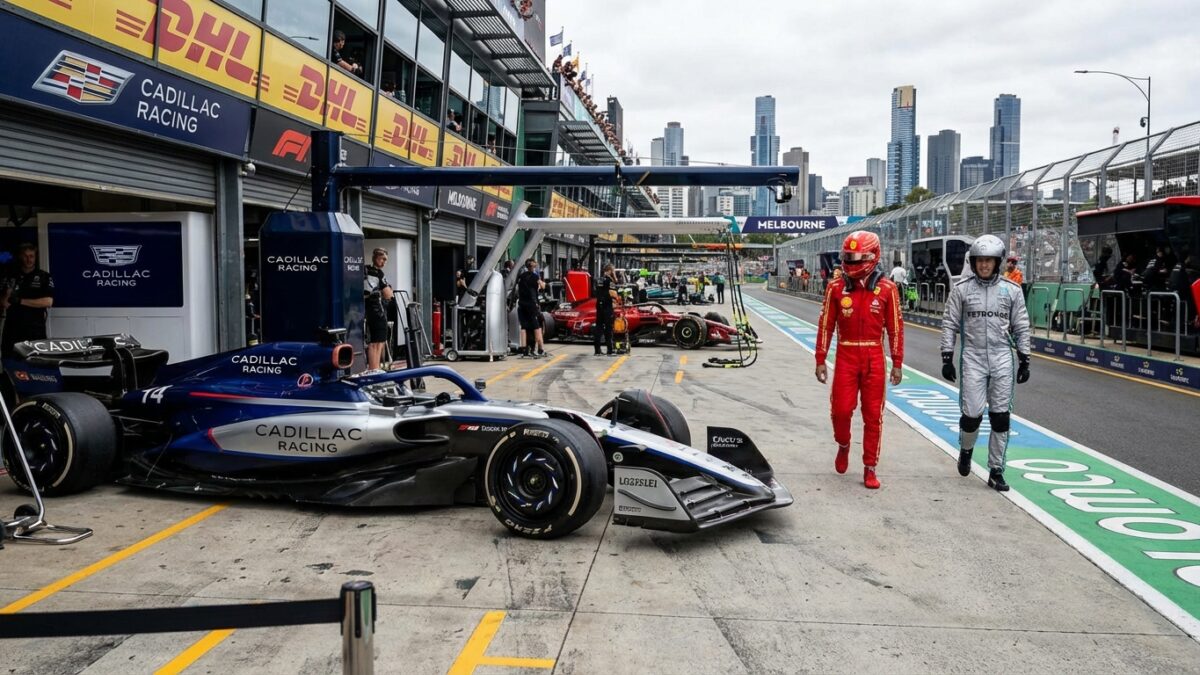
The 2026 Formula One World Championship begins this weekend at Melbourne’s Albert Park Circuit with the most sweeping technical regulations in over a decade, a reshuffled competitive order, and an expanded grid of 11 teams for the first time since 2016. The Australian Grand Prix, scheduled for March 8, marks the debut of Cadillac as a constructor and Audi’s transformation of the former Sauber team, while reigning champion Lando Norris leads McLaren into the new era. (Source: Formula1.com; Wikipedia)
A Technical Revolution
The 2026 regulations represent the most significant overhaul since the ground-effect era began in 2022. New cars feature active aerodynamic elements, revised power units with substantially increased electrical power, and changes to weight and dimensions aimed at improving racing spectacle. Pre-season testing revealed that the rules have genuinely disrupted the hierarchy, with early signs suggesting Mercedes has stolen a march on rivals though Ferrari, Red Bull, and McLaren all appear competitive. ESPN noted this could produce the craziest F1 start ever given how closely matched the front-runners appear. (Source: ESPN)
Cadillac and Audi Arrive
Cadillac’s entry represents the first new constructor team since Haas in 2016 and reflects Formula 1’s surging American popularity driven by Netflix’s Drive to Survive and races in Las Vegas and Miami. General Motors’ commitment signals the strongest manufacturer participation in over a decade, joining Mercedes, Ferrari, McLaren, Aston Martin, Alpine, and Audi. Arvid Lindblad makes his full-time debut with Racing Bulls, representing the next generation of talent. Pirelli brings its three softest compounds for the traditionally slippery Albert Park surface. (Source: Wikipedia; Formula1.com)
Hamilton’s Ferrari Era Begins
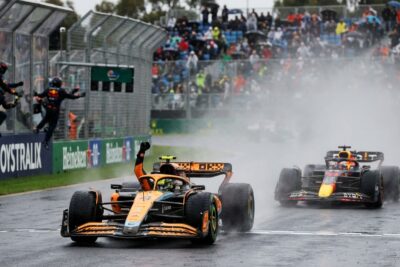
The most dramatic driver move saw Lewis Hamilton join Ferrari alongside Charles Leclerc after 12 seasons at Mercedes, forming arguably the strongest pairing on the grid. His departure created a vacancy filled by rookie Kimi Antonelli alongside George Russell. Red Bull retains Max Verstappen, the four-time champion seeking an unprecedented fifth consecutive title. Free Practice begins Friday, March 6, with the Grand Prix at 3:00 PM Sunday. The forecast suggests temperatures between 15 and 24 degrees Celsius with potential Saturday showers, echoing last year’s rain-affected race won by Norris in chaotic conditions. (Source: ESPN; Formula1.com)
Both Formula 2 and Formula 3 launch their seasons alongside the main event. The FIA has implemented updated scrutineering procedures for active aerodynamic components. With 24 races scheduled, Melbourne sets the narrative for a championship that could be the most unpredictable in years. Teams that nail a regulation change from the outset can build advantages lasting multiple seasons, making this opening race disproportionately important for the entire campaign ahead. (Source: Formula1.com)
The Driver Market Reshuffle
Beyond Hamilton’s move, the 2026 grid features several notable changes. Cadillac’s driver lineup brings fresh faces to the paddock, while Audi’s transformation of the Sauber operation introduces new management and engineering leadership alongside its drivers. The rookie class of 2026, headlined by Lindblad at Racing Bulls and Antonelli at Mercedes, represents one of the strongest cohorts of young talent in recent memory, each bringing victories from junior formulae and considerable expectations.
The competitive uncertainty is genuine. During pre-season testing at Bahrain and Barcelona, lap times fluctuated wildly as teams experimented with the active aerodynamic systems. Mercedes appeared particularly strong, leading some to speculate that the Brackley team has found an advantage in the new power unit regulations where electrical energy plays a much larger role. However, testing performance is notoriously unreliable as a predictor of race pace, with teams running different fuel loads, tire compounds, and engine modes. The truth will only emerge when the lights go out on Sunday afternoon in Melbourne. For the 22 drivers on the grid and the hundreds of engineers behind them, the 2026 Australian Grand Prix represents the culmination of years of development work and the beginning of a new chapter in Formula 1 history. The sport has never been more popular globally, with record television audiences, sold-out races, and an expanding calendar that takes the championship to every inhabited continent.
The commercial and broadcasting dimensions of F1’s new era are equally significant. Apple TV’s new F1 channel reflects the sport’s extraordinary American growth. Netflix’s Drive to Survive attracted millions of new fans globally. Las Vegas and Miami alongside the traditional Australian opener create unprecedented North American presence. For engineering teams, the 2026 regulations present both risk and opportunity. Active aerodynamic elements require sophisticated real-time control systems. The increased electrical power unit component means energy management strategy during races becomes even more complex. History shows teams that nail regulation changes build advantages lasting multiple seasons, making Melbourne disproportionately important for the entire championship trajectory. With 22 drivers on the grid backed by hundreds of engineers, the 2026 Australian Grand Prix represents the culmination of years of development and the beginning of a new chapter. The sport has never been more popular globally with record audiences and sold-out races.
The FIA has introduced sustainability requirements including biofuel mandates that reduce carbon footprint. Increased electrical energy means battery technology and energy recovery have become as important as engine development. The convergence of motorsport and road-car technology has never been more direct, with cooling systems, battery management, and power electronics translating to consumer vehicles. For fans watching from Albert Park this weekend, the cars will sound different, look different, and race differently than anything in F1’s 75-year history.