
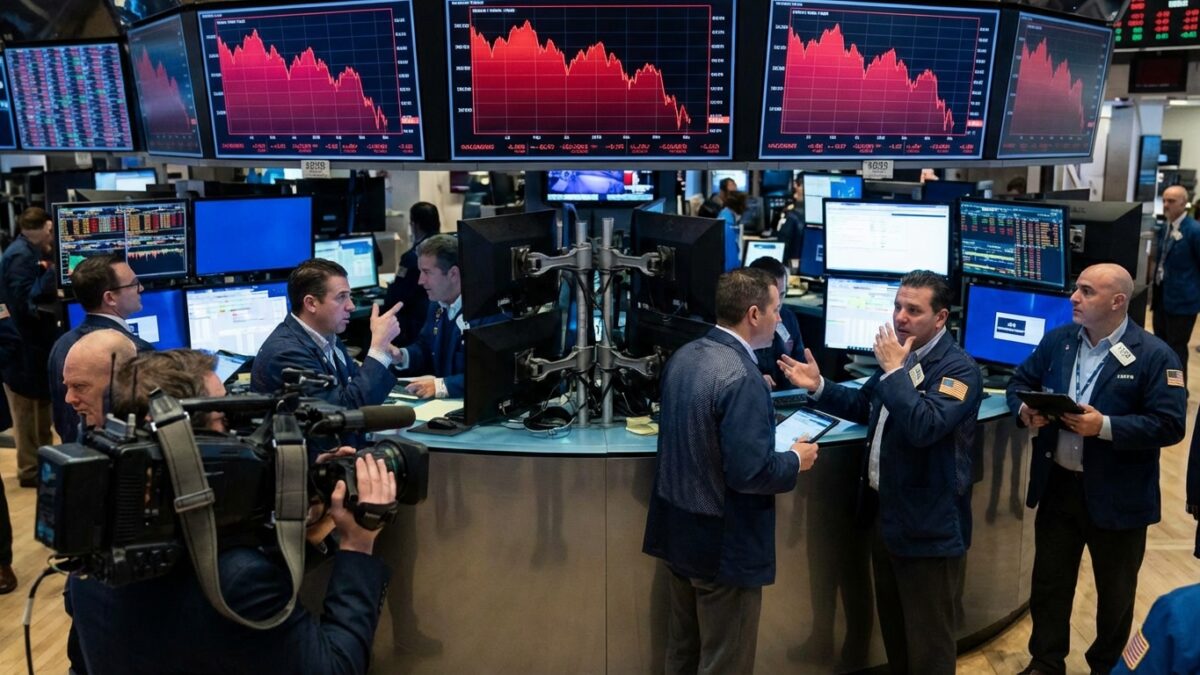
The Biden-era framework governing artificial intelligence chip exports may be tightened further under the Trump administration, with Bloomberg reporting on March 5 that the U.S. is considering requiring permits for AI chip sales that are currently allowed under existing rules. The report sent semiconductor stocks sliding, with the VanEck Semiconductor ETF dropping more than 3 percent intraday before recovering to close with a 1 percent decline, and raised fresh questions about the balance between national security and commercial competitiveness in the AI hardware market. (Source: Bloomberg; TheStreet)
The Current Framework
The existing export control regime, implemented through a series of Commerce Department rules beginning in October 2022, restricts the sale of the most advanced AI chips to China and a handful of other countries. Nvidia’s most powerful data center GPUs, including the H100 and its successors, are subject to these restrictions. However, modified versions with reduced capabilities, such as the H20, have been permitted for sale to Chinese customers under current rules. The proposed permit requirement would add a layer of bureaucratic oversight to sales that are currently approved by default. (Source: Bloomberg)
The timing of the report is significant. It comes amid the Iran conflict, which has heightened national security concerns across government, and alongside OpenAI’s record $110 billion funding round that underscores the enormous capital flowing into AI infrastructure. Nvidia, which invested $30 billion in OpenAI’s latest round, has a direct commercial stake in maintaining the broadest possible market for its chips. (Source: CNBC; Bloomberg)
Market Impact
The semiconductor sector’s sensitivity to export control news reflects the outsized importance of international sales to chip company revenues. Nvidia derives a significant portion of its data center revenue from customers outside the United States, and any restriction that limits market access directly affects the company’s growth trajectory. The iShares MSCI South Korea ETF fell 6.4 percent on March 5, threatening Korean equities heavily concentrated in memory makers Samsung and SK Hynix. The iShares MSCI Japan ETF dropped 3 percent, while Taiwan’s semiconductor-heavy index fell 1.7 percent. (Source: TheStreet)
The potential restrictions come at an already challenging moment for the semiconductor industry. IDC projects the global smartphone market will decline 13 percent in 2026 as AI data centers cannibalize memory chip supply, creating a structural tension between the AI infrastructure buildout that drives chip demand and the consumer electronics market that traditionally sustained the industry. Any additional regulatory burden on chip sales could exacerbate this tension by limiting the markets available to chipmakers seeking to recoup massive capital investments in new fabrication capacity.
Strategic Considerations
Proponents of stricter controls argue that AI capabilities are increasingly dual-use, with applications spanning military intelligence, autonomous weapons systems, and cybersecurity operations that have direct national security implications. The rapid improvement of Chinese AI models, with five new frontier-class systems released in March alone, has intensified concerns that technology transfer through commercial chip sales is accelerating China’s AI capabilities despite existing restrictions. (Source: Bloomberg)
Critics counter that overly restrictive export controls push international customers toward Chinese-made alternatives, including Huawei’s Ascend AI chips, which have improved rapidly under the pressure of U.S. restrictions. They argue that the U.S. semiconductor industry’s global leadership depends on the revenue from international sales that fund the research and development needed to stay ahead. For the administration, the challenge is calibrating restrictions tight enough to slow Chinese AI development without destroying the commercial viability of the American chip industry that makes that development possible. (Source: Bloomberg; TheStreet)
The broader implications for the semiconductor industry extend to national security assessments of AI capability distribution. Chinese AI labs have adapted to existing restrictions by developing more efficient model architectures that achieve competitive performance with less powerful hardware. Paradoxically, tighter U.S. restrictions could further accelerate this efficiency innovation by forcing Chinese developers to extract maximum performance from available chips. The five new frontier-class AI models released by Chinese companies in March alone demonstrate that existing controls have not prevented rapid capability advancement, raising questions about the marginal benefit of additional restrictions. (Source: MIT Technology Review; Bloomberg)
For the global technology industry, the proposed permits represent the latest front in a semiconductor trade war that has been escalating since 2022. The cumulative effect of export controls, entity list designations, and technology restrictions has fragmented the once-unified global semiconductor supply chain into competing ecosystems. Companies that previously sold to any customer worldwide now navigate a complex web of regulations that differ by country, chip type, and end-use application. The compliance burden falls disproportionately on smaller companies that lack the legal and regulatory resources of giants like Nvidia and Intel, potentially consolidating market power among the largest players. (Source: Bloomberg; TheStreet)
The geopolitical timing of the proposed restrictions adds complexity. With the Iran war disrupting global supply chains and energy markets, any additional regulatory friction in the technology sector risks compounding economic instability. Semiconductor stocks are particularly sensitive to export control news because international sales represent a substantial portion of revenue for major chipmakers, and any restriction that limits market access directly impacts growth trajectories and investment returns. (Source: Bloomberg; TheStreet)