
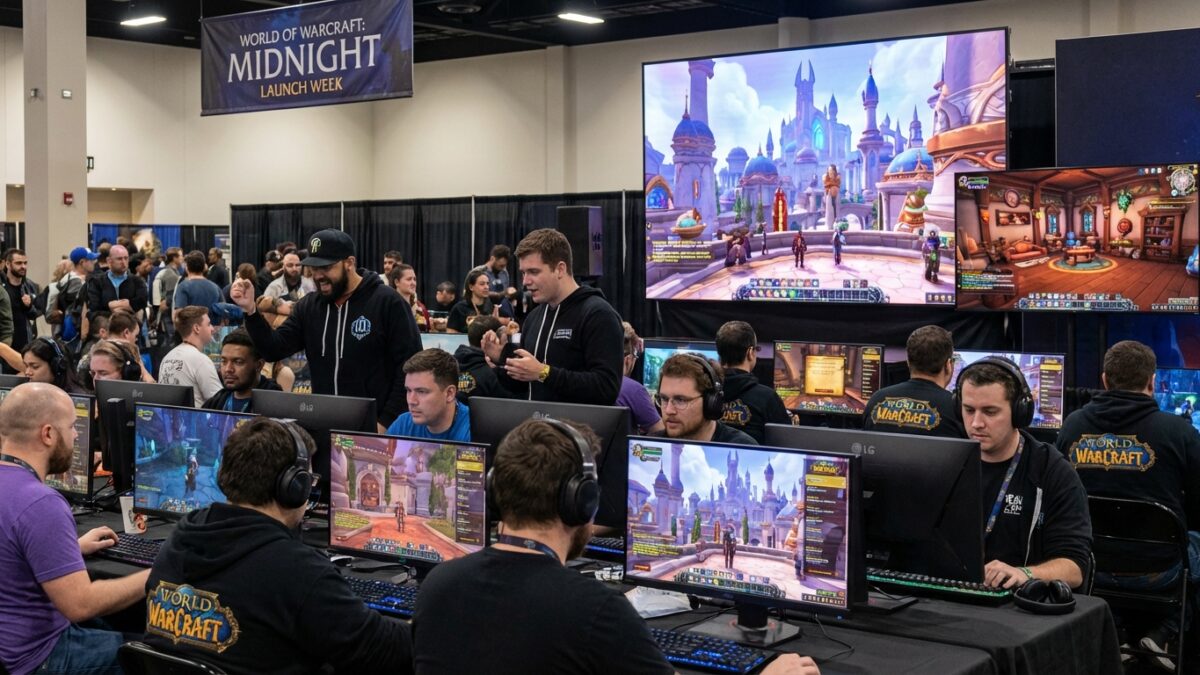
World of Warcraft’s eleventh expansion, Midnight, launched on March 2 to enthusiastic reception from the game’s dedicated community, with Blizzard Entertainment reporting significant player engagement metrics in the first week that suggest the expansion may be among the most successful in the MMO’s 20-year history. The expansion, which returns players to the iconic elven kingdom of Quel’Thalas to battle a massive Void invasion, introduces the long-awaited player housing system alongside major progression updates and refreshed onboarding for new players. (Source: GameSpot; DLCompare)
The Quel’Thalas Return
Quel’Thalas holds a special place in World of Warcraft’s history as the homeland of the Blood Elves, one of the game’s most popular playable races, and as a region that has been essentially frozen in time since the Burning Crusade expansion in 2007. The expansion reimagines the zone with modern graphical technology, expanded geography, and a narrative centered on the Void’s corruption of the Sunwell, the magical font that sustains Blood Elf civilization. Players must forge an unlikely alliance with former enemies to push back the invasion. (Source: GameSpot)
The storytelling represents the middle chapter of the Worldsoul Saga trilogy that began with The War Within in 2024. Blizzard’s narrative team has woven threads from nearly two decades of World of Warcraft lore into a cohesive storyline that rewards long-term players while remaining accessible to newcomers through improved quest guidance and contextual lore delivery systems.
Player Housing at Last
The introduction of player housing, one of the most requested features in World of Warcraft’s history, represents a significant shift in the game’s design philosophy. Players can now claim and customize personal spaces within Quel’Thalas, decorating them with furniture, trophies, and cosmetic items earned through gameplay. The housing system integrates with the game’s crafting professions and achievement systems, providing both creative expression and gameplay incentives.
Early reception of the housing system has been positive, with players praising the breadth of customization options and the integration with existing game systems. Community content creators have generated viral builds that have driven additional interest in the expansion, demonstrating the user-generated content potential that housing systems bring to MMOs. (Source: GameSpot)
Competition and Context
Midnight launched into one of the most competitive gaming months in years, competing directly with Bungie’s Marathon, Slay the Spire 2, and numerous other major releases. The strength of its first-week performance despite this competition suggests that World of Warcraft’s core audience remains dedicated and that lapsed players are returning in significant numbers. The subscription-based MMO model, which many industry observers had written off in favor of free-to-play alternatives, continues to demonstrate viability when supported by compelling content. (Source: DLCompare; GameSpot)
For Blizzard, the expansion’s success validates the Worldsoul Saga’s ambitious three-expansion arc and provides commercial evidence that investment in World of Warcraft’s continued development generates meaningful returns. As the game approaches its 22nd anniversary in 2026, Midnight demonstrates that a well-maintained MMO with a passionate community can continue to evolve and attract players across decades, a longevity that few entertainment products in any medium have matched. (Source: GameSpot)
The decision to introduce player housing reflects Blizzard’s willingness to learn from competitors. Games like Final Fantasy XIV and Elder Scrolls Online have demonstrated that housing systems drive engagement and provide creative outlets that keep players subscribed between major content releases. World of Warcraft’s late entry into housing means the system benefits from observing what worked and what failed in other implementations, and early community feedback suggests that Blizzard’s approach, which ties housing to progression and achievement systems, adds gameplay depth that purely cosmetic housing in other games lacks. (Source: GameSpot; DLCompare)
The refreshed onboarding systems deserve particular attention. World of Warcraft’s 20 years of accumulated complexity had made the game increasingly intimidating for new players, creating a barrier that threatened long-term population health. Midnight’s redesigned new-player experience guides newcomers through essential mechanics while contextualizing them within the expansion’s narrative, creating a coherent entry point that did not exist in previous expansions. The combination of compelling new content for veterans and improved accessibility for newcomers positions Midnight as potentially the most effective recruitment tool the game has had in years. (Source: GameSpot)
The subscription revenue model that WoW relies on creates a direct financial incentive for Blizzard to invest in content quality and regularity. Unlike free-to-play games that depend on microtransaction revenue, subscription games must consistently deliver enough value to justify their monthly fee, creating a quality floor that benefits players. Midnight’s strong opening week suggests that when this value proposition is clearly communicated through compelling content, players are willing to maintain their subscriptions and even return after extended absences, providing Blizzard with the revenue stability to plan long-term content development. (Source: GameSpot; DLCompare)
The broader MMO market context adds significance to Midnight’s performance. With several major MMOs releasing expansions or new content in early 2026, the genre as a whole is experiencing renewed energy after years of concern about its relevance in an era of shorter-form gaming experiences. World of Warcraft’s continued success alongside strong performances from Final Fantasy XIV and Guild Wars 2 demonstrates that the MMO format remains commercially viable and creatively fertile when developers invest in meaningful content and community engagement.