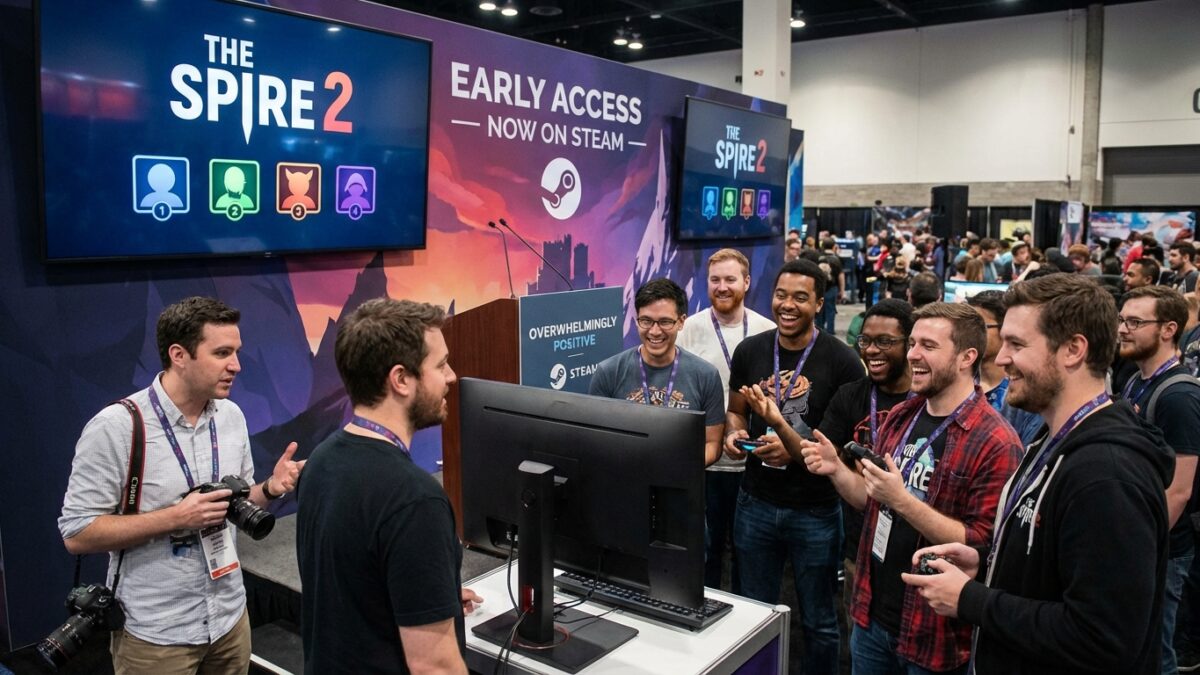
Slay the Spire 2, the sequel to one of the most influential indie games of the past decade, entered Steam Early Access in March 2026 with a headline feature that was absent from the original: cooperative multiplayer for up to four players. Developer Mega Crit’s decision to build co-op into the foundation of the sequel represents a significant creative gamble, transforming a solitary deckbuilding roguelike into a social experience with multiplayer-specific cards and powerful team synergies. Early player reception has been overwhelmingly positive, with the game immediately climbing Steam’s charts. (Source: GameSpot)
The Original’s Legacy
The first Slay the Spire, released in 2019, is widely credited with establishing the deckbuilding roguelike as a mainstream genre. Its elegant fusion of card game strategy with roguelike procedural generation inspired dozens of successors, from Monster Train to Inscryption to Balatro, each building on the design language that Mega Crit pioneered. The original sold millions of copies and remained a fixture on Steam’s most-played lists years after release, creating enormous expectations for the sequel. (Source: GameSpot)
The decision to introduce co-op multiplayer was both the sequel’s most anticipated and most scrutinized design choice. Deckbuilding games are inherently strategic, requiring careful hand management and long-term planning that can be disrupted by the unpredictability of other players’ actions. Mega Crit addressed this by creating multiplayer-specific card types that reward coordination, allowing players to buff allies, share resources, and execute combos that are impossible in solo play.
Early Access Reception
Steam reviews in the first days of Early Access have been overwhelmingly positive, with players praising the co-op implementation, the visual upgrade from the original’s simple aesthetic, and the depth of new card interactions. The Early Access build includes a significant amount of content, though Mega Crit has outlined plans for additional characters, cards, events, and balance refinements throughout the development period.
The game’s success in Early Access continues a trend of deckbuilding roguelikes performing well commercially while contributing innovations that influence game design broadly. The genre’s appeal lies in its accessibility combined with extreme strategic depth, offering sessions that can be completed in 30 to 60 minutes while providing thousands of hours of meaningful variety through procedural generation and different character builds.
The March Competition
Slay the Spire 2’s launch into March 2026’s crowded release calendar has not appeared to hurt its performance. The game’s audience, primarily PC strategy enthusiasts, overlaps only partially with the audiences for Marathon, WoW: Midnight, and the month’s console-focused releases. This suggests that the gaming market, while competitive, is not zero-sum across genres, with different types of players seeking different experiences and willing to invest in multiple purchases when quality is evident. (Source: GameSpot; DLCompare)
For Mega Crit, the Early Access period represents an opportunity to refine the game through direct player feedback before committing to a full 1.0 release. The studio’s transparent development approach, including regular updates, balance patches, and community engagement, mirrors the process that made the original Slay the Spire a beloved classic. If the sequel can match its predecessor’s combination of strategic depth, addictive gameplay loops, and community-driven refinement, it stands to define the next evolution of a genre it helped create. (Source: GameSpot)
The co-op implementation required fundamental rethinking of game balance. In single-player Slay the Spire, every decision involves trading off immediate power against long-term flexibility. In multiplayer, these calculations multiply as players must coordinate not just their own hands but the timing of buffs, heals, and defensive abilities across the team. Mega Crit designed multiplayer-specific card types that create interdependencies between players, rewarding communication and coordination with combo effects that are impossible to achieve alone. The result is a cooperative experience that feels genuinely different from solo play rather than simply layering multiplayer onto an existing single-player framework. (Source: GameSpot)
The Early Access model is well-suited to the iterative refinement that deckbuilding games require. Card balance in a game with hundreds of potential interactions is extraordinarily complex, and the original Slay the Spire benefited enormously from years of community feedback that identified overpowered combinations, underperforming archetypes, and design opportunities the developers had not anticipated. Mega Crit has committed to regular balance patches, new content additions, and transparent communication about development priorities throughout the Early Access period, following the playbook that made the original game not just commercially successful but genuinely beloved by its community. (Source: GameSpot)
The visual upgrade from the original’s simple, almost minimalist aesthetic to Slay the Spire 2’s richer presentation has been widely praised. Card effects, combat animations, and environmental details create a more immersive experience while maintaining the readability that is essential for strategic gameplay. The developers have stated that visual clarity will always take priority over graphical spectacle, ensuring that the game’s strategic depth is not obscured by unnecessary visual complexity. The commitment to functional design over flashy presentation reflects the same design philosophy that made the original a classic and suggests that Slay the Spire 2 is being built with competitive play in mind from the foundation up. (Source: GameSpot)