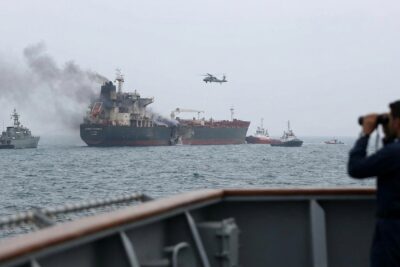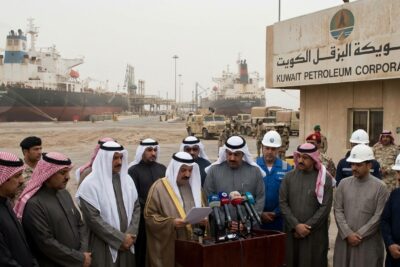
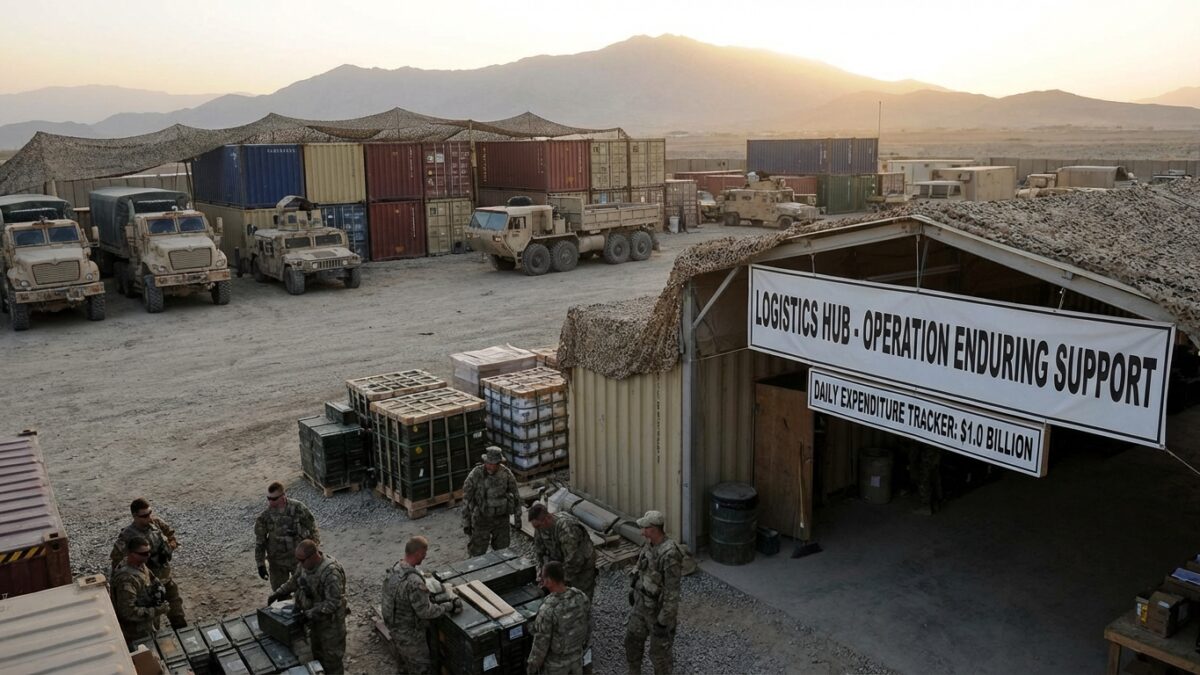
The U.S. military campaign against Iran is costing approximately $1 billion per day according to congressional officials, with the Center for Strategic and International Studies estimating the first 100 hours alone cost $3.7 billion and the Center for American Progress putting the four-day figure at $5 billion. The staggering expenditure encompasses munitions, fuel, force deployment, operational costs, and the logistical complexity of sustaining combat operations thousands of miles from American shores, raising urgent questions about how long the United States can maintain this pace of spending without supplemental congressional appropriations. (Source: NBC News; CSIS)
Where the Money Goes
The cost breakdown reflects the extraordinary scale of the military operation. Precision-guided munitions, including Tomahawk cruise missiles that cost approximately $2 million each, have been fired in the thousands. The operational cost of keeping multiple carrier strike groups deployed in the Arabian Sea, Indian Ocean, and Mediterranean exceeds hundreds of millions per day in fuel, maintenance, and personnel costs. The U.S. Air Force has deployed B-2 Spirit stealth bombers from bases in the continental United States and Diego Garcia, with each sortie costing millions in fuel and maintenance for aircraft that have logged thousands of miles of round-trip flights. (Source: CSIS; NBC News)
Defense Secretary Pete Hegseth confirmed the U.S. military is using a number of new capabilities in the campaign, suggesting advanced weapons systems with development costs that will eventually need to be replenished. The Pentagon has not disclosed the full range of assets deployed, but public reports indicate at least two carrier strike groups, multiple guided-missile destroyers, at least one attack submarine confirmed to have sunk an Iranian warship, strategic bomber squadrons, and extensive intelligence and surveillance platforms. (Source: CNN; LiveNOW from FOX)
Munitions Depletion
One of the most pressing concerns among defense analysts is the rate of munitions consumption. The U.S. military entered the conflict with munitions stockpiles that were already strained by transfers to Ukraine and the need to replenish inventories drawn down during earlier Middle Eastern operations. The industrial base for producing precision-guided weapons operates on multi-year production timelines, meaning weapons expended in the Iran campaign cannot be quickly replaced. If the conflict continues for the weeks that Trump has suggested, the U.S. could face a significant gap between munitions consumed and manufacturing capacity to replace them.
Israel has carried out 2,500 strikes using more than 6,000 weapons, according to its military chief, adding a separate but related drain on shared Western munitions supply chains. The combined U.S.-Israeli consumption of air-launched and sea-launched precision weapons in less than two weeks represents one of the most intensive expenditure rates since the opening days of the 2003 Iraq invasion.
Congressional Funding Questions
The current military operations are being funded through existing defense appropriations and presidential emergency authorities, but these mechanisms have limits. Congressional budget experts estimate that the Department of Defense’s current-year budget cannot absorb sustained $1 billion-per-day costs without a supplemental appropriation from Congress. Given that both chambers rejected war powers resolutions that would have required Trump to seek authorization, the political dynamics for a supplemental spending bill are complex but increasingly necessary. (Source: NBC News; CNBC)
The financial burden arrives at a moment when the federal budget is already under pressure from tax cut extensions, entitlement spending growth, and elevated interest payments on the national debt. The Congressional Budget Office had projected a $1.9 trillion deficit for fiscal year 2026 before the Iran conflict began. Adding tens of billions in unplanned military spending further strains an already challenging fiscal picture and could accelerate calls for spending cuts in other areas.
Broader Economic Impact
The war’s fiscal cost extends beyond direct military spending. Economic disruption from elevated oil prices, disrupted trade routes, and market volatility reduces tax revenue while increasing government costs for programs indexed to inflation. The Federal Reserve’s inability to cut interest rates due to energy-driven inflation keeps the cost of servicing the national debt elevated. The combination creates a fiscal vise that constrains policymakers’ options for responding to an economic slowdown that the war itself may be causing. For taxpayers, the Iran war’s price tag adds to a generational pattern of Middle Eastern military expenditure that, according to Brown University’s Costs of War Project, has already totaled over $8 trillion since September 11, 2001.
The munitions depletion concern is not merely theoretical. During the 2011 Libya campaign, far smaller in scope, European NATO allies exhausted precision-guided munitions within weeks. The Iran campaign’s consumption rate far exceeds Libya’s, and U.S. stockpiles were already under pressure from transfers to Ukraine. Defense industry production lines for key weapons operate on multi-year timelines that cannot be quickly accelerated.
The CBO had projected a $1.9 trillion deficit for fiscal year 2026 before the conflict. Adding tens of billions in unplanned military spending creates a fiscal trajectory that would have been crisis-level in any previous era. For the American taxpayer, the Iran war adds to a generational pattern of Middle Eastern military expenditure that Brown University’s Costs of War Project estimates has exceeded $8 trillion since September 11, 2001. (Source: CSIS; CBO)