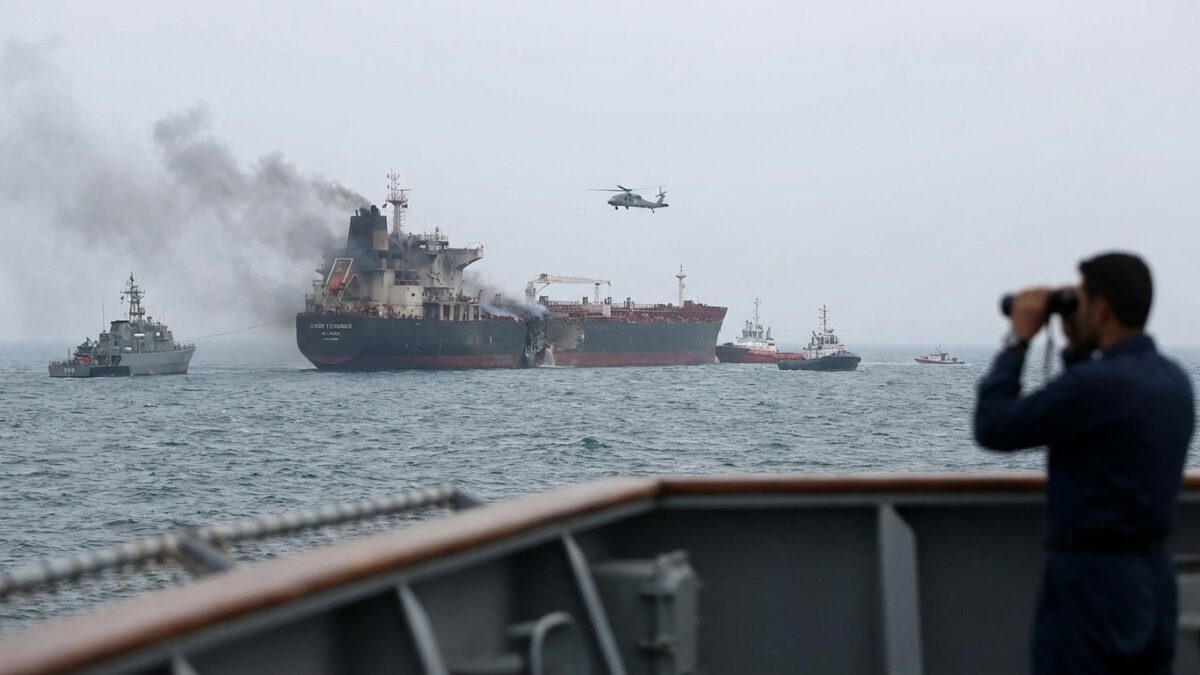
Brent crude oil surged past $85 per barrel on March 5 after Iran struck an oil tanker with a missile in the Strait of Hormuz, marking the sharpest weekly price increase since Russia’s invasion of Ukraine in 2022 and deepening fears of a prolonged energy supply crisis. West Texas Intermediate crude settled above $81 per barrel, up more than 8 percent on the day, as the tanker attack demonstrated Iran’s willingness to target commercial shipping directly. The oil price surge pushed total gains since the war began to roughly 25 percent, threatening to unravel years of progress on energy affordability. (Source: CNBC; TheStreet)
The Tanker Attack
The missile strike on a commercial oil tanker represented a qualitative escalation from Iran’s earlier threats to close the Strait of Hormuz. While the strait had been effectively blocked by insurance withdrawals and shipping company decisions to halt or divert vessels, the direct targeting of a tanker demonstrated that physical danger existed for any vessel attempting transit. The attack raises the threshold for resuming normal shipping operations even after a potential ceasefire, as marine insurers will require sustained evidence of safety before restoring commercially viable coverage. (Source: CNBC; Kpler)
The insurance-driven dimension of the blockade makes it fundamentally different from previous Strait of Hormuz crises. Even if military activity ceased immediately, the resumption of commercial traffic would require weeks of demonstrated safety, meaning the supply disruption could outlast the conflict itself. Marine insurers have either withdrawn coverage entirely or imposed premiums that make transit economically unviable for tanker operators.
Global Market Impact
The oil surge triggered cascading sell-offs across equity markets. The Dow Jones Industrial Average fell 785 points, with 24 of its 30 components declining. Caterpillar dropped 4.1 percent, Goldman Sachs fell 3.9 percent, and GE Aerospace lost 3.4 percent as investors priced in supply chain disruptions and margin compression from elevated energy costs. The S&P 500 and Dow both turned negative for 2026, erasing all gains from the year’s first two months. (Source: CNBC; TheStreet)
Energy was the only S&P sector to finish in the green, with Exxon Mobil rising 2.2 percent. Defense contractors Northrop Grumman and Lockheed Martin also gained. The bifurcation between energy winners and industrial losers reflects a market pricing in prolonged disruption rather than a quick resolution. The CBOE Volatility Index, Wall Street’s fear gauge, spiked nearly 30 percent. (Source: CNBC; Bloomberg)
Consumer Price Impact
Gasoline prices have jumped more than 20 cents since the conflict began, with the national average surpassing $3.20 per gallon. GasBuddy analyst Patrick De Haan warned that prices could reach $4.00 per gallon by summer if the Strait remains closed. The American Automobile Association reported the largest single-day price increase since Russia’s 2022 Ukraine invasion. Goldman Sachs’ head of oil research estimated that current prices implied the market expected approximately four weeks of disruption, but warned that if the conflict extends further, oil could surge into triple-digit territory as forced demand destruction becomes necessary to rebalance supply. (Source: NBC News; Fortune)
For the global economy, the oil shock arrives at the worst possible moment. Central banks had been cautiously considering rate cuts to support moderating growth, but energy-driven inflation may force them to hold or even raise rates, creating the worst-case scenario of simultaneous high inflation and slowing growth that economists call stagflation. The 10-year Treasury yield surged toward 4.5 percent as bond markets repriced inflation expectations. For consumers already stretched by elevated food prices and high housing costs, the gasoline price surge represents a direct and immediate reduction in purchasing power that could tip the economy from slowdown into contraction.
The semiconductor sector took collateral damage, with the VanEck Semiconductor ETF dropping more than 3 percent after Bloomberg reported the administration was considering new AI chip export permits. The iShares MSCI South Korea ETF plunged 6.4 percent. The convergence of geopolitical risk, energy spikes, and potential technology regulatory restrictions created a multi-front challenge for investors. (Source: TheStreet; Bloomberg)
The combination of factors economists call stagflation, simultaneous inflation and stagnation, has not been seen at this intensity since the 1970s oil shocks. The Federal Reserve faces the impossible choice between holding rates to combat inflation and cutting to support a slowing economy. The 10-year Treasury yield’s surge toward 4.5 percent reflects bond market fears that inflation will persist regardless of Fed action. For consumers already stretched by food and housing costs, the gasoline surge represents a direct reduction in purchasing power that could tip the economy from slowdown into contraction. (Source: Bloomberg; CNBC)
Natural gas markets face parallel disruption. QatarEnergy halted LNG production as the conflict threatened its shipping routes, sending European natural gas prices surging over 20 percent. The U.S., now the world’s largest LNG exporter, sees its companies benefit from higher international prices, but domestic electricity costs also face upward pressure. The interconnection of oil and gas markets means the energy shock touches every corner of the global economy, from industrial manufacturing in Germany to power generation in Japan to heating costs for American households heading into the spring shoulder season when stockpiles are typically rebuilt for the following winter.