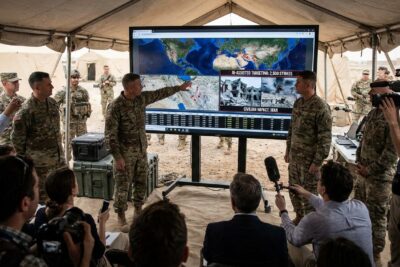
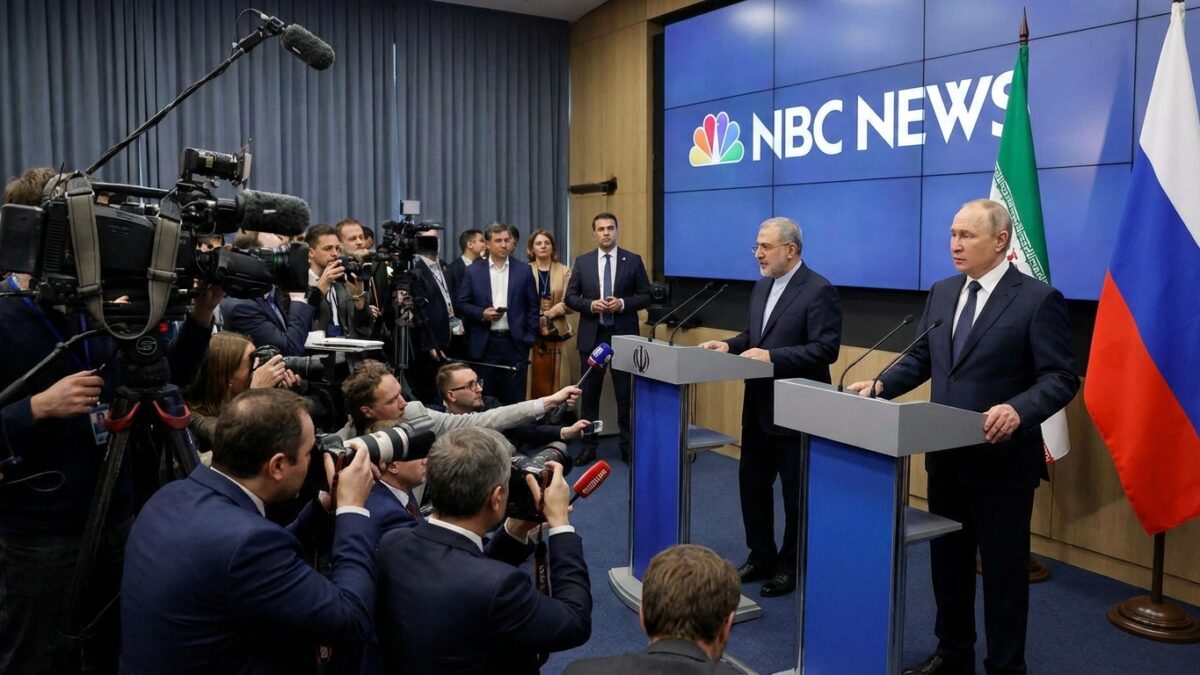
Russia is providing intelligence to Iran on the location of U.S. military assets in the Middle East region, four sources told NBC News, in a revelation that dramatically expands the geopolitical dimensions of the Iran conflict and raises the prospect of a proxy confrontation between the world’s two largest nuclear powers. Iran’s Foreign Minister Abbas Araghchi confirmed on NBC News’ Meet the Press on March 8 that Russia was helping Iran in many different directions, though he declined to specify the nature of the assistance. (Source: NBC News)
The Intelligence Pipeline
The specific nature of the intelligence sharing has not been publicly disclosed, but the implication that Russia is providing real-time or near-real-time information about the positioning of U.S. naval vessels, aircraft, and ground forces would represent a significant escalation. Such information could enable more targeted Iranian strikes against American military assets, potentially increasing the risk to U.S. service members already operating in a hostile environment. Six Americans have been killed since the conflict began, all in an Iranian missile strike on a base in Kuwait. (Source: NBC News; LiveNOW from FOX)
Russia maintains extensive surveillance capabilities including satellite reconnaissance, signals intelligence, and radar systems that can track military movements across the Middle East. The country also has military personnel and intelligence assets deployed in Syria, providing ground-level observation of U.S. operations in the eastern Mediterranean and Levant. Sharing this intelligence with Iran would not require new infrastructure, merely the political decision to do so, a decision that the current geopolitical alignment between Moscow and Tehran makes plausible.
Russia-Iran Strategic Alignment
The intelligence-sharing revelation comes against the backdrop of deepening Russia-Iran strategic cooperation. Russia has provided military equipment to Iran in recent years, including air defense systems. Iran has supplied Russia with Shahed drones used in the Ukraine war. The two countries have coordinated energy policy through OPEC+ and maintained diplomatic alignment against Western interests in multiple international forums. President Putin’s pledge of unwavering support for new Supreme Leader Mojtaba Khamenei further underscores the depth of the relationship. (Source: Al Jazeera; NBC News)
For the United States, the confirmation of Russian intelligence assistance introduces a new dimension to an already complex military operation. American war planners must now factor in the possibility that their force dispositions, movements, and potentially even operational plans are being communicated to an adversary in real time. This could force changes in how U.S. forces operate, including more frequent repositioning, enhanced operational security measures, and adjustments to communication protocols to reduce vulnerability to Russian intelligence collection.
Escalation Risks
The proxy dimension of the conflict echoes Cold War-era dynamics in which the superpowers supported opposing sides in regional conflicts while avoiding direct confrontation. However, the current situation carries unique risks. The U.S. and Russia are simultaneously engaged in a confrontation over Ukraine, share contested Arctic interests through the Greenland dispute, and have just allowed the last nuclear arms control treaty between them to expire. Adding an active proxy conflict in the Middle East to this already strained relationship could create an unpredictable escalation dynamic that neither side can fully control. (Source: NBC News)
The White House has not publicly responded to the intelligence-sharing reports. The Pentagon declined to comment on intelligence matters. Whether the revelation leads to diplomatic consequences between Washington and Moscow, or whether it is absorbed into the broader pattern of adversarial relations, will depend on whether Russian intelligence assistance contributes to specific American casualties, a threshold that could transform the Iran war from a regional conflict into something far more dangerous.
The intelligence-sharing complicates de-escalation efforts. Any ceasefire negotiation must account for a third party actively providing intelligence endangering American forces. This dynamic echoes Cold War-era proxy conflicts but carries unique risks given that the U.S. and Russia are simultaneously engaged over Ukraine, share contested Arctic interests through the Greenland dispute, and have just allowed the last nuclear arms treaty to expire. (Source: NBC News)
For the broader international community, the Russia-Iran intelligence pipeline represents further evidence of a multipolar world in which great-power competition manifests through proxy support in regional conflicts. The pattern mirrors Russia’s provision of Iranian Shahed drones for Ukraine and Iran’s supply of military technology to Russia, suggesting an increasingly formalized security partnership that could evolve into a formal military alliance. The implications for European security, already strained by Ukraine and Greenland, add another layer to the most dangerous international security environment since the Cuban Missile Crisis. (Source: NBC News; Al Jazeera)
The White House has not publicly responded to the intelligence-sharing reports, and the Pentagon declined to comment on intelligence matters. Whether the revelation leads to diplomatic consequences between Washington and Moscow, or whether it is absorbed into the broader pattern of adversarial relations, will depend largely on whether Russian intelligence can be linked to specific American casualties. That threshold, if crossed, could transform the proxy dimension of the conflict into something far more dangerous, potentially triggering demands in Congress for direct action against Russian intelligence assets and further straining a bilateral relationship already at its lowest point since the Cold War.