The volume and sophistication of AI-generated disinformation related to the Iran war has escalated dramatically as the conflict enters its second week, with deepfake videos purporting to show fabricated military victories, synthetic satellite imagery of nonexistent damage, and AI-cloned audio of government officials making statements they never made spreading across every major social media platform. The Atlantic Council’s Digital Forensic Research Lab and the Stanford Internet Observatory have identified coordinated campaigns from multiple state actors alongside opportunistic disinformation from individuals and groups exploiting the fog of war for political or financial gain. (Source: Atlantic Council; World Economic Forum)
The Deepfake Battlefield
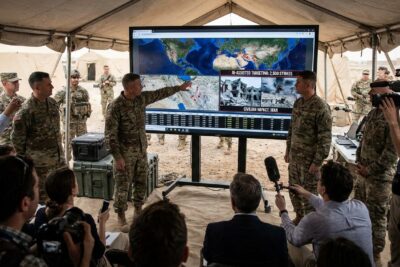
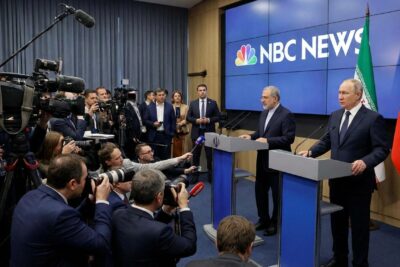
The most concerning trend is the emergence of photorealistic AI-generated video content that is nearly indistinguishable from authentic footage. Videos purporting to show captured American soldiers, destroyed Israeli aircraft, and precision strikes with zero civilian casualties have circulated widely, with some accumulating millions of views before fact-checkers could intervene. Iranian state media has deployed AI-enhanced content to amplify images of civilian casualties, while pro-U.S. accounts have circulated synthetic imagery showing surgical military precision. The gap between these narratives and independently verified reporting creates what researchers describe as a hall of mirrors effect. (Source: World Economic Forum; Dark Reading)
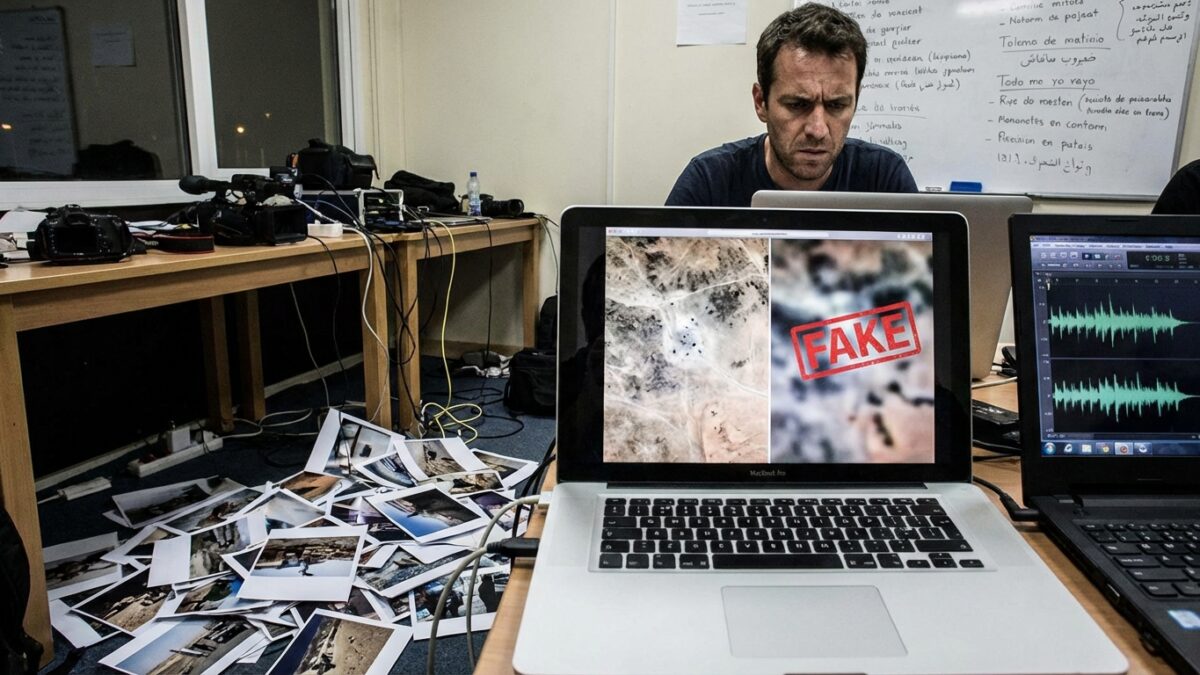
The World Economic Forum’s 2026 cybersecurity report had found that 87 percent of leaders viewed AI-related vulnerabilities as the fastest-growing cyber risk, and the Iran war is proving that assessment prescient in a domain that few analysts anticipated: wartime propaganda. The cost of producing convincing synthetic media has fallen to near zero, while the cost of verifying it requires specialized forensic analysis that can exceed the production cost by a factor of one hundred, creating an economic asymmetry that fundamentally favors disinformation producers. (Source: World Economic Forum)
Platform Struggles
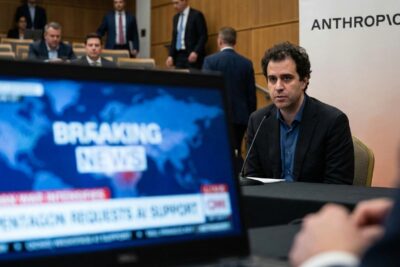
Social media platforms have struggled to keep pace. Meta removed thousands of accounts engaged in coordinated inauthentic behavior but acknowledged its systems are imperfect against sophisticated AI content. X, under Elon Musk’s ownership, relies primarily on community notes for context rather than removing misleading content, an approach critics say is inadequate for wartime propaganda. TikTok’s recommendation algorithm continues to surface emotionally provocative content regardless of accuracy. The fundamental architecture of engagement-driven platforms rewards sensational content, and war disinformation is among the most engaging content types. (Source: CNN; Meta)
The erosion of trust in visual media represents perhaps the most lasting consequence of the disinformation surge. If publics lose the ability to distinguish authentic documentation of war events from fabrications, the entire framework of accountability that depends on visual evidence is undermined. For the hundreds of millions following the conflict through social media, the information environment creates a uniquely disorienting experience where the war is simultaneously more documented and more distorted than any previous conflict.
The speed and scale of AI-generated war content has overwhelmed fact-checking infrastructure. The International Fact-Checking Network reports ten times normal verification volume. The economic asymmetry where creating a deepfake costs near zero while debunking requires expensive forensic analysis fundamentally favors disinformation. Government responses are uneven, with the EU’s Digital Services Act providing some authority while the U.S. has taken no significant regulatory action. (Source: World Economic Forum; Dark Reading)
The long-term implications extend beyond this conflict. The techniques being refined during the Iran war will persist and proliferate. State actors are developing AI propaganda capabilities available for future conflicts and elections. Non-state actors with modest skills can produce synthetic media at scale using commercially available tools. The war is accelerating a capability buildout that will shape the information landscape for years, making reliable content authentication a democratic security imperative rather than merely a media industry priority. (Source: Atlantic Council; MIT Technology Review)
The war has become a testing ground for information operations capabilities that state and non-state actors have been developing for years. The convergence of accessible AI tools, encrypted messaging platforms, and algorithm-driven social media creates an environment where anyone with modest technical skills can produce and distribute synthetic media at scale. The implications extend well beyond this conflict, as the techniques and infrastructure being refined will persist and proliferate long after the fighting ends, permanently altering the information landscape for democratic societies that depend on shared facts for collective decision-making.
Platform responses reveal structural challenges predating the war. Social media companies have reduced trust and safety teams through major layoffs, diminishing capacity to identify coordinated inauthentic behavior. The U.S. regulatory environment provides little framework for compelling investment in content moderation during crises. The contrast with the EU’s Digital Services Act highlights the policy gap allowing synthetic propaganda to flourish on American-hosted platforms serving global audiences. The cumulative effect is an information ecosystem where the quality of public understanding depends on individual media literacy rather than institutional safeguards.
For democratic societies that depend on informed public opinion to guide policy decisions, particularly decisions about war and peace, the weaponization of AI-generated content represents an existential challenge. Citizens cannot exercise meaningful democratic oversight of military operations when the information environment is so polluted by synthetic content that establishing basic facts about what is happening on the ground becomes impossible. The Iran war’s disinformation crisis thus connects to fundamental questions about democratic governance in the AI age that extend far beyond any single conflict.