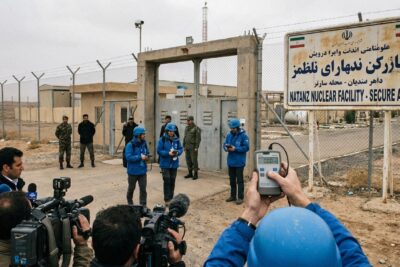
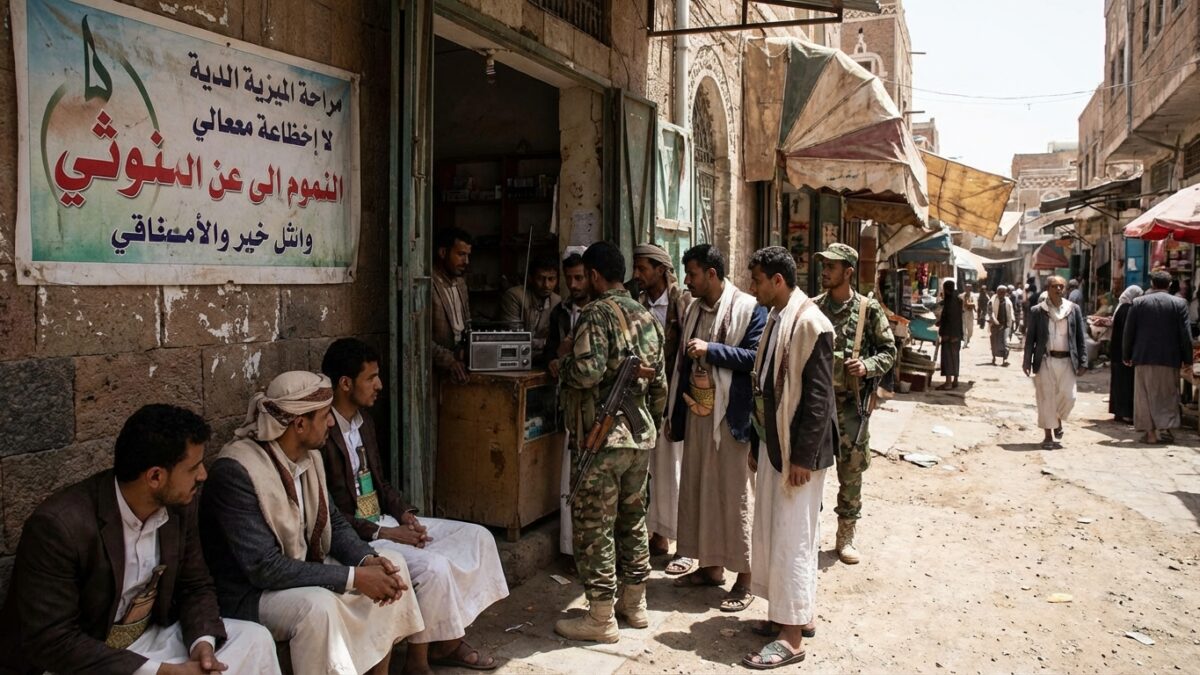
Despite their well-established alliance with Iran and a history of aggressive military action including attacks on Red Sea shipping, Yemen’s Houthi movement has shown notable restraint since the U.S.-Israeli war on Iran began on February 28. Houthi leader Abdul-Malik al-Houthi stated on March 5 that his group stands with Iran and has its hands on the trigger, but as of March 9, the Houthis have limited themselves to three public declarations characterized by analysts as more disciplined and subdued than their usual approach. The restraint stands in stark contrast to their aggressive posture during the 2023-2024 Red Sea crisis and reflects a pragmatic strategic calculation that has surprised many regional observers. (Source: Wikipedia/2026 Iran war)
Why the Restraint?
Several factors appear to be driving the Houthis’ uncharacteristic caution. The most significant is the 2025 United States-Houthi ceasefire, which ended months of American strikes on Houthi positions and brought a measure of stability that the movement’s leadership is reluctant to jeopardize. The Houthis are simultaneously engaged in the Yemeni civil war and confronting the Saudi-led coalition, creating multiple fronts that they cannot afford to expand. Opening a third front against the United States by targeting shipping or military assets would risk the ceasefire that has allowed them to consolidate control over their territory. (Source: Wikipedia)
Regional analysts note that the Houthis’ public statements have been carefully calibrated as political and emotional expressions of solidarity rather than practical military commitments. The declarations lack the specific threats against shipping lanes, military bases, or commercial targets that characterized their rhetoric during the Red Sea crisis. This linguistic precision suggests a leadership that is managing expectations among its Iranian patrons while preserving its strategic options.
Implications for the Broader Conflict
The Houthi restraint has significant implications for the conflict’s trajectory. Had the Houthis resumed attacks on Red Sea shipping simultaneously with the Strait of Hormuz disruption, the global energy and trade disruption would have been catastrophically compounded. The Red Sea route handles approximately 12 percent of global trade, and combined closures of both the Strait of Hormuz and the Red Sea would have left global shipping with no viable alternative routes for transiting between Asia and Europe without circumnavigating Africa. (Source: Wikipedia)
The restraint also raises questions about the depth of Iran’s proxy network. Tehran’s so-called axis of resistance, which includes Hezbollah, the Houthis, Iraqi militias, and Syrian allies, was expected to coordinate responses to any attack on Iran. While Hezbollah has engaged in fighting in Lebanon, the Houthis’ caution and the relatively limited response from Iraqi militias suggest that Iran’s ability to command coordinated action across its proxy network may be more limited than its rhetoric has suggested.
A Rational Actor in an Irrational Conflict
The Houthi calculus reveals a movement that, despite its revolutionary rhetoric, is capable of rational strategic decision-making that prioritizes institutional survival over ideological solidarity. The movement controls significant territory and population in Yemen and has built governing institutions that it does not want to risk for a war that is, fundamentally, not its own. This pragmatism may frustrate Iranian leaders who hoped for a coordinated multi-front campaign, but it also demonstrates that proxy relationships in the Middle East are more complex and conditional than simple patron-client models suggest. For the United States, the Houthi restraint represents one of the few mitigating factors in a conflict that has otherwise exceeded worst-case projections in its scope, intensity, and human cost. (Source: Wikipedia)
The Houthis’ behavior reflects lessons from other proxies. Hezbollah’s engagement has produced over 400 deaths, massive displacement, and infrastructure destruction. Iraqi militia responses have been limited. The pattern suggests Iran’s proxy network makes independent strategic assessments rather than following orders, with each group calibrating based on local conditions. (Source: Wikipedia)
For global trade, the restraint is consequential. The 2023-2024 Red Sea crisis added roughly $1 million per transit in costs and caused significant supply chain delays. Resumption of those attacks simultaneously with the Hormuz disruption would compound the energy crisis beyond current projections. The absence of this additional disruption represents one of the conflict’s few mitigating factors. Whether Houthi restraint persists as pressures mount remains one of the war’s most important open questions.
The broader pattern of proxy behavior during the Iran war reveals a network that is less monolithic than analysts had assumed. Each component of Iran’s axis of resistance is making independent calculations about engagement based on local circumstances. This disaggregation of proxy response challenges the assumption that striking Iran’s leadership would automatically trigger coordinated retaliation across the network, an assumption that appears to have informed the decision to launch the military campaign. The reality of fragmented, conditional proxy responses may ultimately provide more opportunity for de-escalation than a unified front would have allowed, but it also complicates the strategic picture for military planners on all sides.
The Houthis’ careful positioning also reflects awareness of their international image. After years of being characterized as an Iranian proxy, the movement has sought to establish itself as an independent political actor with legitimate grievances and governance responsibilities in northern Yemen. Joining the Iran war enthusiastically would reinforce the proxy narrative and potentially undermine the ceasefire with the United States that has provided breathing room for institution-building and economic recovery in Houthi-controlled territory. The strategic restraint thus serves multiple objectives: preserving the ceasefire, maintaining governance stability, protecting international credibility, and keeping military options available for the moment when circumstances might warrant their use.