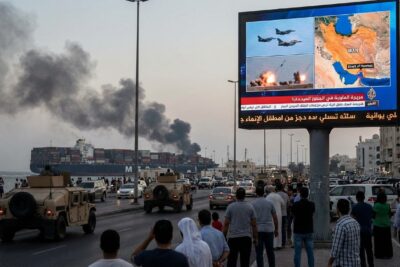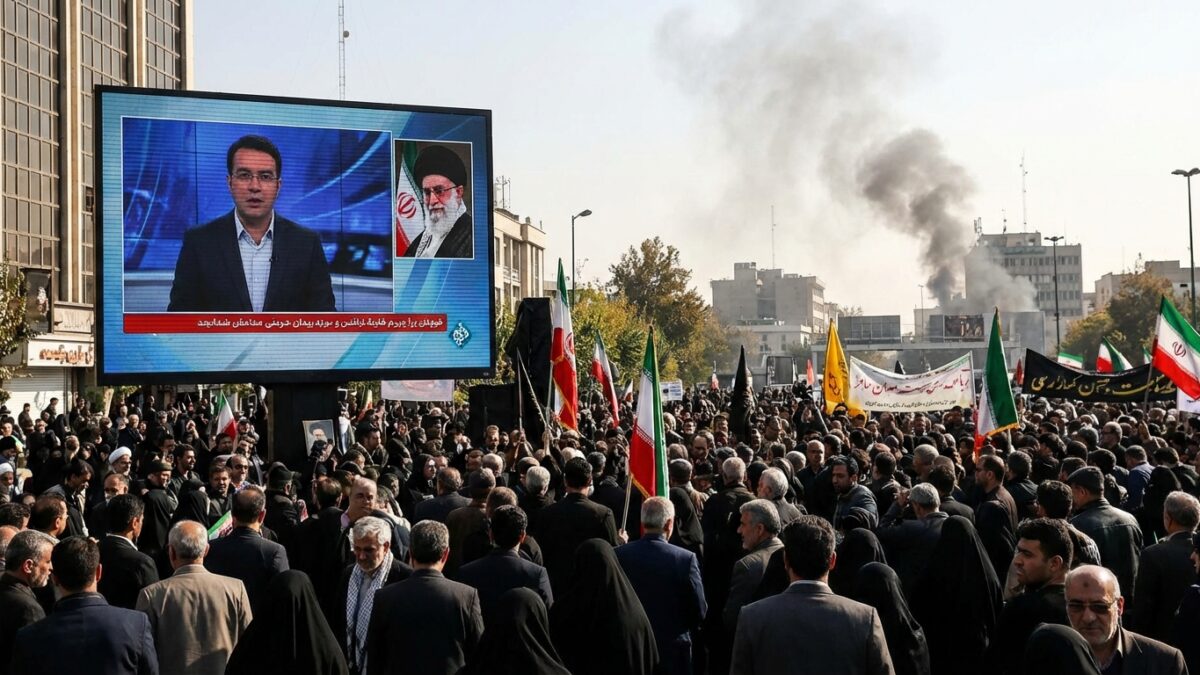
Iran confirmed on Saturday, March 1, the death of Supreme Leader Ayatollah Ali Khamenei following a massive joint military operation by the United States and Israel that struck the heart of Tehran in the early morning hours of February 28. The killing of the Middle East’s longest-serving head of state has sent shockwaves through the region and the broader international community, triggering retaliatory strikes by Iran and raising fears of a wider conflict.
The Strikes
The coordinated assault began at approximately 8:10 a.m. local time on February 28, 2026, and was described by military analysts as a massive, carefully orchestrated daytime attack targeting Iranian political and military leadership. According to the Israel Defense Forces, some 200 fighter jets carried out an extensive attack across western and central Iran in what it called the largest military flyover in the history of the Israeli Air Force. (Source: IDF statement via The Times of Israel)
The United States simultaneously deployed precision Tomahawk land attack missiles from Navy ships stationed in the region, along with strikes from multiple fighter aircraft, hitting hundreds of targets throughout Iran, according to two U.S. officials who spoke with NBC News. President Donald Trump announced the operation in a video message, declaring that the United States had launched major combat operations in Iran, joined by Israel.
Intelligence for the strikes came from months of Central Intelligence Agency surveillance that had been tracking Khamenei’s movements and the locations of senior Iranian officials. The CIA learned that a high-level meeting of military and security officials was to take place, and the operation was timed to coincide with that gathering. An Israeli official said Khamenei was observed above ground at his official residence shortly before the attack commenced. (Source: Reuters, citing intelligence officials)
Confirmation and Initial Denial
In the hours following the strikes, Iranian officials initially denied Khamenei’s death. Iran’s Ministry of Foreign Affairs spokesman Esmail Baghaei stated that the supreme leader was safe and sound, and Reuters reported that he had been transferred to a secure location outside Tehran. However, Israeli Prime Minister Benjamin Netanyahu asserted there were growing signs pointing to Khamenei’s death, while Trump called the unconfirmed assassination justice for the people of Iran on his Truth Social platform.
Early on March 1, the Iranian Supreme National Security Council and Iranian state media, including the Islamic Republic of Iran Broadcasting network, officially confirmed Khamenei’s death. Iranian President Masoud Pezeshkian declared Khamenei a martyr and announced 40 days of national mourning. (Source: Al Jazeera)
In addition to Khamenei, seven Iranian military commanders were confirmed killed, including several senior figures identified as Abdolrahim Mousavi, Aziz Nasirzadeh, Mohammad Pakpour, and Ali Shamkhani, who were reportedly struck during the same meeting that was targeted by the joint operation. Former Iranian president Mahmoud Ahmadinejad was also allegedly killed in a separate targeted strike on his home in the Narmak district of Tehran, according to The Times of Israel.
Iran’s Retaliation
Iran’s elite Islamic Revolutionary Guard Corps pledged immediate revenge and launched retaliatory strikes against Israel and U.S. military installations across the region. The IRGC said it attacked 27 bases in the Middle East where U.S. troops are stationed. Iranian missiles also struck targets in Qatar, the United Arab Emirates, Kuwait, Bahrain, Jordan, Saudi Arabia, Iraq, and Oman, according to Al Jazeera’s reporting.
Explosions were heard in the Qatari capital Doha and in the Dubai area, with thick smoke seen billowing near the Barwa district and the port of Jebel Ali. The United Arab Emirates ordered all schools and universities to switch to remote learning, and several countries in the region closed their airspace during the escalating exchange. Gulf Cooperation Council foreign ministers scheduled an emergency video conference to discuss the crisis. (Source: CNBC, citing Reuters and regional reports)
Global Reactions
The international response has been deeply polarized. EU foreign policy chief Kaja Kallas described Khamenei’s death as a defining moment in Iran’s history, adding that there is now an open path to a different Iran. China’s Ministry of Foreign Affairs condemned the strikes as a serious violation of Iran’s sovereignty and the basic norms of international relations. Bangladesh described the assassination as a violation of international law. Armenia’s Prime Minister Nikol Pashinyan expressed condolences to Iranian President Pezeshkian.
Domestically, the response was equally divided. A Reuters/Ipsos poll found that only 27 percent of Americans approve of the strikes, while 43 percent disapprove. Meanwhile, hundreds of Iranian Americans rallied in Times Square and at the National World War I Memorial in Washington, D.C., waving pre-Islamic Revolution Iranian flags and cheering for the downfall of the regime.
What Comes Next
Iran’s top security official, Ali Larijani, announced that a temporary leadership council would be established and warned that any secessionist groups attempting to exploit the crisis would face a harsh response. Trump told The Atlantic that Iranian leaders want to talk, and I have agreed to talk, though he declined to specify when those discussions would occur.
The operation comes after months of failed nuclear negotiations between Washington and Tehran, with talks facilitated by Omani mediation. Oman’s foreign minister has since urged both sides to return to dialogue. However, with Israel continuing to carry out additional waves of airstrikes against IRGC and government facilities in Tehran, and Iran firing missiles at multiple regional targets, the prospects for rapid de-escalation appear slim.
The situation remains extraordinarily fluid. Hezbollah has fired rockets at northern Israel for the first time since the November 2024 ceasefire, and Iran’s internet connectivity has been severely disrupted since the attacks began. Analysts warn that the killing of Khamenei could trigger a prolonged period of regional instability, with implications reaching far beyond the Middle East.