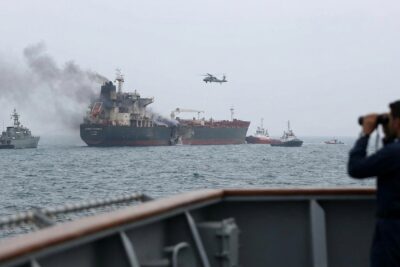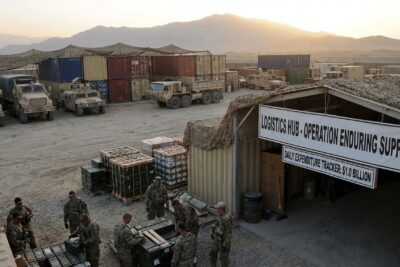
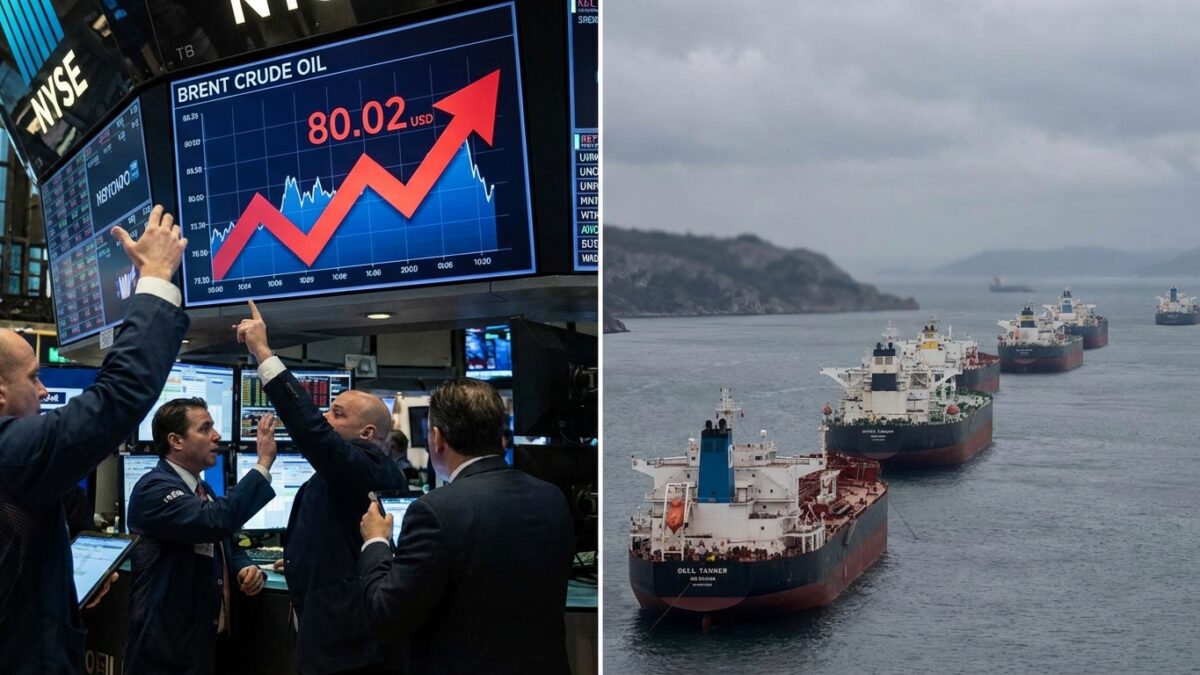
Global crude oil prices posted their sharpest weekly gains since the outbreak of the Russia-Ukraine war as the effective closure of the Strait of Hormuz, triggered by the U.S.-Israeli military campaign against Iran, threatened to disrupt one-fifth of the world’s daily oil supply and sent energy traders scrambling for alternative sources.
Brent crude surged as much as 13 percent to $82 per barrel in volatile Monday trading before settling around $78, its highest level since the June 2025 Israeli airstrikes on Iranian nuclear facilities. U.S. West Texas Intermediate rose more than 8 percent to $72.74 per barrel. Prices extended gains after the market close when Reuters reported comments from an IRGC commander declaring the strait closed to all shipping. (Sources: CNBC, Bloomberg)
A Real Supply Disruption, Not Just a Risk Premium
Energy analysts stressed that the current situation represents a fundamentally different kind of crisis than previous geopolitical flare-ups in the region. Kpler, the commodity data analytics firm, published an assessment characterizing the situation as a genuine supply disruption affecting crude, refined products, LPG, and LNG simultaneously. (Source: Kpler)
Matt Smith, oil analyst at Kpler, told CNBC that tanker traffic had effectively halted. More than 14 million barrels per day passed through the strait on average in 2025, representing roughly a third of the world’s total seaborne crude exports. Approximately three-quarters of those shipments are destined for China, India, Japan, and South Korea. (Source: CNBC)
Barclays analysts warned in a client note that Brent could reach $100 per barrel if security conditions continue to deteriorate, while UBS analysts led by Henri Patricot said a material disruption could push spot prices above $120. (Sources: Barclays, UBS)
Why the Reaction Has Been Measured
Despite the scale of the disruption, several factors have prevented an even more dramatic price spike. Rebecca Babin, an energy trader at CIBC Private Wealth, told NPR that markets had been recently oversupplied, allowing countries to build significant stockpiles. China in particular holds substantial reserves both on land and floating offshore, positioning the world to weather a short-term interruption. (Source: NPR)
Dan Pickering, founder of Pickering Energy Partners, acknowledged the market response was smaller than he expected given that the strait was essentially closed, but cautioned that prices could rise dramatically if shipping does not resume by the end of the week. (Source: Fortune)
Saudi Arabia has contingency plans to route oil through its East-West pipeline via the Red Sea, though terminal infrastructure limitations at Jeddah restrict throughput. The UAE’s Fujairah pipeline offers a partial alternative, but analysts at Kpler noted that a significant portion of Gulf spare capacity simply cannot reach global markets if the strait remains inaccessible. (Source: Kpler)
Natural Gas and Broader Energy Impact
The crisis has also sent natural gas prices sharply higher, particularly in Europe, where benchmark prices surged more than 20 percent on March 2. Some 30 percent of Europe’s jet fuel supply originates from or transits via the strait, while one-fifth of global LNG passes through the waterway. Qatar, one of the world’s largest LNG exporters, preemptively paused production amid the escalating conflict. (Sources: NPR, Al Jazeera)
Patrick De Haan, an analyst with GasBuddy, estimated that the spike in crude prices would push U.S. gasoline prices up by 10 to 30 cents per gallon on average in coming days, with some individual stations potentially seeing increases of up to 85 cents. (Source: NPR)
Claudio Galimberti, chief economist at Rystad Energy, compared the situation to blocking the aorta in a circulatory system. He told NPR that the world had not seen anything comparable in the history of the strait. Helima Croft, an energy strategist, warned that an extended war scenario could leave the majority of OPEC production in the region effectively stranded, and that Iraq might be forced to shut in production entirely if it cannot access the strait for exports. (Sources: NPR, Rystad Energy)
OPEC+ pledged to increase output by 206,000 barrels per day to mitigate shortages, but analysts noted that this modest increase would do little to offset a sustained closure. The next scheduled OPEC+ meeting is April 5, though the group can convene at any time. (Source: Wikipedia, citing OPEC)
As one energy trader put it, the difference between the strait being disrupted for a few days and a multi-week closure represents the difference between manageable volatility and a potential global economic shock not seen since the 1970s oil crisis.
Insurance and Shipping Industry Response
The shipping and insurance industries have been among the most immediate casualties of the crisis. War-risk insurance premiums for vessels transiting the Persian Gulf had already reached six-year highs before the strikes began, and the onset of hostilities has prompted most major underwriters to suspend coverage for the region entirely. Without insurance, commercial ship operators face the prospect of assuming billions of dollars in potential liability, a risk that virtually none are willing to take.
Major shipping companies including Maersk and Hapag-Lloyd have suspended transits through the strait and related routes, with some vessels being redirected around Africa’s Cape of Good Hope, adding weeks to transit times and significantly increasing costs. The rerouting echoes the pattern seen during Red Sea disruptions caused by Houthi attacks in 2024, but on a much larger scale given the volume of energy shipments through Hormuz. (Source: Wikipedia)