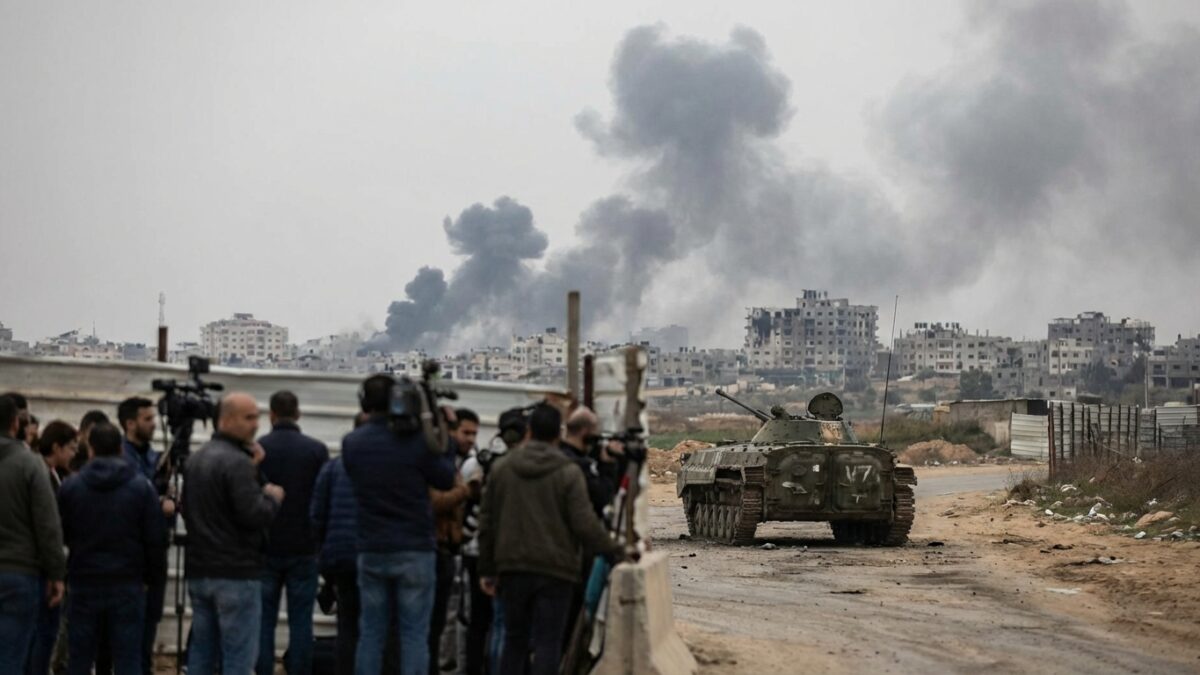
The United States and Israel launched a sweeping military campaign against Iran beginning February 28, 2026, killing Supreme Leader Ayatollah Ali Khamenei and top military leaders in what has become the largest armed conflict in the Middle East in more than two decades. The strikes, which targeted nuclear facilities, military installations, and command centers across Iran, have triggered retaliatory attacks from Tehran and Iranian-backed militias throughout the region, drawing in Gulf states and threatening critical global energy infrastructure. (Source: NPR)
The Opening Salvo
The initial wave of strikes, carried out jointly by U.S. and Israeli forces in the early hours of February 28, struck targets across Tehran, Isfahan, and other major Iranian cities. Within hours, Iranian state media confirmed that Khamenei and several senior Islamic Revolutionary Guard Corps commanders had been killed. President Donald Trump, speaking from the White House, stated that the operation was necessary to prevent Iran from developing nuclear weapons capabilities. (Source: PBS NewsHour)
By the end of the first day, plumes of smoke were visible over Tehran as simultaneous strikes hit military and government targets. The scale of the operation caught both allies and adversaries by surprise, with the Pentagon confirming the deployment of multiple carrier strike groups and strategic bomber assets to the region.
Iran’s Unprecedented Retaliation
Iran’s response departed significantly from the largely symbolic retaliation observed during its brief conflict with Israel in June 2025. The IRGC launched missile and drone strikes against targets in the United Arab Emirates, Saudi Arabia, Bahrain, and Kuwait. The UAE bore the brunt of the retaliation, with reports of strikes hitting the Jebel Ali port, Abu Dhabi infrastructure, and several civilian areas. (Source: Kpler Energy Analysis)
Most critically, Iran moved to close the Strait of Hormuz, through which approximately 20 percent of the world’s daily oil consumption passes. By Monday, March 2, tanker traffic through the strait had come to a virtual standstill as shipping companies and insurers withdrew coverage for vessels transiting the waterway. At least four vessels were hit in Gulf waters in the first days of fighting. (Source: Al Jazeera)
American Casualties and Domestic Reaction
By March 3, six U.S. service members had been killed in action, marking the first significant American combat deaths in the Middle East in years. The conflict has drawn sharp criticism from some within Trump’s own political base. Representative Marjorie Taylor Greene publicly criticized the president for what she described as abandoning his promise of no new wars, testing the MAGA movement’s core commitment to an America First foreign policy. (Source: NPR)
Bipartisan concern has mounted in Congress, where several lawmakers have questioned whether the administration obtained proper authorization for what appears to be an open-ended military operation. Senator Tim Kaine called on the Senate to hold emergency hearings on the legal basis for the strikes.
Global Diplomatic Fallout
The international community has responded with a mixture of alarm and cautious support. NATO allies have largely backed the operation while urging restraint, though France announced it was prepared to participate in the defense of Gulf states if necessary. Russia condemned the strikes, with Foreign Ministry spokesperson Maria Zakharova calling the killing of Khamenei vile. China warned against further escalation, stating it would not tolerate interference in regional affairs. (Source: Euronews)
The conflict has created a humanitarian emergency across the region, with tens of thousands of travelers stranded in the UAE and other Gulf states after airports suspended operations. Several countries, including the UAE and Kuwait, temporarily closed their stock markets, citing exceptional circumstances.
What Comes Next
With Iran’s top leadership eliminated, the country faces an unprecedented leadership vacuum. Iranian Foreign Minister Araqchi has accused the United States of betraying diplomacy, while remaining military commanders have vowed continued resistance. Trump signaled on March 3 that the conflict could last weeks, telling reporters that everything has been knocked out in Iran while offering no clear exit strategy. (Source: Euronews)
Analysts are closely watching whether Iran’s remaining military leadership will seek a diplomatic off-ramp or continue escalating retaliatory strikes. The death of Khamenei removes the ultimate decision-maker from a theocratic system that has no clear succession mechanism for wartime, raising the prospect of internal power struggles that could further destabilize the region. For now, the world watches as the most consequential military operation in the Middle East since the 2003 invasion of Iraq unfolds with no end in sight.
Military Operations Continue
The Pentagon confirmed on March 3 that U.S. forces had launched over 500 sorties against Iranian military targets in the first 72 hours of the campaign, striking air defense systems, ballistic missile launch sites, and Revolutionary Guard command nodes. The operation has employed a mix of precision-guided munitions, standoff cruise missiles launched from naval vessels in the Arabian Sea, and B-2 Spirit stealth bombers flying from bases in the continental United States and Diego Garcia.
Israeli Defense Forces have simultaneously intensified operations in Lebanon, where Hezbollah launched rocket barrages at northern Israeli cities in solidarity with Iran. The multi-front nature of the conflict has stretched both American and Israeli military resources, with the Pentagon drawing assets from the Pacific theater to reinforce Central Command.
American diplomatic installations across the Gulf have been evacuated, with the State Department confirming the closure of embassies in Kuwait, Bahrain, and the UAE. An apparent strike on the U.S. Embassy compound in Kuwait marked one of the most provocative Iranian actions, though details remained unclear as of March 4. The combination of diplomatic closures and military escalation has created an environment of maximum uncertainty, with defense analysts comparing the situation to the early days of the 2003 Iraq War in terms of its potential to reshape the regional order for decades.