
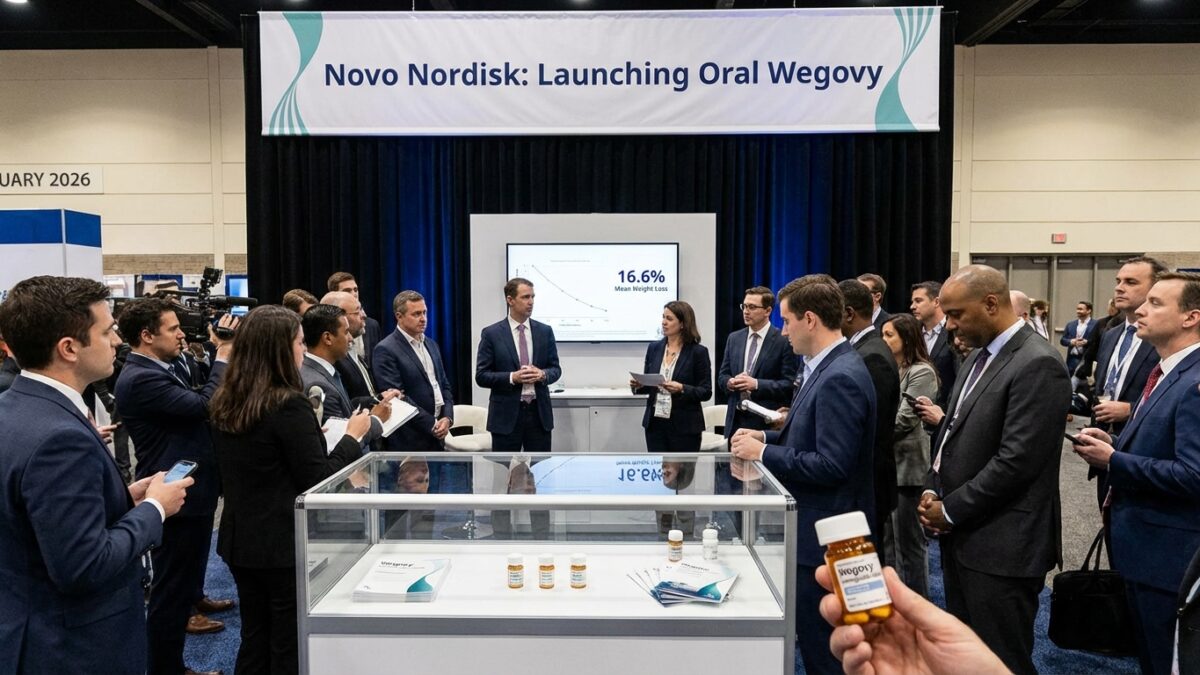
After years of domination by weekly injections, the weight loss drug revolution has reached a pivotal new chapter. Novo Nordisk’s oral Wegovy pill, approved by the FDA in late December 2025 and launched in the United States in January 2026, represents the first oral GLP-1 receptor agonist approved for chronic weight management, potentially expanding access to millions of patients who have been reluctant to use injectable medications.
The approval, based on the Phase III OASIS clinical trial program and the landmark SELECT cardiovascular outcomes trial, marks a significant evolution in the treatment of obesity, a condition affecting more than 40 percent of American adults. The once-daily tablet containing 25 mg of semaglutide demonstrated weight loss comparable to the injectable form that has become one of the best-selling drugs in pharmaceutical history. (Sources: FDA, Novo Nordisk, The New England Journal of Medicine)
What the Clinical Data Show
The OASIS 4 trial, a 64-week Phase IIIb study enrolling 307 adults with obesity or overweight with at least one related comorbidity, produced compelling results. Participants who adhered to the oral semaglutide regimen achieved a mean weight loss of 16.6 percent, compared with 2.7 percent for those on placebo. One in three adherent participants lost 20 percent or more of their body weight. Even under the more conservative treatment-policy analysis, which accounts for participants regardless of adherence, oral semaglutide delivered 13.6 percent mean weight loss compared to 2.2 percent for placebo. (Source: The New England Journal of Medicine, September 2025)
Beyond weight loss, the trial showed significant improvements across cardiometabolic risk factors, including waist circumference, blood pressure, LDL cholesterol, and triglycerides. Serious adverse events were actually less frequent with oral semaglutide at 3.9 percent than with placebo at 8.8 percent, though the common side effects of nausea, vomiting, and diarrhea familiar to GLP-1 users remained present. (Source: Applied Clinical Trials Online)
Accessibility and Cost
The oral formulation addresses one of the most significant barriers to GLP-1 adoption: needle aversion. While injectable Wegovy transformed the obesity treatment landscape after its 2021 launch, surveys consistently showed that a substantial percentage of eligible patients were reluctant to begin self-injection therapy. The pill form also eliminates the need for refrigerated storage, a practical advantage for patients and pharmacies alike.
Novo Nordisk has priced the oral Wegovy at approximately $149 per month without insurance, significantly below the list price of the injectable formulation. With insurance, co-pays could be $25 or less. The company also offered promotional pricing on injectable Wegovy, cutting initial-dose costs to $199 per month through March 2026. (Source: ABC News)
Dave Moore, executive vice president of Novo Nordisk’s U.S. operations, described the approval as the next chapter in the company’s GLP-1 experience. Mike Doustdar, Novo Nordisk’s president and CEO, said the pill would help patients who had not previously sought or accepted treatment. (Source: Novo Nordisk)
The Competitive Landscape
The oral Wegovy launch intensifies competition in what has become the pharmaceutical industry’s most lucrative therapeutic area. Eli Lilly has submitted its own oral GLP-1, orforglipron, to the FDA for review. Unlike oral semaglutide, which requires a 30-minute fasting period after consumption before eating, orforglipron is a non-peptide compound that can be taken without food or water restrictions, potentially offering a convenience advantage. (Source: AJMC)
W. Timothy Garvey, professor at the University of Alabama at Birmingham’s School of Health Professions and a lead investigator for the oral semaglutide clinical trial, emphasized the importance of the oral option for long-term adherence. He noted that keeping patients on these medications long term remains a challenge, and that an effective oral preparation could help achieve that goal. (Source: AJMC)
Broader Implications
The emergence of effective oral weight loss medications could fundamentally alter the economics of obesity treatment. Analysts project that the global GLP-1 market, already worth tens of billions of dollars annually, could expand dramatically as oral formulations lower the barrier to entry for both patients and healthcare systems.
The pill also raises important questions about public health infrastructure, insurance coverage, and the potential for these medications to move from specialist prescribing to broader primary care use. Novo Nordisk has submitted the oral formulation for approval by the European Medicines Agency and other regulatory bodies, with decisions expected throughout 2026. (Source: Novo Nordisk)
For millions of patients worldwide, the arrival of an effective weight loss pill that matches the results of weekly injections represents more than a pharmaceutical milestone. It is a fundamental shift in how obesity, the most prevalent chronic disease in the developed world, may be treated for decades to come.
Global Public Health Dimensions
The significance of effective oral obesity treatments extends well beyond individual patient outcomes. The World Health Organization has classified obesity as a global epidemic, with prevalence rates tripling since 1975. The condition is a leading risk factor for cardiovascular disease, type 2 diabetes, certain cancers, and numerous other chronic conditions that collectively represent the largest burden on healthcare systems worldwide.
An accessible oral treatment that can be prescribed in primary care settings, stored without refrigeration, and administered without the training and supply chain requirements of injectable medications could dramatically expand the reach of obesity pharmacotherapy, particularly in lower-resource settings. Public health experts have drawn parallels to the introduction of oral antiretroviral therapies for HIV, which transformed a condition requiring complex injectable regimens into one manageable with daily pills.