The H5N1 avian influenza virus continues its unprecedented spread through American agricultural systems, with confirmed detections in dairy herds and poultry flocks across dozens of states raising concern among public health officials about the potential for broader human transmission and the fragility of the nation’s food supply chain.
The current outbreak, which began gaining momentum in early 2024 when H5N1 was first detected in U.S. dairy cattle, has since expanded to affect herds in more than 15 states, marking the first known sustained transmission of highly pathogenic avian influenza among mammals in North America. The virus has also devastated commercial poultry operations, leading to the culling of tens of millions of birds and contributing to persistent egg price inflation. (Sources: U.S. Department of Agriculture, Centers for Disease Control and Prevention)
An Unusual Mammalian Adaptation
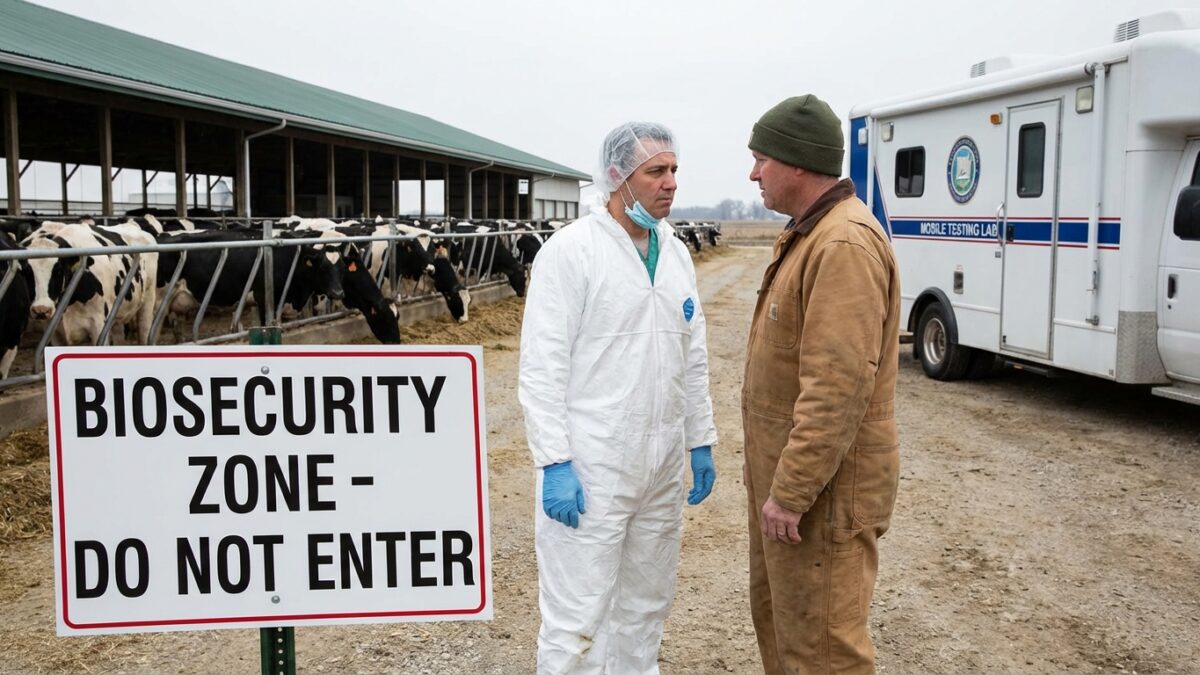
What makes the current H5N1 situation particularly concerning to virologists is the virus’s demonstrated ability to spread efficiently between dairy cattle, a pattern not previously documented for avian influenza viruses. Research published by the USDA’s Animal and Plant Health Inspection Service has shown that the virus is being transmitted through contaminated milking equipment and possibly through respiratory droplets between animals in close confinement. (Source: USDA APHIS)
The virus has also been detected in raw milk samples, prompting renewed debate about the safety of unpasteurized dairy products. The FDA has emphasized that pasteurization effectively eliminates the virus and that commercially processed milk remains safe. However, the growing market for raw milk, particularly in states with permissive sales laws, has created a potential exposure pathway that regulators are monitoring closely. (Source: FDA)
Human Cases Remain Limited but Concerning
As of early 2026, confirmed human cases of H5N1 in the United States remain in the dozens, concentrated among agricultural workers with direct exposure to infected animals. Most cases have presented with mild symptoms, primarily conjunctivitis and upper respiratory infection. No sustained human-to-human transmission has been documented, but the CDC has maintained its enhanced surveillance posture and continues to monitor for mutations that could increase transmissibility. (Source: CDC)
The World Health Organization has classified the overall risk to the general public as low but has repeatedly stressed that the situation requires careful monitoring. Each new mammalian host species provides the virus with additional opportunities to acquire mutations that could enhance its ability to spread between humans, a scenario that would constitute a pandemic threat. (Source: WHO)
Economic Impact on Agriculture
The outbreak has had substantial economic consequences for the U.S. agricultural sector. Egg prices, which had already been elevated from previous avian flu outbreaks, have remained persistently high as producers implement enhanced biosecurity measures and absorb the costs of flock depopulation. The USDA has committed billions in indemnity payments to affected farmers, but industry groups say the compensation does not fully cover losses from production disruptions and market access restrictions. (Source: USDA)
The dairy industry faces its own set of challenges. While milk from infected herds is diverted from the commercial supply, the economic impact on individual farms can be severe. Some producers have reported significant drops in milk production from infected cattle, and the stigma associated with H5N1 detection has created market access difficulties even after herds have been cleared. (Source: National Milk Producers Federation)
Vaccination Debate Intensifies
The question of whether to deploy avian influenza vaccines in poultry flocks has become increasingly contentious. Proponents argue that vaccination could reduce virus circulation and economic losses, while opponents warn that it could complicate surveillance by masking infections and potentially trigger trade restrictions from countries that ban imports of poultry from vaccinated flocks.
Several countries in Europe and Asia have already begun deploying avian influenza vaccines in their poultry industries, with France being among the first to implement a large-scale program. The USDA has been evaluating vaccine candidates but has not yet authorized their widespread use in commercial flocks. (Sources: USDA, European Commission)
The ongoing H5N1 situation serves as a reminder that pandemic preparedness extends beyond human vaccines and antiviral stockpiles. The intersection of animal health, food safety, and human disease represents one of the most complex public health challenges of the current decade, requiring coordination across agricultural, veterinary, and human health agencies at every level of government.
Global Context and Preparedness
The U.S. outbreak is part of a broader global picture. H5N1 has been detected in dairy cattle, wild mammals, and poultry across multiple continents, with particularly significant outbreaks in Europe and South America. The World Organisation for Animal Health has characterized the current epizootic as the most geographically widespread and genetically diverse H5N1 event on record.
Pandemic preparedness experts emphasize that the current moment calls for enhanced surveillance, rapid response capabilities, and investment in both animal and human vaccine development. The development of mRNA-based avian influenza vaccines, leveraging the platform technology that proved successful against COVID-19, is underway at several pharmaceutical companies, with Moderna and other manufacturers conducting preclinical and early clinical studies.
The lesson of every previous pandemic is that the time to prepare is before widespread human transmission begins, not after. The H5N1 virus’s increasing comfort in mammalian hosts should be treated as a warning signal that demands sustained attention and resources from both public health authorities and the agricultural industry.