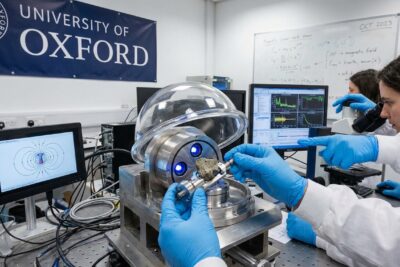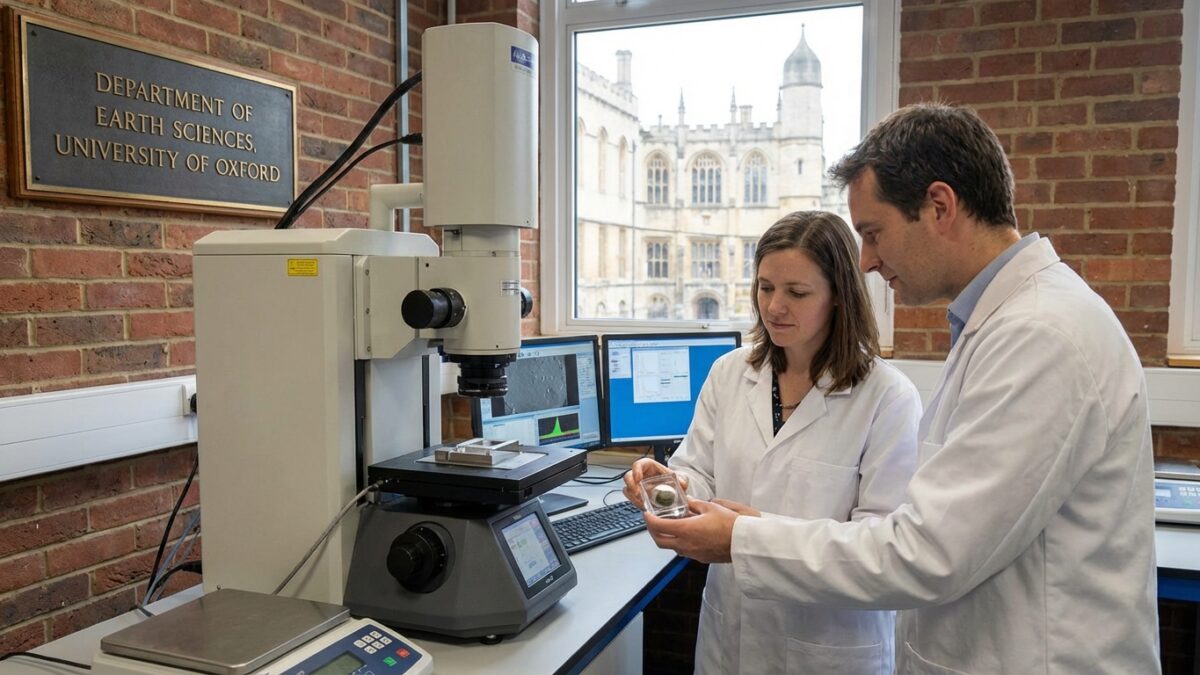
Scientists at the University of Oxford have finally settled a decades-long debate about the Moon’s ancient magnetic field — and it turns out both sides of the argument were partially right. By reanalyzing rock samples brought back by Apollo astronauts more than 50 years ago using modern analytical techniques, the research team has determined that the Moon once possessed a magnetic field, but one that was more complex and shorter-lived than some models had predicted. The findings, published in late February 2026, rewrite a key chapter in our understanding of lunar history. (Source: ScienceDaily, February 26, 2026)
The Controversy
Since the Apollo missions of the late 1960s and early 1970s returned 842 pounds of lunar rocks, soil, and core samples to Earth, scientists have debated whether the Moon ever generated a global magnetic field similar to Earth’s. Some Apollo-era samples showed remnant magnetization — a signature suggesting they cooled in the presence of a magnetic field. Others showed no such evidence, leading to a sharp division in the scientific community.
One camp argued that the Moon had a long-lived core dynamo, an internal engine driven by convection in a liquid iron core that generated a magnetic field lasting billions of years. The other camp contended that any magnetization in the samples was the result of transient events — asteroid impacts that temporarily generated localized magnetic fields without requiring a sustained internal dynamo. The debate persisted for decades, with each side marshaling evidence from the same limited set of Apollo samples.
Modern Techniques, New Answers
The Oxford team applied techniques unavailable to earlier generations of researchers, including high-resolution magnetic microscopy and advanced thermal demagnetization methods that can distinguish between different sources of magnetization with far greater precision than was possible in the 1970s. The analysis revealed that the Moon did indeed generate a genuine core dynamo field, but one that operated for a shorter period and with a more variable intensity than the strongest dynamo models had proposed.
Crucially, the research showed that some of the magnetization recorded in Apollo samples was consistent with a dynamo origin, while other signatures were better explained by impact-generated fields — confirming elements of both competing hypotheses. The finding suggests that the Moon’s magnetic history was not a simple story of either a persistent dynamo or transient impacts, but rather a more nuanced narrative involving periods of genuine internal field generation punctuated by externally driven magnetic events.
Why the Moon’s Field Died
Earth’s magnetic field is generated by the churning motion of its liquid iron outer core, a process sustained by the planet’s internal heat and the gravitational energy released as the inner core slowly solidifies. The Moon, being much smaller, lost its internal heat more rapidly. As the lunar core cooled and solidified, the convection that drove the dynamo slowed and eventually stopped, causing the magnetic field to fade.
The Oxford findings suggest this process occurred earlier than some models had predicted, with the lunar dynamo ceasing to operate approximately 3 billion years ago — roughly 1.5 billion years after the Moon’s formation. This timeline is significant because it overlaps with a period of heavy bombardment by asteroids, which may have both contributed to and complicated the magnetic record preserved in surface rocks.
Implications for Lunar Exploration
Understanding the Moon’s magnetic history has practical implications for future exploration. The Moon today has no global magnetic field, which means its surface is directly exposed to the solar wind — a stream of charged particles from the Sun that can damage electronics, degrade materials, and pose radiation risks to astronauts. However, some regions of the lunar surface retain localized magnetic anomalies, remnants of the ancient field that continue to partially deflect charged particles.
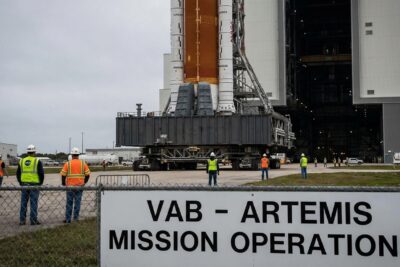
These magnetic anomalies could influence site selection for future lunar bases under NASA’s Artemis program. Areas with stronger residual magnetism may offer modest natural radiation protection, reducing the shielding requirements for permanent habitats. As NASA prepares for the Artemis IV lunar surface landing mission, now targeted for 2028, such considerations could factor into where astronauts live and work. (Source: NASA)
The Moon Is Still Changing
The magnetic field study arrives alongside other recent findings that paint a picture of the Moon as a more geologically active body than previously appreciated. In February 2026, researchers uncovered more than a thousand previously unknown tectonic ridges across the Moon’s dark plains, demonstrating that the Moon is still contracting and actively reshaping itself. This ongoing contraction generates moonquakes — seismic events that could pose risks to future surface infrastructure. (Source: ScienceDaily, February 18, 2026)
Separately, a new study using simulated lunar soil demonstrated that the fine dusty material on the Moon’s surface, known as regolith, can be melted and fused using laser 3D printing methods to create small, heat-resistant structures. The research suggests a pathway toward using local resources for construction on the Moon, reducing the need to transport building materials from Earth — a key requirement for establishing a sustainable lunar presence.
The Enduring Value of Apollo Samples
Perhaps the most remarkable aspect of the Oxford study is that it extracted genuinely new scientific knowledge from samples collected more than half a century ago. The Apollo lunar sample collection remains one of the most scientifically productive investments in the history of space exploration, with modern analytical techniques continuing to reveal information that the instruments of the 1970s could not detect.
As new lunar samples are expected from upcoming missions — including China’s Chang’e 7 mission to the lunar south pole and Firefly Aerospace’s Blue Ghost Mission 2 carrying NASA and ESA payloads — the integration of legacy Apollo data with fresh samples from different lunar locations promises to further refine our understanding of Earth’s nearest neighbor. (Source: Scientific American)