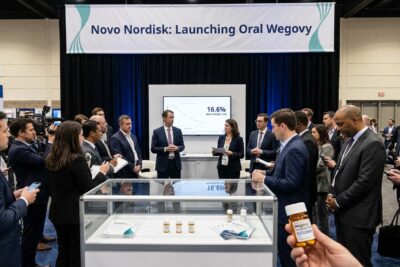
The era of injectable weight-loss drugs may be giving way to a new chapter. The U.S. Food and Drug Administration approved an oral formulation of semaglutide specifically for weight loss in late December 2025, marking a potential turning point for the blockbuster GLP-1 drug class that has dominated healthcare headlines for the past two years. With Eli Lilly also advancing its own pill formulation, the race to deliver these transformative medications in a more convenient form is reshaping the obesity treatment landscape heading into 2026. (Source: Scientific American)
From Injections to Pills
The GLP-1 receptor agonist medications — including Novo Nordisk’s Wegovy (semaglutide) and Eli Lilly’s Zepbound (tirzepatide) — have generated enormous attention for their ability to trigger profound weight loss and treat metabolic, cardiovascular, and kidney disease. However, these medications have been administered through weekly injections, a barrier for many patients who are uncomfortable with needles or find the injection regimen inconvenient.
Novo Nordisk had previously secured FDA approval for Rybelsus, an oral form of semaglutide for type 2 diabetes, in 2019. The December 2025 approval extends the oral semaglutide indication to weight loss specifically, removing a significant access barrier. The effectiveness of the pill formulation compared to injections remains a key question, though early clinical data suggests meaningful weight reduction, albeit potentially somewhat less than the injectable version.
A Competitive Landscape
Eli Lilly, whose injectable tirzepatide (marketed as Mounjaro for diabetes and Zepbound for weight loss) has been a formidable competitor to Novo Nordisk’s products, has its own oral formulation in late-stage development. The company’s pill version targets both GLP-1 and GIP receptors — the same dual-agonist mechanism that has made tirzepatide one of the most effective weight-loss medications ever studied. Analysts expect an FDA decision on Lilly’s oral formulation in 2026.
The American Association for Cancer Research has noted the intersection between obesity medications and cancer prevention, with experts forecasting the integration of obesity control programs within cancer prevention and treatment strategies. Marcia Cruz-Correa, chief medical officer of PanOncology Trials, has called for evidence-based medications and structured programs, arguing that when policy, care, and culture align to reduce obesity exposure, incidence of related diseases can fall significantly. (Source: AACR)
Beyond Weight Loss
The therapeutic potential of GLP-1 medications extends far beyond obesity. Study after study published in 2025 and early 2026 has demonstrated benefits across a remarkable range of conditions. Semaglutide has shown cardiovascular benefits in patients with heart disease, reductions in kidney disease progression, and promising signals in neurodegenerative conditions. Some researchers have described the drug class as having the broadest therapeutic potential of any medication developed in recent decades.
Mass General Brigham researchers predicted that 2026 would see medical AI moving toward clinical validation while these pharmacological advances expand treatment options. Pradeep Natarajan, a physician investigator at Mass General Brigham’s Heart and Vascular Institute, highlighted how expanding datasets that include sociodemographic, environmental, clinical, imaging, and molecular features will deepen our understanding of cardiovascular disease and guide strategies to maximize well-being. (Source: Mass General Brigham)
Access and Affordability Challenges
Despite the excitement around GLP-1 medications, access remains a significant challenge. Monthly costs for injectable versions can exceed $1,000 without insurance coverage, and many health plans — including some state Medicaid programs — do not cover weight-loss medications. The introduction of pill formulations could help reduce costs through simpler manufacturing and distribution, though pricing decisions by Novo Nordisk and Eli Lilly will ultimately determine whether the oral versions are more affordable in practice.
The broader public health implications of these drugs depend heavily on who can actually obtain them. Health equity advocates have raised concerns that the most transformative obesity treatments risk becoming available primarily to wealthier patients with comprehensive insurance, while underserved communities — which disproportionately bear the burden of obesity-related diseases — are left without access.
GLP-1 and Cancer Research
The City of Hope, one of the largest cancer research organizations in the United States, included microbiome-guided therapies and obesity management among its top predictions for 2026. CEO Robert Stone noted that research breakthroughs are redefining what is possible for cancer patients but cautioned that too many patients are still getting lost in a system not built for the realities of modern cancer care. The integration of weight management into oncology care represents a broader recognition that metabolic health and cancer outcomes are deeply intertwined. (Source: City of Hope)
The Year Ahead
Scientific American identified GLP-1 pill development as one of the key health stories to watch in 2026, alongside developments in personalized gene therapy, regulatory T cell treatments, and the ongoing threat of avian influenza. The publication noted that it remains to be seen how effective the pill formulations will be compared to injections, and whether the convenience of oral dosing can overcome the potential for somewhat lower efficacy.
For the tens of millions of Americans living with obesity and related metabolic conditions, the arrival of GLP-1 pills represents a meaningful expansion of treatment options. Whether it represents a true democratization of these therapies — or simply a new form of the same access challenges — will depend on the pricing, insurance coverage, and public health policy decisions that shape their rollout over the coming year.