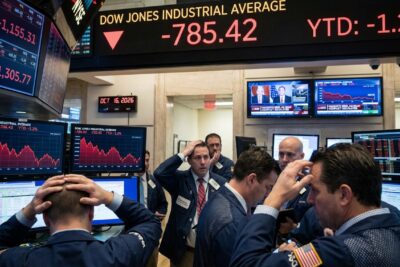
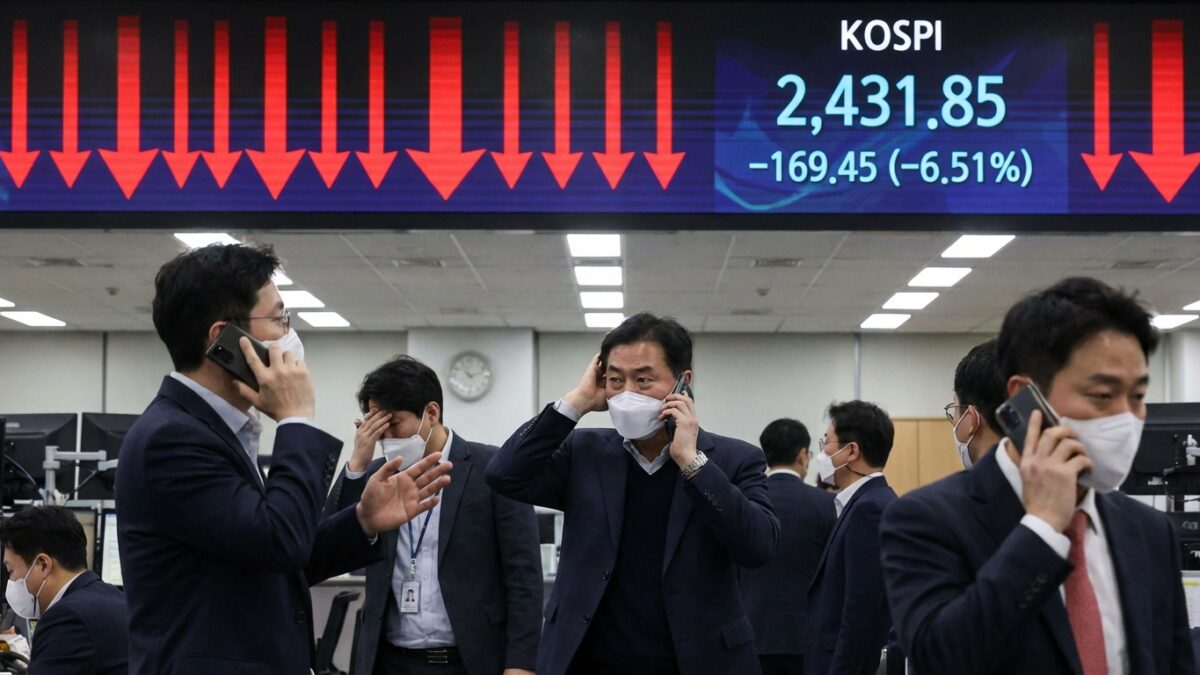
Stock markets across the Asia-Pacific region plummeted on Tuesday as the economic consequences of the U.S.-Israeli war with Iran began to reverberate through the global financial system, with South Korea’s KOSPI leading losses at 6.5 percent and safe-haven assets surging as investors fled risk.
The sell-off came after U.S. markets had held surprisingly firm on Monday despite the escalating crisis. Japan’s Nikkei 225 fell 3 percent, Australia’s ASX 200 dropped approximately 1.5 percent, and China’s SSE Composite fell as much as 1.3 percent before recovering some losses later in the session. (Source: Al Jazeera)
A Delayed Reckoning
The Asian sell-off reflected growing investor unease about the durability of Wall Street’s initial resilience. The S&P 500 had closed flat on Monday while the Nasdaq edged up 0.36 percent, though airline shares fell sharply, with Delta and United among the notable decliners. Analysts suggested the delayed reaction in Asia reflected the region’s much greater dependence on Middle Eastern energy supplies, with China, India, Japan, and South Korea collectively accounting for nearly 70 percent of crude oil shipments through the Strait of Hormuz. (Sources: Al Jazeera, U.S. Energy Information Administration)
Treasury yields declined across the entire curve on Monday, with the 10-year yield falling to levels not seen in 18 months as investors sought the safety of government bonds. A similar flight-to-quality pattern was observed in European sovereign debt markets. (Source: CaixaBank Research)
Banking Sector Under Pressure
The turmoil compounded an already difficult period for the global banking sector. On March 2, a separate wave of selling had hit U.S. bank stocks, with the SPDR S&P Bank ETF and the SPDR S&P Regional Banking ETF both falling approximately 5 percent in what analysts described as an earnings-driven repricing of risk. The sell-off was driven by a phenomenon market participants are calling the 2026 Twist, a yield curve distortion that is compressing bank net interest margins. (Source: FinancialContent)
With Federal Reserve Chair Jerome Powell’s term set to expire in May 2026, markets have been on edge regarding the future direction of monetary policy. The combination of a slowing economy, as reflected in the S&P Global Flash Composite PMI dropping to a 10-month low of 52.3, and sticky inflation at 3.0 percent on the Core PCE measure, has created what economists describe as a stagflationary environment that is particularly challenging for financial institutions. (Source: S&P Global)
Shadow Banking Concerns Resurface
Adding to the anxiety, Lloyd Blankfein, Goldman Sachs’ former longtime chief executive, warned in a Bloomberg podcast interview that the financial system appeared to be inching toward another potential catastrophe, with everyday Americans increasingly exposed to losses through the growing private credit market. The comments highlighted broader concerns about the migration of risk into what regulators estimate is now a $256 trillion shadow banking system. (Source: Bloomberg)
Unlike the 2008 financial crisis centered on subprime mortgages or the 2023 crisis driven by liquidity concerns, the current stress appears rooted in a fundamental repricing of risk amid collapsing net interest margins and growing private credit exposure. Analysts expect 2026 to be a defining year for bank mergers as smaller institutions struggling with profitability seek partners with greater scale. (Source: FinancialContent)
Central Banks in the Crosshairs
The unfolding crisis has complicated the already delicate task facing central bankers worldwide. January’s U.S. payroll count of 130,000 had surprised to the upside, pushing unemployment down to 4.3 percent and pulling back expectations for near-term rate cuts. S&P Global noted that the Federal Open Market Committee is likely to remain on hold in the coming months while it weighs the conflicting signals of resilient employment, persistent inflation, and the oil price shock from the Middle East. (Source: S&P Global Market Intelligence)
PwC’s 2026 annual outlook, published before the Iran crisis erupted, had forecast steady U.S. GDP growth of 2.1 percent with unemployment hovering near 4.4 percent. That forecast is now under severe pressure as energy costs threaten to add upward pressure to inflation just as economic activity faces headwinds from uncertainty. Hamad Hussain, a commodities economist at Capital Economics, warned that a sustained rise in oil prices would push inflation higher across importing nations. (Sources: PwC, Al Jazeera)
Investors are watching closely for emergency coordination among central banks and whether OPEC+ moves to accelerate production increases beyond its current modest pledges. The next major data point comes Friday with the release of U.S. non-farm payrolls and unemployment figures, which will be scrutinized for any early signs of economic deterioration.
Investor Positioning and Safe-Haven Flows
Gold prices surged to fresh highs as investors sought traditional safe-haven assets, while the Japanese yen strengthened against major currencies despite the sell-off in Japanese equities. The Swiss franc also appreciated, continuing a pattern seen during previous geopolitical crises. Cryptocurrency markets, which some advocates had positioned as digital gold alternatives, showed mixed reactions, with Bitcoin initially falling before recovering as some traders treated the dip as a buying opportunity.
Institutional asset managers and pension funds have begun rotating out of financials and into defensive sectors including utilities, healthcare, and consumer staples. The VIX volatility index, often described as Wall Street’s fear gauge, spiked above 30 for the first time since the regional banking crisis of 2023, indicating that options traders are pricing in the possibility of significantly more market turbulence in the weeks ahead.